Rohingya Refugees Receive Food Rations in Bangladesh
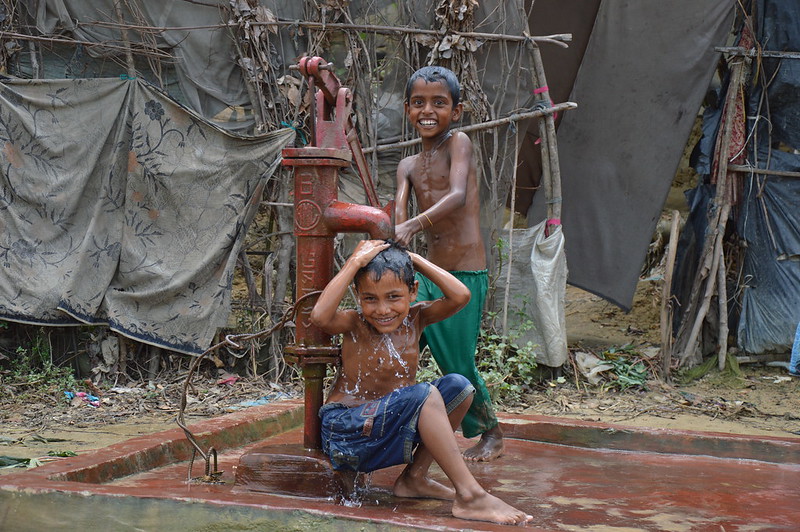 Following armed attacks against Rohingya Muslims in Myanmar in August 2017, thousands of Rohingya Muslims sought refuge in Bangladesh for safety. Over the course of six years, more than 960,000 Rohingya refugees have made a home at the world’s largest refugee camp in Cox’s Bazar, Bangladesh. Faced with multiple ration cuts in the past due to insufficient funding, the United Nations has promised to increase the amount of rations given to refugees in 2024.
Who Are the Rohingya?
The Rohingya people are an ethnic minority group from Myanmar and the world’s most persecuted minority group. Despite living in the country for hundreds of years, the Rohingya are not recognized as an official ethnic group, rendering them stateless after being denied citizenship by Myanmar’s government. After suffering years of discrimination and lack of basic rights, the Rohingya were subjected to a targeted campaign of violence by Myanmar authorities in the country’s Rakhine state in August 2017. Ever since, nearly a million Rohingya have settled in two of the most populated refugee camps in the world – Kutupalong and Nayapara in Cox’s Bazar, Bangladesh.
The Crisis
Although the Rohingya found refuge away from persecution, they faced many challenges while making a home in the camps. Given that many lack access to basic health care and vaccination regiments in Myanmar, a majority of the refugees are more susceptible to preventable diseases and poor sanitation. While the United Nations World Food Programme (WFP) played an active role in providing aid to the Rohingya, cuts were made in 2023 due to a lack of funding. Food rations were reduced to $8 a month as opposed to the previous $12, resulting in an increased risk of malnutrition, infant mortality and disease among the refugees.
Further harsh measures taken by the Bangladeshi government have imposed pressure on many refugees to consider returning to life in Myanmar rather than face hunger in the camps. Bangladesh has a history of bad blood with the Rohingya, as evidenced in 1978 when the government restricted food rations in the camps to force refugees back to Myanmar. As of March 1979, more than 11,900 refugees had lost their lives due to inadequate conditions in the camps, leading to the departure of more than 107,000 Rohingya from Bangladesh.
The UN’s New Rations
The situation in Cox’s Bazar revealed a rapid decline in nutrition among camp members as malnutrition rates reached 15%, exceeding the World Health Organization’s emergency threshold. Nearly 40% of children under the age of five were chronically malnourished, a further 12% suffering from acute malnutrition.
The deterioration spurred action among donors, with the United States leading the pack with an increased contribution to WFP. The influx in donations has allowed WFP to increase food rations to $10 a month in 2024, with the addition of locally fortified rice newly added to the food assistance package received by refugees.
Moving Forward
Despite the push to restore food rations in the refugee camps, WFP suffers from a funding shortfall of $61 million, a goal they must reach to restore rations to $12 a month. The meager food vouchers only provide enough to purchase essential items such as rice, garlic, spices and potatoes, a diet lacking protein and meat that are essential to upkeep good nutrition.
Abu Toha MR Bhuiyan, a chief refugee health coordinator in Cox’s Bazar, has disclosed that WFP plans to introduce genetically modified rice. This initiative aims to provide refugees with multivitamins to address malnutrition and prevent diseases such as marasmus and nyctalopia. A.K. Abdul Momen, Bangladesh’s Foreign Minister, echoes sentiments that an increase in funding for more food rations will only serve to benefit the camp and prevent violence among its members. Aid efforts must be refocused on the deteriorating situation in Cox’s Bazar to ensure the health and safety of the Rohingya people.
– Megha Gupta
Photo: Flickr
