• Link to X
  • Link to Facebook
  • Link to Instagram
  • Link to TikTok
  • Link to Youtube
  • About
    • About Us
      • President
      • Board of Directors
      • Board of Advisors
      • Financials
      • Our Methodology
      • Success Tracker
      • Contact
  • Act Now
    • 30 Ways to Help
      • Email Congress
      • Call Congress
      • Volunteer
      • Courses & Certificates
      • Be a Donor
    • Internships
      • In-Office Internships
      • Remote Internships
    • Legislation
      • Politics 101
  • The Blog
  • The Podcast
  • Magazine
  • Donate
  • Click to open the search input field Click to open the search input field Search
  • Menu Menu
Blog - Latest News
Global Poverty

Poverty Reduction in Botswana
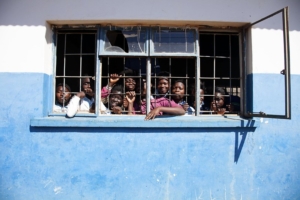
Poverty Reduction in BotswanaPoverty reduction in Botswana has seen success in recent years. In the early 21st century, 29.1% of its citizens lived on below $2.15 a day, but later surveys showed that the number had declined to 15.4% between 2015 and 2016. Since the country’s independence in 1966, it has had the desire to create a poverty-free and inequality-free nation.

The Role of Education

A focus on education, particularly at the primary level, has greatly benefited the nation and played an important role in reducing poverty levels among the population. The completion rate for primary education stands at 94.55% as of April 24, 2023, while the adult literacy rate of 86.82% ranks significantly higher than other sub-Saharan African nations.

When considering the number of out-of-education adolescents, Botswana’s 9.94%  as of April 24. 2023, is substantially lower than the regional average of 33.14%. This highlights a strong focus on ensuring that Botswana is making the most out of access to education in the country. Education enables individuals to lift themselves or their families out of poverty by potentially securing higher-paid jobs or becoming more skilled in their current roles, leading to improved productivity and earnings. In Botswana, the government provides schooling, and since the 1990s, increased investments in the education sector have resulted in a gradual reduction in poverty. Through the power of education, Botswana has seen the growth of a developing middle class, whose consumer spending can support a stronger economy. In a bid to reduce Botswana’s dependence on diamond mining and tourism, the government is encouraging students to complete secondary education and pursue higher education by providing financial policies, scholarships and loans. The government of the country aims to diversify the economy by promoting higher education among citizens.

Future Plans

Botswana attributes much of its recent success to its well-thought-out plans for the future, epitomized by Vision 2016 and its successor, Vision 2036. The aim is to transform Botswana into a high-income nation by 2036. This agenda includes four pillars:

  1. Sustainable economic development
  2. Human and social development
  3. Sustainable environment
  4. Governance, peace and security

Botswana plans to become a self-sustaining, export-led, and knowledge-based economy. The country learned valuable lessons from its previous national plan, Vision 2016. It established the National Poverty Eradication Programme (NPEP), which takes a multidimensional approach to poverty by considering various factors that contribute to communities’ financial and social situation, instead of relying on income as the sole indicator of poverty. The NPEP aims to promote small-scale entrepreneurship, employment initiatives and skills development, giving individuals greater financial and social agency.

What is Next?

Through ongoing agendas like Vision 2036, Botswana aims to create new opportunities, thereby boosting economic stability. However, the country still faces challenges in providing aid to the rural, isolated areas where many of the poorest reside. Nevertheless, the government’s commitment to inclusive growth and development bodes well for Botswana’s future. The progress so far suggests that the country can tackle present challenges and continue to build a brighter and more prosperous future for all its citizens.

– Charlie Valentine
Photo: Flickr

May 8, 2023
Share this entry
  • Share on Facebook
  • Share on X
  • Share on WhatsApp
  • Share on Pinterest
  • Share on LinkedIn
  • Share on Tumblr
  • Share on Vk
  • Share on Reddit
  • Share by Mail
https://borgenproject.org/wp-content/uploads/borgen-project-logo.svg 0 0 Jennifer Philipp https://borgenproject.org/wp-content/uploads/borgen-project-logo.svg Jennifer Philipp2023-05-08 01:30:132023-05-08 03:41:57Poverty Reduction in Botswana

Get Smarter

  • Global Poverty 101
  • Global Poverty… The Good News
  • Global Poverty & U.S. Jobs
  • Global Poverty and National Security
  • Innovative Solutions to Poverty
  • Global Poverty & Aid FAQ’s
Search Search

Take Action

  • Call Congress
  • Email Congress
  • Donate
  • 30 Ways to Help
  • Volunteer Ops
  • Internships
  • Courses & Certificates
  • The Podcast
Borgen Project

“The Borgen Project is an incredible nonprofit organization that is addressing poverty and hunger and working towards ending them.”

-The Huffington Post

Inside The Borgen Project

  • Contact
  • About
  • Financials
  • President
  • Board of Directors
  • Board of Advisors

International Links

  • UK Email Parliament
  • UK Donate
  • Canada Email Parliament

Get Smarter

  • Global Poverty 101
  • Global Poverty… The Good News
  • Global Poverty & U.S. Jobs
  • Global Poverty and National Security
  • Innovative Solutions to Poverty
  • Global Poverty & Aid FAQ’s

Ways to Help

  • Call Congress
  • Email Congress
  • Donate
  • 30 Ways to Help
  • Volunteer Ops
  • Internships
  • Courses & Certificates
  • The Podcast
Link to: Key Facts About UK Aid to India Link to: Key Facts About UK Aid to India Key Facts About UK Aid to India Link to: Mother-to-Child Transmission of HIV In Haiti  Link to: Mother-to-Child Transmission of HIV In Haiti  Mother-to-Child Transmission of HIV In Haiti 
Scroll to top Scroll to top Scroll to top