Poverty Alleviation by Providing ‘Housing for All’ in Cape Verde
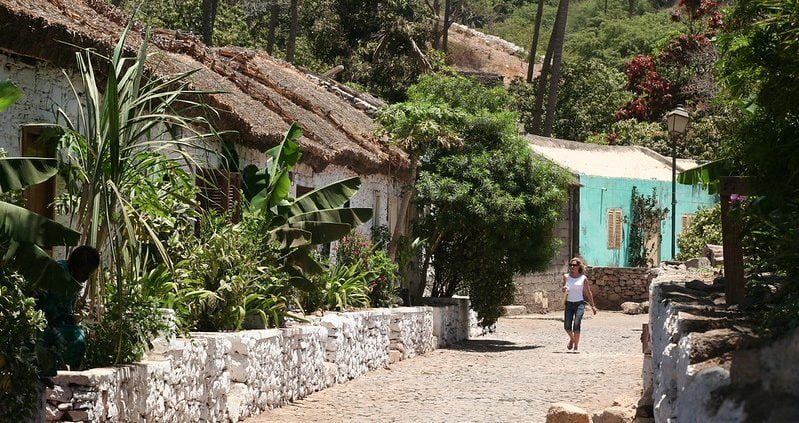 Between 2016 and 2025, Cape Verde reduced its extreme poverty rate to 2.8% of the population. Successive administrations achieved this historic decline through a multi-faceted approach. The program to house all its people might be one of the largest contributors.
Launched in 2009, the ‘Housing for All’ scheme was set to be the largest social initiative the country had ever undertaken. At the time, Cape Verde faced a significant housing challenge, with a large share of the population living in a housing deficit. When the government unveiled the scheme, roughly one in four Cape Verdeans lived in poverty, with inadequate housing a central concern. Many of those problems are rooted in the country’s history.
Colonial Housing to Tourism Development Zones
During the period when Cape Verde was a Portuguese colony, the government prioritized creating urban neighborhoods to house local administrators. After independence in 1975, many Portuguese civil and military officials repatriated, and through the 1980s and 1990s a new middle class of civil servants and liberal professionals bought their vacated properties.
The private sector continued to play a dominant role through the 1990s as the government piloted new Declared Tourist Development Zones (ZDTIs). These zones, often by the coast, designated land for urban development focused on tourist services. After building infrastructure, the government sold the land to private developers for tourist attractions like hotels, nightclubs and bars.
The creation of ZDTIs coincided with an explosion of the service sector, which now accounts for more than 70% of gross domestic product (GDP), and with it the urban population. As migration increased toward the coasts, urban housing availability struggled to meet demand from rural-urban migrants looking for jobs.
In contrast to the luxurious resorts that tourists enjoy, the housing deficit is highest in urban areas. Many migrants settled in spontaneous, informal settlements on public property, land owned by the Catholic Church or plots of low commercial value. These sat at the greatest risk of landslides and flooding. Residents frequently built them from wood, cardboard, sheet metal and plastic in accommodations known as barracks. Barrack housing is also prevalent in rural areas, where poverty is most severe and where severe droughts and inefficient water mobilization have eroded agricultural productivity.
The Successes of ‘Housing for All’
The approach mirrored the different challenges in urban and rural areas. With initial funding of 200 million euros from the Government of Portugal and 20 million from the Cape Verdean government, the scheme took a three-pronged approach: the Habitar component built new housing units, the Rehabilitar program upgraded dangerous barrack homes in both urban and rural areas, and the smaller Prohabitar project targeted rural environments.
The program prioritized people in the hardest conditions. A report showed that the program gave priority to those with little access to public water or electricity, and housed the homeless, those in illegal housing and those in overcrowded homes regardless of legal status. Successful applicants now live in multi-story blocks with running water and electricity. Each compound has a children’s playground; larger ones include sports pitches, green walks, multipurpose rooms and community centers. Some function as self-contained neighborhoods with schools, clinics and police stations. Decree-Law No. 5/2016 requires community facilities and social integration plans for residents.
New Solutions to the Housing Deficit
Sustaining the program has been difficult. Although it sometimes paid families to build their own homes, the government faced unforeseen costs in default interest and credit-line debt. In 2021, it staggered payments on the initial 200 million euro Portuguese loan. Two years later, the minister of infrastructure, spatial planning and housing said the government had rerouted spending from building and rehabilitation toward debt repayment.
Housing nonetheless remained a political priority. Ahead of the May 2026 legislative elections, then-Prime Minister Ulisses Correia e Silva pledged to solve the housing crisis, and his government directed funding toward a pledge to build 1,400 social housing units. Correia e Silva’s Movement for Democracy lost the election, however, and on June 19, 2026, Francisco Carvalho of the African Party for the Independence of Cape Verde took office as prime minister, inheriting the housing challenge after a decade of MpD rule.
A new mortgage program aimed at young people and households with unfavorable debt-to-income ratios also seeks to ease the deficit. The state will subsidize up to 55% of mortgage interest, and with support from Caixa Económica de Cabo Verde and Banco Comercial do Atlântico, it will in some cases cover the full down payment—potentially making home ownership realistic for more Cape Verdeans.
Another largely untapped source of housing sits in properties held by the Cape Verdean diaspora. The domestic population is about 520,000, but more Cape Verdeans live abroad than at home, and remittances make up about 12% of GDP. Locals complain that the homes emigrants leave behind sit disused and crumbling. When a property-holding emigrant dies without a will, contacting legal heirs abroad can be so costly and complex that probate never begins. Calls for a dedicated office to resolve these inheritance disputes remain unanswered.
The Future
‘Housing for All’ remains unfinished in Cape Verde. The program saw marked success from 2011 to 2021, before unforeseen costs made its current form harder to sustain. Still, the government presses on with programs to make a first home more affordable, and may welcome international support—including efforts to reclaim land in legal limbo. In recent years, United Nations (U.N.)-Habitat and Instituto Nacional de Estatística (INE) have helped seek solutions, and independent nongovernmental organizations (NGOs) like the Nilza Varela Foundation have built homes with their own funding. Together, these efforts have expanded access to affordable housing—a step that helps individuals escape poverty, and one closely tied to Cape Verde’s broader success against it.
– Luke Buckland
Luke is based in London, UK and focuses on Good News and Politics for The Borgen Project.
Photo: Flickr
