Higher Education in Sri Lanka
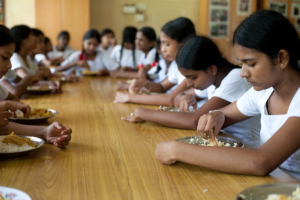 The higher education landscape in Sri Lanka reflects a nation that has prioritized education since gaining independence in 1948. The commitment to providing education up to the bachelor’s degree has contributed to the country’s impressive literacy rate of 92%. This is of the highest in South Asia, despite ongoing economic and social challenges, including the civil war. While the enrolment rate at secondary school is 99%, this drops to 21% at tertiary level, with women making up 65% of total university enrolment.
Funding State Education
After the end of British colonial rule, Sri Lanka established a state-funded educational system with a national framework in place in 1961, when the government took control of denominational schools. However, public spending on education has been persistently low in the last decade, accounting for only 2% of the gross domestic product (GDP), which fell to a historic low of 1.2% in 2022 due to a global economic crisis. As a result, household private spending on education in Sri Lanka tends to be significantly higher, indicating a gap between government support and the demand for educational services.
Private Higher Education in Sri Lanka
However, while Sri Lanka offers state education, there are more government-approved private universities. Private institutions play a crucial role in higher education, with 27 government-approved private universities compared to 18 public ones. Private universities are under the purview of the Ministry of Higher Education. In contrast, the purview of the University Grants Commission oversees public universities.
The National Human Resource Development Council of Sri Lanka data showed that in 2021, Sri Lanka Institute of Information Technology (SLIIT) was the largest private higher education provider, with 10,402 students. Other providers were the National Schools of Business Management (NSBM), Horizon College of Business and Technology, CINEC Campus and SLTC Campus. Many of these universities have also recently formed partnership arrangements with U.K. universities, enhancing their international recognition.
Recent Developments
The government has recently established the Ministry of Education Science and Technology, aiming to improve the standard of the country’s Science, Technology, Engineering and Mathematics (STEM) education system to a more competitive level. This initiative aims to boost STEM education to attract a competitive market for private providers. However, due to limited opportunities in the free government public universities, 80% of these students seek private higher education pathways.
As a result of the economic crisis in Sri Lanka, middle-class parents have been pushing for their children to join degree pathways after their O-Levels rather than after the General Certificate of Education (GCE) A-level examinations. This means they can graduate three to four years earlier and start their career. This shift allows students to complete degrees in a shorter time frame, immediately entering the workforce and addressing critical skills shortages in the job market. As a result of these developments, there is a clear link between the higher education system and encouraging sustainable economic growth in Sri Lanka.
Final Note
While Sri Lanka has made substantial progress in ensuring access to education, significant challenges remain in higher education enrollment and funding. The rise of private institutions, coupled with government initiatives to enhance STEM education, presents a pathway for improving the employability of graduates and fostering economic growth. Continued investment and strategic planning will be vital in overcoming current challenges and ensuring that Sri Lanka’s higher education system meets the needs of its population and economy.
– Amani Almasri
Amani is based in Durham, UK and focuses on Good News and Technology for The Borgen Project.
Photo: Flickr
