From Rice to Resilience: Food Systems in Laos
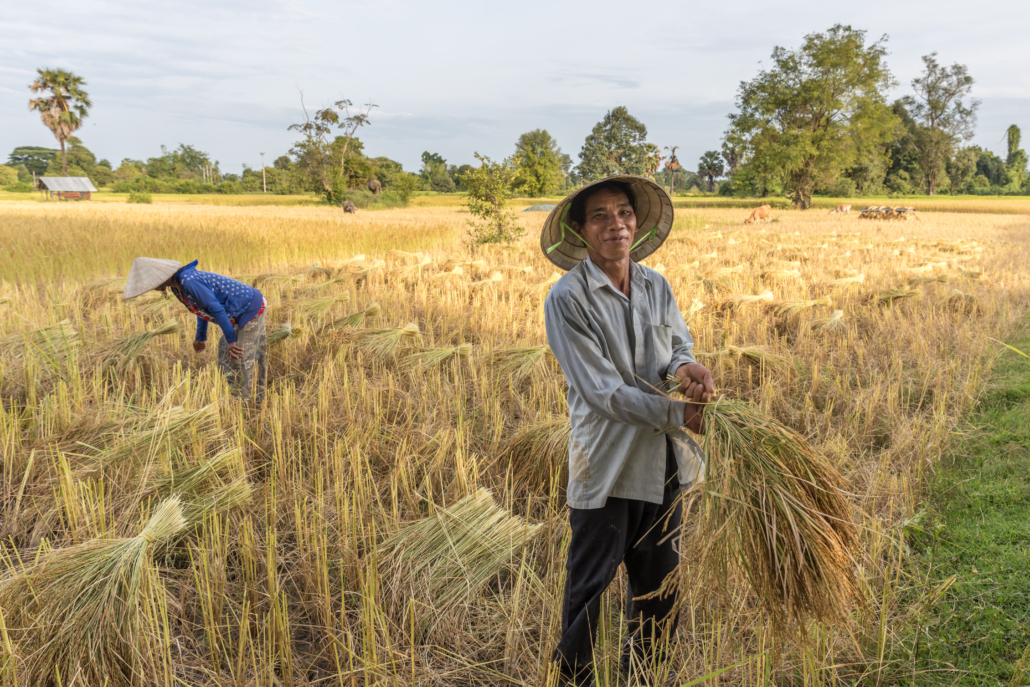 As the Lao People’s Democratic Republic (PDR) moves into the latter half of the 2020s, climate volatility, demographic growth and a rural development model anchored in subsistence agriculture are pushing food systems in Laos to a turning point. Though the country has achieved measurable progress in reducing absolute poverty and stimulating macroeconomic growth, the deeper transformation required for food system resilience remains elusive. In particular, the interconnected challenges of infrastructural isolation, market inaccessibility and nutritional insecurity continue to delimit the horizons of sustainable rural development.
The World Food Programme (WFP) reports that more than 7.5 million people live across more than 10,000 villages, many of them in topographically complex and infrastructurally marginal zones. Geography shapes food security in practical, immediate ways. As farmers increasingly experience “unpredictable weather patterns that affect their crops and livelihoods,” Laotians often depend on seasonal conditions to move food, farm inputs and essential services. As a result, households secure food not only through production or income, but through roads, rivers and rainfall.
A Rice-Based Rural Economy
Most Laotians still depend on agriculture for their livelihoods, and rice remains both a cultural staple and the foundation of daily diets. The UN Common Country Analysis notes that the nation’s agricultural sector is “predominantly subsistence and rice-based.” This singular dependence creates vulnerabilities. When households and districts depend on a monocultural system, they reduce dietary diversity and weaken ecological resilience, which leaves rural communities more exposed to nutritional shortfalls and environmental shocks.
To supplement rice-based diets, many households gather forest products, cultivate home gardens and raise small-scale livestock or fish farming. These practices often improve nutrition, but environmental degradation, resource scarcity and changing weather patterns can quickly undermine them. National planning also tends to overlook these systems, and the poorest or most remote communities often cannot reap their benefits.
The Confluence of Changing Weather and Demographic Growth
Despite its economic momentum, Laos continues to struggle with entrenched food insecurity. Roughly one-third of children under five experience stunting. Demographic change will likely intensify these pressures: projections suggest the population will reach 9 million by 2035, increasing demand for land, water and food.
Therefore, food systems in Laos face a distribution challenge as much as a production challenge. The country must deliver food reliably and affordably throughout the year, not merely grow more of it. Rising input costs, deteriorating soil quality and climate-induced variability in rainfall are already placing new strains on production, storage and distribution networks. Limited infrastructure exacerbates these stresses and turns climate shocks into prolonged disruptions.
Poverty and Market Disconnection
Food insecurity in Laos is strongly correlated with rural poverty and spatial exclusion. WFP estimates that 18% of the population lives on less than $1.25 USD per day, while the International Fund for Agricultural Development (IFAD) highlights the persistence of multidimensional poverty in the country’s mountainous north and east. In regions where roads are impassable for months at a time, where agricultural extension services are non-existent, and where markets are distant or unresponsive, households face a compound disadvantage. When crops fail or prices spike, these communities have few alternatives and limited buffers to absorb shocks.
Even as national poverty rates have declined, geographic inequality remains a defining feature of rural life. Almost one-third of rural Laotians are considered multidimensionally poor, with food insecurity operating as both a cause and a consequence of that deprivation.
Toward Integrated and Adaptive Food Systems
In response to these structural challenges, the Lao government and international development agencies have begun advancing a more integrated approach to food system resilience. Rather than treating agriculture, nutrition and infrastructure as discrete policy domains, current strategies increasingly view them as interdependent elements within a broader development framework.
Two initiatives that IFAD supports exemplify this systemic orientation:
- Agriculture for Nutrition Phase II ($48.3 million USD): This is a multi-pronged initiative focused on enhancing household nutrition through diversified production and income generation.
- Partnerships for Irrigation and Smallholder Agriculture ($166.27 million USD): It aims to strengthen irrigation networks, value chain linkages and climate-resilient farming practices.
Both initiatives depart from conventional aid models by recognizing that food security cannot be resolved in silos. Instead, they promote structural enablers such as market access, climate-smart agriculture and inclusive governance that can buttress systemic resilience.
Looking Ahead
Food systems in Laos capture many food security challenges that landlocked and climate-exposed countries across the Global South now face. The food system remains deeply local, rooted in subsistence farming and traditional ecological knowledge, while at the same time highly exposed to global market fluctuations and reliant on external aid.
The imperative now is to construct a food system that is not only productive, but adaptive. This requires all-weather infrastructure, diversified production systems and governance mechanisms that extend beyond national averages to address subnational disparities. It also necessitates a reorientation of food security policy from the distribution of calories to the cultivation of resilience.
– Lola Chambers
Lola is based in Vancouver, British Columbia, Canada and focuses on Global Health and Politics for The Borgen Project.
Photo: Wikimedia Commons
