Top 10 Facts About Poverty in Cairo
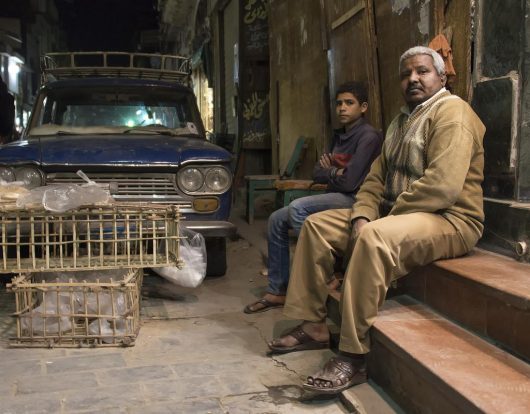 Cairo, the capital city of Egypt, is one of the most heavily populated regions in the country, causing a significant increase in social gaps. However, the future for Cairo looks hopeful. Below are the top 10 facts about poverty in Cairo.
Facts About Poverty in Cairo
- During the years 2015-2016, it was recorded that 27.8 percent of the Egyptian population was living in poverty, which was considered the highest rate recorded for the area since the year 2000. Of the 27.8 percent, the city of Cairo made up a colossal 18 percent of the poverty in Egypt.
- The government created a metamorphic reform program to lower poverty in Cairo in 2014. The program was created to trigger the economy, boost business conditions and create equitable growth. This plan showed conclusive results almost immediately, although it didn’t fix everything right away. In spite of these efforts, the social climate still showed difficulties. With high inflation and the disintegration of income in some areas, growth is not as abundant.
- The Cairo 2050 project was put into action in 2007. The project was developed to bolster project overreach and contact with all shareholders and establish the Local Urban Observatory Unit as a monitoring mechanism for urban development.
- In 2017, statistics showed that Cairo has one of the lowest living costs compared to virtually every major city. The cost of living in Cairo dropped nearly 15 percent between 2016 and 2017.
- On January 30, 2018, Ghada Wali, the Minister of Social Solidarity in Egypt, explained to the United Nations that ending poverty in Egypt is the top strategy for sustainable development. Their plan is to encourage: micro, modest and medium enterprises; job creation; social preservation; entrepreneurship; as well as overseeing and reporting on poverty.
- The poverty line in Greater Cairo is severely underestimated and does not account for the cost of basic necessities. Communities who live in ashwa’iyyat, or unofficial housing arrangements, pay more for food than those who live in high-income neighborhoods.
- Inequitable subsidies for food and water is an issue. Although the vouchers are available to the poor, they are also accessible to the middle class as well as the rich thereby creating wealth inequality and fewer resources for those in more vulnerable situations. Besides this, electricity and drinking water are available to the poor and the rich at the same rate.
- With a total of 289 slums in Cairo alone, the capital of Egypt has the highest poverty rate next to Alexandria and Port Said.
- The Program of Action was adopted at the International Conference on Population and Development in 1994. It sought to improve reproductive and health rights, women’s empowerment and gender equality — all of which will allow Cairo to provide opportunities to those who are usually neglected.
- The poverty rate in Cairo was extremely high in 2016. In January 2015, the unemployment rate was 12.8 percent, however, it dropped down significantly to 11.8 percent in January 2018.
Egypt has found itself in the throes of poverty and social unrest for many years. With the economy, education, population and development showing uneven statistics throughout protests and social issues that the country has found itself in, the people of Cairo still have hope. These top 10 facts about poverty in Cairo prove that Egyptians are resilient, strong people just fighting for a better future.
– Rebecca Lee
Photo: Flickr
