• Link to X
  • Link to Facebook
  • Link to Instagram
  • Link to TikTok
  • Link to Youtube
  • About
    • About Us
      • President
      • Board of Directors
      • Board of Advisors
      • Financials
      • Our Methodology
      • Success Tracker
      • Contact
  • Act Now
    • 30 Ways to Help
      • Email Congress
      • Call Congress
      • Volunteer
      • Courses & Certificates
      • Be a Donor
    • Internships
      • In-Office Internships
      • Remote Internships
    • Legislation
      • Politics 101
  • The Blog
  • The Podcast
  • Magazine
  • Donate
  • Click to open the search input field Click to open the search input field Search
  • Menu Menu
Blog - Latest News
Global Poverty

Energy Independence Through Genetically Modified Bacteria
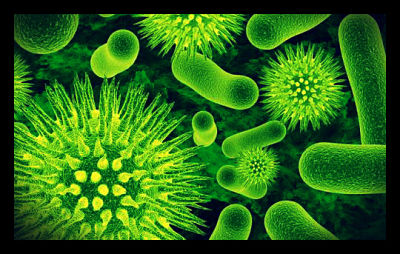
Energy Independence Through Genetically Modified BacteriaIn a concerted effort to find a realistic solution to the energy independence problem plaguing the globe, huge amounts of research funding have been invested in finding alternative forms of energy. Of several promising methods put forward thus far, none have had the potential both for energy independence and sustainability than that of butanol production through bacteria.

Swedish researchers at KTH Royal Institute of Technology in Stockholm recently conducted a study that utilized genetically modified bacteria to produce butanol, a hydrocarbon that could be utilized as an effective fossil fuel. The bacterium – known as Cyanobacteria – was altered using DNA recombination technology to change its metabolic properties to produce butanol instead of its usual algae dependent byproduct. Furthermore, once various environmental challenges are worked out, the industrial production of the bacterium produced fuel is expected to commence in less than a decade. In regards to the energy independence gleaned from such a process, a researcher remarked that “Fuel based on Cyanobacteria requires very little ground space to be prepared. And the availability of raw materials- sunlight, carbon dioxide, and seawater- is in principle infinite.”

This exciting new frontier in genetically engineered bacteria has almost universal applications and can be harnessed to produce an important alternative to the energy-intensive ethanol fuel production. This is great news for the future of energy independence both at home and abroad and shows how much quantitative results can be gleaned from greater scientific funding.

– Brian Turner

Source Science Daily
Photo Scienceray.com

March 17, 2013
Share this entry
  • Share on Facebook
  • Share on X
  • Share on WhatsApp
  • Share on Pinterest
  • Share on LinkedIn
  • Share on Tumblr
  • Share on Vk
  • Share on Reddit
  • Share by Mail
https://borgenproject.org/wp-content/uploads/borgen-project-logo.svg 0 0 Borgen Project https://borgenproject.org/wp-content/uploads/borgen-project-logo.svg Borgen Project2013-03-17 09:00:082020-05-24 23:33:08Energy Independence Through Genetically Modified Bacteria

Get Smarter

  • Global Poverty 101
  • Global Poverty… The Good News
  • Global Poverty & U.S. Jobs
  • Global Poverty and National Security
  • Innovative Solutions to Poverty
  • Global Poverty & Aid FAQ’s
Search Search

Take Action

  • Call Congress
  • Email Congress
  • Donate
  • 30 Ways to Help
  • Volunteer Ops
  • Internships
  • Courses & Certificates
  • The Podcast
Borgen Project

“The Borgen Project is an incredible nonprofit organization that is addressing poverty and hunger and working towards ending them.”

-The Huffington Post

Inside The Borgen Project

  • Contact
  • About
  • Financials
  • President
  • Board of Directors
  • Board of Advisors

International Links

  • UK Email Parliament
  • UK Donate
  • Canada Email Parliament

Get Smarter

  • Global Poverty 101
  • Global Poverty… The Good News
  • Global Poverty & U.S. Jobs
  • Global Poverty and National Security
  • Innovative Solutions to Poverty
  • Global Poverty & Aid FAQ’s

Ways to Help

  • Call Congress
  • Email Congress
  • Donate
  • 30 Ways to Help
  • Volunteer Ops
  • Internships
  • Courses & Certificates
  • The Podcast
Link to: UN Warns Environmental Threats Increase Poverty Link to: UN Warns Environmental Threats Increase Poverty UN Warns Environmental Threats Increase Poverty Link to: Environmentally Sustainable Cattle Grazing Link to: Environmentally Sustainable Cattle Grazing Environmentally Sustainable Cattle Grazing
Scroll to top Scroll to top Scroll to top