The Inspiring Economic Development of Bangladesh
After gaining independence in 1971, Bangladesh was described as a “basket case” and a collapsing and fragile state as it emerged from the war as the second poorest country in the world. At the time, Bangladesh was a war-torn agrarian economy with a number of human development challenges with dwindling productive assets and weak infrastructure. However, Bangladesh proved the international community wrong as they emerged victorious and resilient in their pursuit of economic development, particularly after the 1974 famine.
The World’s Fastest-Growing Economy
Economic development in Bangladesh in the past 50 years has been impressive, with GDP per capita rising to $2,734 in 2021 from $134 in 1971. Bangladesh quickly recovered from the aftermath of its War of Independence as one of the poorest countries in the world to achieve a steady growth rate, even during the times of the COVID-19 pandemic. Over the past two decades, extreme poverty has significantly declined by more than half, dropping from 34% in 2000 to just 11% in 2022. In addition, other key indicators of human well-being, such as maternal mortality rates, life expectancy and primary and secondary education attainment have also shown significant improvement.
One important factor is that almost all children go to school, with the primary school net enrolment rate at 97%. Moreover, more women continue to enroll in schools, and thus enter the workforce, contributing to growth in a wide range of economic sectors. Consequently, maternal mortality cases decreased significantly from 2000 to 2017, from 434 live births per 100,000 to 173.
Even during the COVID-19 pandemic, Bangladesh still found a way to prosper. Households saw improvements in regard to coping strategies and food security amidst the pandemic, and according to self-reported surveys, families residing in poor and slum areas of Dhaka and Chittagong experienced substantial improvement in their food security. This was linked to an increase in employment opportunities observed between two rounds of surveys conducted. Survey results also indicated a general improvement in the labor market and employment situation in 2022.
How Did They Do It?
There were several factors that contributed to the economic development of Bangladesh, particularly in the agricultural sector of the country. Following the birth of the nation in the 1970s, Bangladeshi scientists helped successfully implement innovations in crop varieties that made the country self-sufficient in food. Advancements in sustainable food production practices, despite the difficulties posed by frequent flooding, have been instrumental in combating hunger, poverty and malnutrition.
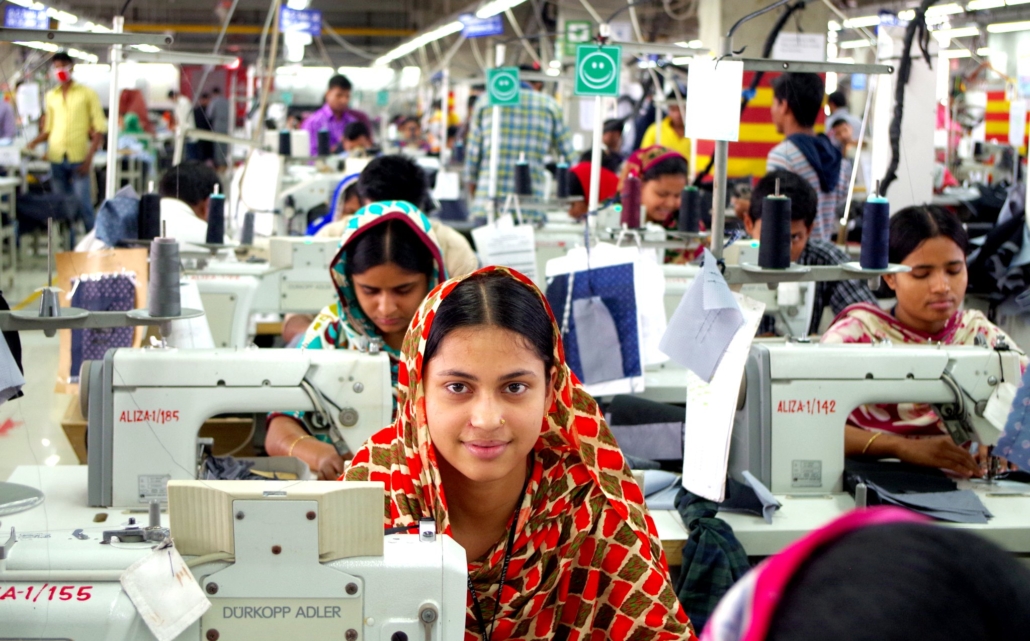
Furthermore, Bangladesh became the second largest exporter of ready-made garment (RMG) products in the world which greatly increased employment in the manufacturing sector. The growth of RMG also benefitted female labor, as the number of women entering the workforce increased to 35% in 2021, from 21% in 1990. Clean energy also became more accessible for the 8.2 million people living in the rural parts of Bangladesh, with every home having access to electricity. These improvements led to increases in immigration and the nation saw an increase in economic contributions from migrant workers.
Partnership with the World Bank
In 1972, the World Bank saw potential in Bangladesh, beginning a partnership by investing a $50 million credit. This turned into more than $38 billion in financing for economic development in Bangladesh over the following years. Today, the World Bank is Bangladesh’s largest external funder. The decision to continue funding centered around Bangladesh’s impressive achievements and the necessary actions required to maintain Bangladesh’s progress toward its goal of becoming an upper-middle-income country by 2031.
Despite these accomplishments, the current challenges of high inflation and declining foreign exchange reserves challenge the notion of stable macroeconomic performance in the country. Furthermore, concerns persist about the nature of growth and its impact on the population. Roughly 24.3% of the population struggles to fulfill basic necessities and the wealthiest 5% hold 27.8% of the nation’s income.
Nonetheless, the impressive economic development and poverty reduction in Bangladesh are inspiring. However, to achieve high-income status and meet the Sustainable Development Goals (SDGs), significantly increased efforts toward inclusive growth are necessary.
– Noura Matalqa
Photo: Flickr
