Combating Dengue in Brazil
 When many people think of mosquito-borne diseases, often the name that first comes to mind is malaria. Some may recall the Zika virus outbreak of 2016, or have a relative who returned from travels with a case of West Nile virus; however, it may be surprising to hear that in the Americas alone, over 1.2 million cases have been reported in 2026 of another mosquito-borne illness—and many have never heard of it.
Dengue Fever
Dengue fever is one of the most prevalent diseases faced by nations south of the equator, with up to 400 million cases reported every year. It is characterized by rashes, aches and nausea; targeted medicine has yet to be developed. In 2026, dengue has continued to make headlines, but Brazil is also expanding several approaches to prevention and control. These include disease forecasting, mosquito-control methods and a new single-dose vaccine.
A State of Emergency
The regions most susceptible to dengue are South and Central America. In the first 12 weeks of 2026, 62 cases were reported per 100,000 people throughout the Americas. Dengue in Brazil reached a peak in 2024 with a record-breaking 6 million cases, including 5,000 deaths. Dengue has become the fastest-spreading disease on the continent, leading several countries across the Americas to declare a state of emergency. In response, the Americas Health Foundation held a summit in Bogotá, Colombia, to create a plan of attack.
Experts discovered that some of the primary factors leading to a dengue outbreak are direct results of poverty. One was the spread of information and underreporting: in areas like Brazil, where 20.9% of the population lives below the poverty line, diagnostic testing is often inaccessible, causing cases to be underreported until epidemics have arisen. Another is the increased breeding of mosquitoes, which thrive on the stagnant water and waste endemic to big cities. Research has linked inadequate water, sanitation and waste management with conditions that can increase exposure to Aedes mosquitoes. However, experts found that areas of Brazil have already begun combating these factors.
Scientific Solutions
Since dengue spreads faster than word of its coming, one group of scientists, in collaboration with the Brazilian Ministry of Health, developed Infodengue, a sophisticated forecasting system that predicts the spread of dengue in Brazil. The first and second rounds of research succeeded, helping support public health systems by providing information ahead of the outbreaks. Another edition of the software is being developed as of 2026, with forecasts expected to be released in September. This way, Brazilians can combat underreporting with the help of a free service.
Meanwhile, Brazilian biologists have succeeded at the source level. Mosquitoes carrying the naturally occurring bacterium Wolbachia have been released as part of Brazil’s vector-control efforts. Wolbachia can reduce Aedes aegypti mosquitoes’ ability to transmit dengue and other viruses. Studies of Wolbachia deployments have reported substantial reductions in dengue in some locations. Brazil’s Ministry of Health treats Wolbachia as a complementary vector-control method rather than a standalone solution.
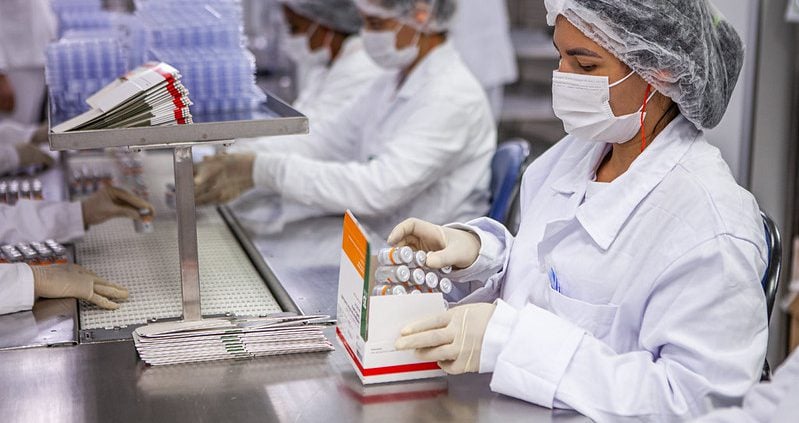
No attempt at disease control would be complete without the circulation of a vaccine. In April 2026, after 25 years of research and development, the National Institute of Health announced that a brand-new, single-dose vaccine would be released to the Brazilian public for dengue. The vaccine, called Butantan-DV, is administered as a single dose. A five-year phase 3 follow-up found 65% overall efficacy against symptomatic dengue. In June 2026, however, Brazil temporarily paused the vaccination strategy while health authorities investigated rare adverse events reported after rollout. Dengue has four serotypes. The five-year efficacy study recorded cases caused by DENV-1 and DENV-2, so efficacy against DENV-3 and DENV-4 could not be estimated from that trial. The vaccine had entered Brazil’s National Immunization Program, but the June 2026 pause means the rollout is under reassessment.
Results
The year 2026 has thus far proven to be a year of crisis regarding dengue; many countries in the Americas, Southeast Asia, Africa and the Middle East have been struggling to keep up with the influx of cases, possibly due to rising heat levels across the globe. However, in Brazil, the results of science speak for themselves. Brazil recorded a substantial decline in dengue cases in 2025 compared with 2024, and the Ministry of Health reported a further 73% year-on-year decline by June 20, 2026. The new vaccine, alongside surveillance and mosquito-control measures, provides Brazil with additional tools to reduce the burden of dengue.
– Madison Hoar
Madison is based in Birmingham, AL, USA and focuses on Global Health for The Borgen Project.
Photo: Flickr
