Can Technology Bridge Ethiopia’s Education Divide?
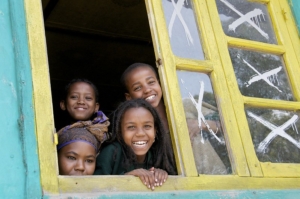 Located in the Horn of Africa, Ethiopia has one of the largest populations on the continent with an estimated 116,462,712 people living in the country as of 2023. It also suffers from endemic poverty and widespread illiteracy: according to the CIA World Factbook, almost a quarter of the population lives in poverty and nearly 50% of the population can not read or write. The problems of illiteracy and poverty are much worse in rural Ethiopia, where few have access to the education, resources and opportunities that exist in urban areas. However, those working to improve education in Ethiopia could look to one successful experiment and its use of technology to bridge Ethiopia’s education divide.
The Rural/Urban Divide
Underscoring poverty’s inordinate effect on rural Ethiopians, as of 2016, the country’s rural poverty rate was 26%, compared to an urban poverty rate of 15%. With only about 23% of Ethiopia’s population currently living in urban areas, this divide is alarming. In fact, more than three-quarters of Ethiopians, and most of the country’s poor, live in rural areas and rely upon agriculture for food and income.
To help Ethiopia’s rural poor, the World Bank has emphasized the need to develop better infrastructure, adopt more modern agricultural techniques, increase levels of connectivity and create opportunities for non-agricultural employment. While the country has already made some progress in these areas, more work is necessary to bring the level of rural development up to that of urban areas.
In 2011, “36% of rural children were out of school compared to 13% of urban children,” and, as recently as 2020, “less than 20% of children from very poor households finished primary school.”
One Laptop per Child
Back in 2005, at the MIT campus, One Laptop Per Child came up with a plan to eradicate the education gap between countries by equipping children in underdeveloped nations with modern technology. Since its founding, the nonprofit organization has provided more than 3 million laptops to children in more than 64 countries, including Rwanda, Ghana and Kenya.
In February 2011, the One Laptop Per Child team decided to expand its efforts to rural Ethiopia. The team distributed educational tablets to around 20 schoolchildren in two remote villages, each around 50 miles outside the Ethiopian capital of Addis Ababa. The children had little to no education and were illiterate.
The results were a success. Although the children received no instruction on how to operate the devices, within weeks they had learned how to use them, experimenting with pre-installed apps to teach themselves the ABCs and English words. After five months, some children had even learned how to customize the tablets’ settings, all without teachers or a classroom setting.
A Blueprint for Success?
The success of One Laptop Per Child’s initiative to help educate rural Ethiopian children is inspiring. Exemplifying technology’s potential to help bridge Ethiopia’s education divide, such initiatives can complement the work of other nonprofits like Together We Learn. Currently working to improve children’s education in Ethiopia, Together We Learn has built new and improved schools with updated infrastructure, sponsored education for children from impoverished families and provided teacher training, among other efforts. It has thus far sponsored the education of 870 Ethiopian children and improved the lives of 11,500 students through its literacy training.
What’s Next?
The successful implementation of One Laptop Per Child’s educational tablets in rural Ethiopia showcases the potential of technology in bridging the education divide. This initiative, along with the work of organizations like Together We Learn, offers hope for improving access to education and reducing illiteracy rates in the country. By combining technology-driven solutions with infrastructure development and comprehensive support, Ethiopia can continue to make progress in addressing poverty and improving the lives of its population, both in rural and urban areas.
– Jonathon Crecelius
Photo: Flickr
