Being poor in North Korea (Democratic People’s Republic of Korea)
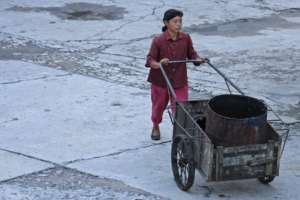 North Korea, officially known as the Democratic People’s Republic of Korea (DPRK), is one of the poorest countries in the world, occupying the northern half of the Korean Peninsula in East Asia. The Korean War broke out on June 25, 1950, when the North Korean Army attacked South Korea. The war lasted until 1953 when military commanders from the United States (U.S.), China and North Korea signed the Korean Armistice Agreement. It established a demilitarized zone (DMZ) that has economically and culturally separated South and North Korea to this day.
Following the Soviet Union’s collapse in 1991, North Korea experienced a significant economic decline, mainly due to a reduction in foreign aid. Poverty in North Korea is widespread, and its people have become one of the most isolated and marginalized groups. This economic downturn has contributed to the challenges faced by the population.
What Is Poverty Like in North Korea?
Poverty is prevalent in North Korea. Around 60% of the total population is believed to live below the poverty line, equating to 15 million people. According to the remote-sensed luminosity data, the economic status of North Korea forecasts a downturn even though there is a lack of credible information regarding the poverty figures. Furthermore, due to agricultural mismanagement of the state as well as an increasing economic inequality between regions, North Koreans are suffering from food shortages, leading to malnutrition. Aside from economic problems, there is a lack of infrastructure in education and health care, making the quality of life much poorer.
When Have They Been So Poor?
Being poor in North Korea has been an ongoing issue. From 1994 to 1998, there was a severe famine in North Korea, which resulted in nearly two to three million deaths, more than 10% of North Korea’s population. All the natural disasters, such as hailstorms in 1994, flooding from 1995 to 1996 and droughts in 1997, pushed the whole country into a more grievous economic crisis. Despite starvation during the 1990s, the regime has maintained a failed economic model, which put the country’s food security in danger. Throughout the global pandemic coronavirus disease, starting in early 2020, North Korea closed its borders, which aggravated the scarcity of food. Day by day, North Koreans face increasing repression and danger, threatening the welfare of their lives.
Why Is Poverty Rampant in North Korea?
Undeniably, being poor in North Korea stems from the poor governance of the totalitarian regime of the Kim family. They adopted the “Juche” ideology, having these three elements: the spirit of independence, self-reliance in the economy and self-defense in the military sector, which paved the way for the dictatorship by isolating the country in the name of independence. This ideology led the leadership to take on a command economy, also known as a planned economy, in which they controlled the production and distribution of goods and services.
This economic model severely limits freedom in the domestic market setting, hindering economic growth due to the absence of competition. All the regulations on international trade exacerbate the country’s economy. Furthermore, the regime violated the right to life and freedom, and in particular, women and children are poorly treated among all vulnerable groups.
Hope in Action
Helping Hands Korea(HHK) is a non-governmental organization based on the Korean peninsula that has actively supported North Koreans since 1996. It provides necessities, including food, medicine and clothing, to North Korean people as well as escapees in China.
LiNK, Liberty in North Korea, is an international non-government organization that aims to rescue North Korean refugees who have to travel a 3,000-mile secret route and empower them by offering resettlement programs. The organization also strives to change the narrative on North Korea by creating media content. More than 150,000 people engage with North Korean storytellers on social media, and in 2019, this project reached over 5.7 million people online.
The what, when and why of being poor in North Korea reflects that its political and economic stance has made North Korea a hermit kingdom. However, despite the extreme poverty in North Korea, they have a hopeful future ahead as there are international supporters who are acting in full hope to ensure they are well-fed, clothed and sheltered.
– Grace Mun
Photo: Wikimedia Commons
