Basket Weaving and Poverty Alleviation
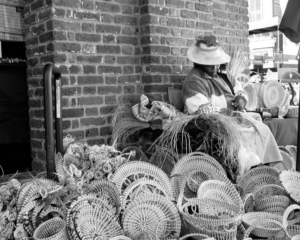 The making of sturdy baskets is a delicate process. Weaving together Kenyan palm leaves or Indian Moonj grass requires deftness and fine attention to detail. Passed on from generation to generation, it remains a thriving craft. Stories from Kenya, Ghana and India tell us that basket weaving has also led hundreds worldwide away from poverty and toward financial self-sufficiency.
Kerio Basket Makers’ Self-Help Group
Many members of the present Kerio Basket Makers’ Self-Help Group in Turkana County, Kenya, used to rely on relief supplies to make ends meet. They often struggled to accumulate savings and fund their children’s education. This was until 2018 when Mary Erakai and 19 other women pooled $7.75 each to start a small-scale enterprise for basket weaving.
They astutely turned a stringent ban on plastic carrier bags into an opportunity for them to create a sustainable source of income for themselves. Benefitting from vendors’ increased demand, the group sells baskets worth anywhere between $2.33 and $11.63. With the Hunger Safety Net Program’s assistance, they also weave brooms and mats. Erakai has, over time, transitioned into a successful entrepreneur who trains and employs women across three towns.
Basket Weaving in Ghana
Azunne Asakiboba, from Ghana’s Bongo district, can feed and educate her family of three primary school-going children with the supplementary income of $7 she earns weekly by weaving three baskets. She has also been able to contribute to and benefit from a village savings scheme that allows her to access credit.
As a result of the livelihood-enhancing Complimentary Income Generation Scheme, supported by the Japanese Social Development Fund and the World Bank, she gained the vital vocational skills of straw basket and hat weaving. She also earned a $41.27 fund for her basket weaving set-up.
Moonj Grass Baskets
The art of dexterously weaving together fine blades of sun-dried, cream-colored Moonj grass has been in Fatima Bibi’s family for generations. She grew up watching her mother, Aasma, practice it. She picked it up in no time after she got married and started living with her mother-in-law, Ayesha Begum, a seasoned artisan. Fatima, a resident of Prayagraj district in Uttar Pradesh, India, is now financially independent, earning close to $83.38 monthly. She spends much time locating new buyers and liaising with policymakers to promote the craft. She also heads a local self-help group, which provides women with credit and a sense of community.
Demand for Moonj grass basket weaving had declined before the Uttar Pradesh government launched its One District, One Product scheme in 2013. When Moonj was earmarked as the unique product of Prayagraj, orders started increasing. It became a meaningful and consistent source of employment for craftswomen throughout the district, who benefit from the district’s Zilla Udyog Kendra or local industry center’s training and starting kit-provision services. The craft has also found support in the neighboring state of Bihar, where the Wildlife Trust of India, along with the Indian Institute of Technology and the state’s Forest Department, has trained more than 200 women from 53 rural self-help groups in the weaving and marketing of Moonj grass baskets.
Looking Ahead
Few cost-effective initiatives can simultaneously achieve sustainable development, poverty alleviation and women’s empowerment. One powerful example is the promotion of traditional basket weaving. It has proven to transform lives across diverse regions.
– Shiveka Bakshi
Shiveka is based in London, UK and focuses on Good News and Global Health for The Borgen Project.
Photo: Flickr
