Artificial Pollinators to Fight World Hunger
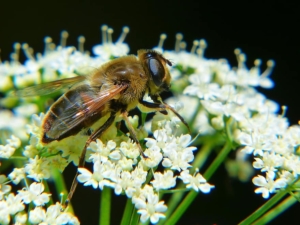
More than 570 million farms exist in the world today. Notably, 45% of the world’s population lives in rural areas; a number that is equivalent to 3.4 billion people. However, today, 2 billion people sustain themselves through agriculture. While the entirety of human-kind depends on agriculture for sustenance, only 33% of the population depends on agriculture to survive, economically. In this same vein, farmers’ livelihoods have been threatened by Colony Collapse Disorder (CCD), a leading cause in the decline of bees. With a decrease in natural pollinators, researchers are creating artificial pollinators to sustain our ecosystem.
The Birds & Bees Falling Short
Birds, bees and other insects are the world’s crop pollinators and cross-pollinators. Bees can pollinate more than $15 billion of crops every year in the U.S. alone. In 2016, however, seven species of Hawaiian bees were declared endangered, as well as a bee that is native to the East Coast and Midwest of the U.S. Researchers are now looking to artificial pollinators and robotics as a substitute to help fulfill the world’s agricultural needs.
Robotic Dragonflies and Miniature Drones
In the Netherlands, a group at the Technical University of Delft is creating drones — robotic dragonflies — that will recognize, land on, and pollinate flowers. Assistant professor Guido de Croon said that they “use robot dragonflies which mimic insects flying by flapping their wings… this will be beneficial once miniaturization of these drones has taken place. They’ll be able to fly longer without recharging.” The drones can also communicate with each other to avoid contact and possible damage to themselves. In the future, these robotic dragonflies will work in greenhouses to aid in plant health, i.e., watering and safe pesticide use.
Soap Bubble Pollination
An associate professor at the Japan Institute of Science and Technology, Eijiro Miyako, has used soap bubbles carried by drones to pollinate a pear orchard. Inspired by blowing bubbles with his son, Miyako notes that “soap bubbles have innovative potentiality and unique properties, such as effective and convenient delivery of pollen grains to targeted flowers and high flexibility to avoid damaging them.” Miyako’s team used GPS-controlled drones to direct soap bubbles, carrying pollen grain, at fake lilies from two meters away and had a 90% success rate.
This is by far a cheaper source for pollination and according to Miyako, more efficient than other artificial pollinators. Instead of using human labor, Miyako hopes to continue to advance this eccentric, bubble pollinator. Previously, Miyako used a two-centimeter long drone to pollinate but found that the flowers were getting harmed in the process. This pollinating technique is “flower-friendly” in Miyako’s experience, far safer for the fruit or flower.
More Innovative Technologies
Other researchers have created robot bees and dragonflies and one group has created a backpack to attach to real dragonflies to assist in the pollination process. In any case, these insects are crucial to our ecosystem. While technology should never fully replace the natural process — it is useful to have these innovations to assist. Those who live in rural areas depend on the ecosystem and environment around them — including crops and agriculture. Although these technologies remain unperfected, solutions like these artificial pollinators are working to protect livelihoods.
– Hannah Kaufman
Photo: Pikist
