Solar power in Pakistan: Assisting Low-Income Families
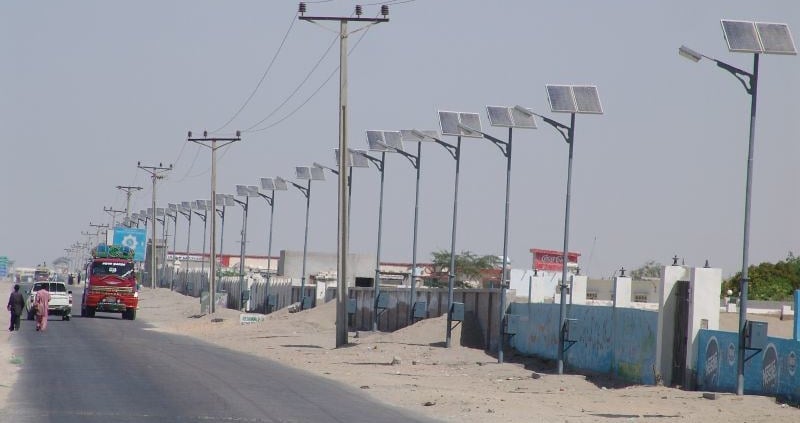 For low-income families in Pakistan, escalating electricity costs can exert significant pressure on already constrained household budgets. Frequent power outages can also disrupt education, work and other daily activities. Solar power in Pakistan is emerging as an increasingly vital solution as households and governments seek more affordable and reliable sources of electricity.
The Rising Cost of Energy for Low-Income Families
Pakistan has long grappled with electricity shortages, rising energy costs and unreliable power supplies. These challenges disproportionately affect households with limited incomes, as families have fewer resources to absorb higher electricity expenses.
In rural areas, unreliable electricity can hinder access to essential services and limit opportunities for education and employment. The World Bank reports that rural residents in Pakistan are increasingly turning to solar power as an alternative to unreliable and costly grid electricity. Its Sindh Solar Energy Project specifically targets households with limited or no access to the electricity grid.
How Solar Power Can Reduce Household Energy Costs
Pakistan receives abundant sunlight across much of the country, offering strong potential for solar energy. Solar photovoltaic systems can provide electricity for basic household needs such as lighting and fans, while larger systems can support appliances like refrigerators and water pumps.
Solar power can also reduce a household’s reliance on the national grid. For families with limited incomes, reducing electricity expenses can provide greater financial flexibility for other essential needs.
The Punjab government highlights lower electricity bills and a more reliable power supply among the benefits of its free solar panel program. Recent data indicates growing household adoption. Gallup Pakistan’s 2023 census analysis found that approximately 4 million households, or 7.4% of all households, reported access to solar energy. The report also noted particularly high levels of solar adoption in some districts of Sindh and Khyber Pakhtunkhwa.
Pakistan’s Free Solar Panel Initiative
The Government of Punjab introduced the CM Punjab Free Solar Panel Scheme on Dec. 6, 2024. The program targets electricity consumers who use up to 200 units per month and aims to provide free solar systems to up to 100,000 households.
The Punjab Energy Department allocated 9.97 billion Pakistani rupees (Rs. 9.97 billion) for the scheme. The government planned to select eligible households through computerized balloting and verify beneficiaries through district administrations.
The scheme uses electricity consumption to determine eligibility. Households using up to 100 units per month can receive a 550-watt solar system, while those using up to 200 units can receive a 1,100-watt system. This approach directs support toward households with relatively low electricity consumption.
Reaching Households Through Digital Selection
The Punjab scheme also employs digital tools during the application and selection process. Consumers can register through an online portal or by sending their bill reference number and Computerized National Identity Card (CNIC) number via SMS. The government then uses computerized balloting to select beneficiaries.
When Punjab launched balloting in March 2025, officials reported more than 861,000 applications. The first phase selected 94,483 consumers for solar systems.
The digital selection process allows the government to manage a large number of applications while using electricity consumption records to identify eligible households. This approach helps direct limited public resources toward households that meet the program’s criteria.
Expanding Solar Access Beyond Punjab
Punjab is not the only province leveraging solar power to expand electricity access. The World Bank’s Sindh Solar Energy Project combines large-scale solar development with distributed solar systems and solar home systems for households with low or no access to electricity.
The project aims to provide affordable solar home systems to 200,000 households in Sindh. It also includes quality controls for solar equipment and collaborates with private-sector providers to reach rural consumers. The World Bank states that the project aims to make solar systems more practical for rural households by including high-efficiency fans in the solar home system packages.
This approach demonstrates how government and development partners can combine funding, private-sector participation and quality standards to make renewable energy more accessible to underserved communities.
Making Solar Power More Affordable
Although solar panels can reduce electricity costs over time, the initial price of a solar system can still deter low-income households from adopting the technology. Families may struggle to afford solar panels, batteries and installation costs without financial support.
Government subsidies can help address this barrier. Other approaches include flexible payment plans, microfinance and community-based solar systems that allow several households to share infrastructure.
The World Bank’s Sindh project uses partial grants and private-sector providers to expand the market for affordable solar home systems while maintaining quality standards.
The Challenges of Wider Adoption
Solar power still faces challenges in Pakistan. High upfront costs, limited financing and concerns about equipment quality can make adoption difficult for low-income families. Rural communities may also face limited access to technical services and maintenance.
Programs need to combine financial support with quality standards, trained technicians and accessible information. These measures can help households benefit from solar technology without incurring additional costs from poor-quality equipment or inadequate maintenance.
A More Affordable Energy Future
The expansion of solar power in Pakistan illustrates how renewable energy can address both electricity access and household financial pressure. Punjab’s free solar panel scheme provides one example of a government program targeting households with lower electricity consumption, while the World Bank-supported Sindh project demonstrates another approach to expanding solar access in areas with limited grid electricity.
As Pakistan continues to develop solar energy programs, directing financial and technical support toward underserved households can help ensure that renewable energy does not remain accessible only to families who can afford the initial investment. Expanding affordable solar access could help more Pakistani households reduce their energy burden while gaining a cleaner and more reliable source of electricity.
– Afia Atif
Afia is based in Chenab Nagar, Pakistan and focuses on Technology and Solutions for The Borgen Project.
Photo: Flickr
