Indonesia’s SDG 5 in Java
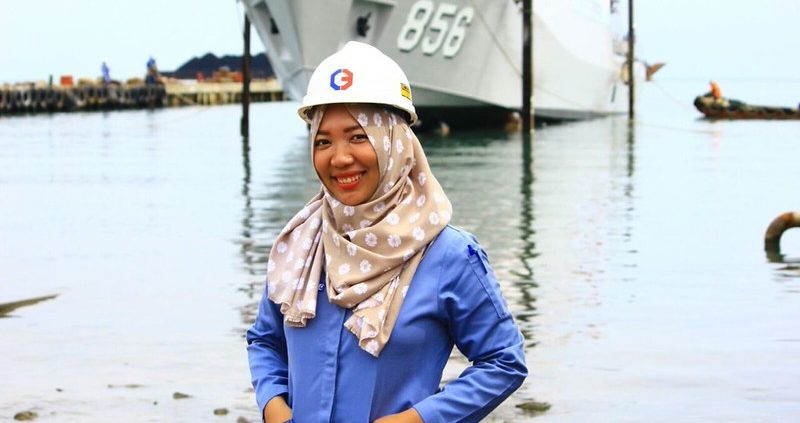 Gender equality is heavily connected to reducing poverty. Indonesia’s Sustainable Development Goal 5 (SDG 5), gender equality, has 48 programmatic interventions through the United Nations (UN) and its partners. This one SDG accounts for about 25% of the UN’s SDG-related activities in Indonesia, and for a good reason. Young women aged 25 to 34 are 25% more likely than men to live in extreme poverty and are more vulnerable to falling into poverty.
In Indonesia, as of 2025, the labor force participation rate among females is 53.7% and among males is 82.3%. Even women within employment are around 14% more likely to be in vulnerable employment than men, meaning they are more likely to fall into poverty.
Dida Gardera, Indonesia’s acting deputy for the coordination of industry, manpower and tourism at the Coordinating Ministry for Economic Affairs, believes that women, comprising 49% of Indonesia’s population, must not be overlooked for economic development. Eradicating gender inequality leads to economic development and a decrease in poverty in Indonesia. This can be done through advocating for women’s rights in the workplace and civil society and ensuring women’s safety. UN initiatives in these categories have greatly improved the lives of women, moving toward gender equality and alleviating poverty.
Rights of Women in the Workplace and Civil Society
Activity 1.2.15 and 1.2.16 focus on empowering women in civil society and the household, allowing women to have a more influential role. The goal of this initiative is to strengthen the ability to advocate, digital and physical security, leadership and policy influence. It fosters collective action and dialogue with policymakers, allowing meaningful participation for women in shaping an inclusive future.
Initiative 1.2.22 works to ensure decent work and reduce vulnerabilities for women and children in the context of labor migration in Southeast Asia. Part of this initiative is preventing and responding to violence against women in the workplace, including human trafficking and migrant smuggling. Preventive measures empower women migrant workers and children by uplifting their voices and equipping them with knowledge, skills and access to services.
Activity 3.1.3 aims to reduce gender-based discrimination at work and eliminate child labor, improving protection of rights for women and children during trade growth and restructuring. It allows for enhanced working conditions that enable workers to perform better, which boosts economic benefits.
Indonesia’s SDG 5 is helping women rise out of poverty through empowerment. Empowering women in society and the workplace increases household income and boosts economic growth. Results of these initiatives are evident in the increase of women holding seats in national parliament, from 11.4% in 1997 to 21.9% in 2025. By having more women included in policy-making discussions, women receive policy-based advocacy for their rights in society, the workplace and the household. Advocacy in policy allows for decent work and social protection, which provides security that allows women to rise out of poverty while establishing sustainable economic development.
Ensuring Safety of Women
Activity 1.2.19 strengthens policy ability to prevent and respond to gender-based violence facilitated by technology (TF-GBV). It takes a survivor-centered and rights-based approach to build specialized skills among police officers that enhance their ability to prevent TF-GBV. It also improves collaboration between law enforcement agencies, ministries and civil society organizations.
Activities 1.2.20, 1.2.36, 1.2.38 and 1.2.48 all aim to reduce violence against women (VAW). Both activity 1.2.20 and 1.2.38 focus on budgeting-related initiatives directed toward reducing VAW, with training of stakeholders and allocating more budget to decrease VAW. Activity 1.2.38 focuses on capacity-building activities that reduce VAW. Activity 1.2.48 focuses on implementing a VAW case management system in government centers.
Activities 1.2.45, 1.2.46 and 1.2.47 focus on reducing female genital mutilation (FGM). This is done by improving the enabling environment to establish agency, improving awareness and generating evidence among target populations.
Violence against women threatens women’s economic well-being, independence and health. Therefore, addressing and combating violence against women makes Indonesia’s SDG 5 an important component of fighting poverty. Gender-based violence affects one in three women worldwide, with 27% of women ages 15 to 49 experiencing intimate partner violence. In Indonesia, only 11.9% of women ages 15 to 49 experience intimate partner violence. This difference can partly be attributed to the initiatives described. Fighting violence against women and ensuring a safe environment for them allows participation in civil society and seeking employment without fear, facilitating personal economic growth to overcome poverty.
Agencies Behind the Initiatives
The two most prominent agencies in charge of these initiatives are the United Nations Population Fund (UNFPA) and UN Women. UNFPA’s main mission is to advocate and uphold women’s rights through sexual and reproductive health. Its programs center around reducing maternal mortality rates, eradicating gender-based violence and advocating for women’s reproductive rights.
UN Women is an agency that seeks to empower women by closing the gender gap, shifting laws, institutions, social norms and services. It works in four areas: leadership; economic empowerment; freedom from violence; and peace, security and humanitarian action.
In Indonesia, UN Women works with stakeholders, Komnas Perempuan (Indonesia’s National Commission on Violence Against Women), legal aids and women’s crisis centers to improve policy and seek legal justice. Its Women, Peace and Security (WPS) Programme builds alliances with women members of parliament, and its Wahid Foundation develops peace villages for women’s safety. It engages with Association of Southeast Asian Nations (ASEAN) sectoral bodies to develop conflict prevention and promote the collection and use of gender data for crises.
These agencies and their dedication to eradicating gender inequality benefit many women in poverty. By empowering them and allowing them the right to choose their future path, more women are able to find employment and reach their full potential, thus rising out of poverty.
– Arden Schultz
Arden is based in Milford, MI, USA and focuses on Good News and Politics for The Borgen Project.
Photo: Flickr
