Women-led Community Kitchens in Peru Fight Hunger
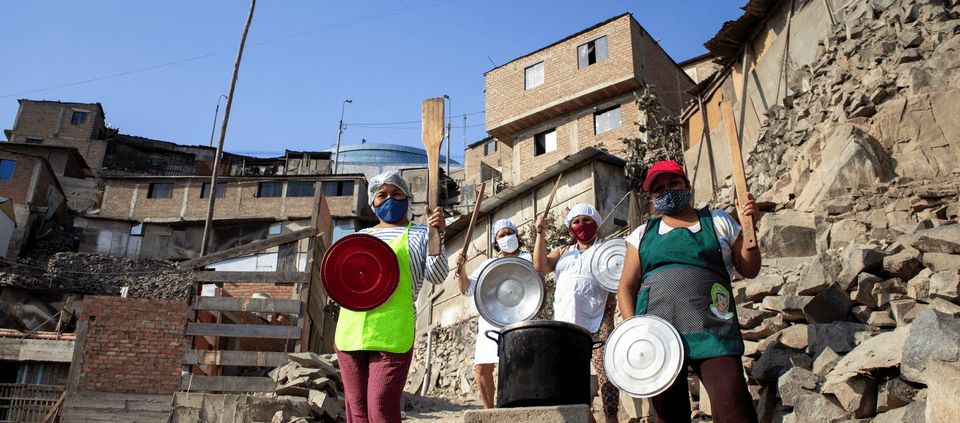 Food insecurity remains a serious challenge in Peru. In 2025, moderate or severe food insecurity affected 30.5% of the population, meaning about three in 10 people had difficulty accessing enough food in quantity or quality, according to Peru’s National Institute of Statistics and Informatics and the Food and Agriculture Organization (FAO) of the United Nations (U.N.). Against this backdrop, women-led community kitchens in Peru known as ollas comunes have become an important safety net for families facing hunger.
How Ollas Comunes Work
Women-led community kitchens in Peru, or ollas comunes, operate as neighborhood food spaces where volunteers organize, cook and distribute low-cost meals. In many cases, women lead this work, turning limited resources into daily meals for families, children, older adults, migrants and other vulnerable groups.
The model expanded during the COVID-19 pandemic, when many Peruvians lost income and struggled to access food. Although many kitchens began as an emergency response, they continue to operate because food insecurity remains high. Their ability to adapt from a short-term crisis response into a lasting source of community support highlights the resilience of local volunteers and the important role ollas comunes continue to play in improving food access. By 2021, there were at least 2,000 operating in Lima.
Food Rescue and WFP Support
Following the rapid expansion of ollas comunes during the COVID-19 pandemic in 2020, the World Food Program (WFP) launched a dedicated support project to strengthen the kitchens and improve food security. In Peru, WFP worked with partners such as Caritas, Banco de Alimentos Peru and local farmers to transport food that otherwise might have gone to waste, including potatoes, celery, strawberries, onions and grapes.
WFP and its partners distributed rescued fresh food to 2,000 ollas comunes in Lima alone, reaching hundreds of thousands of people. Through its ollas comunes project, WFP also distributed more than 8,000 metric tons of food and nonfood items, including kitchen kits, to nearly a quarter of a million people between July 2021 and July 2022.
This support addresses more than hunger. WFP also provided nutrition guidance, kitchen equipment, refrigerators, food containers and training in food safety and hygiene. These investments helped kitchens remain operational after the immediate pandemic emergency, allowing volunteers to continue serving vulnerable families while reducing food waste and improving nutrition.
Challenges Facing Community Kitchens
Peru’s Defensoría del Pueblo, or ombudsman’s office, supervised 991 ollas comunes and 2,616 comedores populares across the country. Together, these two types of food spaces served more than 200,000 users nationally — a separate, more targeted count than WFP’s broader Lima-area distribution figures above, since the two organizations tracked different programs and regions. Within that oversight sample, the supervised ollas comunes alone served 65,284 people, most of them older adults, while the comedores populares served 140,350 people, most of them women.
Although significant gaps remain, these findings have prompted renewed calls for stronger municipal investment and oversight, reflecting growing recognition of the kitchens’ importance in Peru’s food security system. The Defensoría del Pueblo found that many kitchens need stronger support from local governments, better food distribution and more oversight of public resources. About 72.5% of kitchens reported receiving no municipal support to improve equipment. The report called for action to improve the conditions of ollas comunes and comedores populares, noting their role in protecting the right to food and addressing hunger, anemia, malnutrition and other poverty-related challenges.
These findings show that community kitchens do not offer a complete solution on their own. They rely on volunteers, municipal support, equipment and steady access to food. Without these resources, women-led kitchens may struggle to meet the needs of the communities they serve.
A New Direct Purchasing Model
Peru’s Ministry of Development and Social Inclusion has introduced a pilot program that could give community kitchen members more control over food access. The ministry announced that more than 125,000 members of ollas comunes and comedores populares in metropolitan Lima will be able to purchase food directly, without intermediaries, to avoid overpricing.
The ministry said women members requested the initiative because they wanted a system that would allow them to better manage food purchases. This direct purchasing model could help kitchens stretch limited funds while reducing the risk that inflated prices will cut into meal supplies.
Looking Ahead
Women-led community kitchens in Peru show how local action can help reduce hunger during periods of crisis and economic hardship. By combining volunteer leadership, food rescue, government support and direct purchasing, ollas comunes offer one approach to improving food access in vulnerable communities.
However, their long-term success depends on continued investment. Stronger municipal support, reliable food distribution, better infrastructure and more accountability can help these kitchens remain a sustainable tool in Peru’s fight against hunger. As food insecurity continues to affect millions of Peruvians, ollas comunes show how women-led community organizing can help protect families and strengthen local resilience.
– Ben Jordan
Ben is based in Saint Louis, MO, USA and focuses on Technology and Solutions for The Borgen Project.
Photo: Wikimedia Commons
