What is the NCBA?
One of the most intriguing business ideas is that of a co-op. It can be like a corporation, only it’s governing body is chosen democratically by it’s members, not shareholders. From a business standpoint, the co-op isn’t profit motivated but exists to serve it’s members. When a surplus is realized by the co-op, the excess is divided among members by individual use of the organization and not by how much was initially invested. Members can be essentially anyone, from sole proprietors to nonprofit organizations.
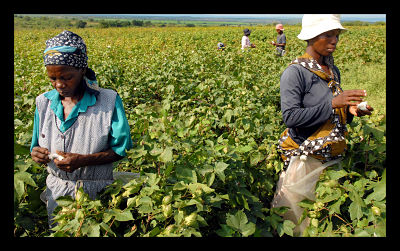
Among the many benefits of co-op membership, knowledge may be the most important. Nowhere is this more evident than in the developing world, specifically in the nations of Senegal, Zambia, and Mozambique. In their efforts to alleviate poverty, increase income and food production, and provide a higher standard of living for their people, farmers there have partnered with the National Cooperative Business Association (NCBA) in the United States.
Initially founded in 1916, the NCBA has existed as the soundboard for all co-ops in the U.S., touting the benefits and successes of this business framework. Known today as NCBA CLUSA International, their focus also includes advocacy, cross-sector support and education, and co-op community advancement in a total of 15 different nations.
NCBA CLUSA International maintains a strong presence in Senegal and Zambia through the USAID’s “Farmer-to-Farmer” initiative. The co-op organization calls on it’s extensive volunteer base, culling professionals from the agricultural, development, technological, and even financial fields. However, most volunteers for the program are American farmers and agribusiness people who are directly involved with teaching and sharing techniques with farmers in Zambia and Senegal. Everything from business development, soil fertility, and crop processing is all covered. NCBA CLUSA International provides transportation, logistical support, and translators for its volunteers.
Recently, USAID acknowledged the NCBA’s efforts in Niger. Backed by USAID funding, the group’s volunteers have been working with farmers and people in the nation for several years teaching them the best way to grow highly nutritious moringa. Areas of southwest Niger have transformed from drought-stricken to fields of lush vegetation suited for the climate.
In Mozambique, the NCBA has been granted a contract worth $14 million by Norwegian Ministry of Foreign Affairs. In a press release dated in December 2012, the NCBA reports their mission is to:
“…boost agriculture production by 20% and increase household resilience by 30%, helping these small farmers progress from the subsistence level, to income generation… This program will train 54,000 farmers and 50 emerging commercial farmers in proven Conservation Agriculture (CA) techniques and nutrition, benefitting more than 140,000 individuals. The practice of Conservation Agriculture is a method of farming that, when adhered to, achieves high and sustained production levels, while concurrently conserving the environment.”
An empowering facet of the program is that half of those 54,000 farmers are women. This move no doubt increases community capacity and women’s efficacy as they are literally equal partners.
The NCBA is living proof that the co-op model can be successful in myriad ways and is especially helpful in the developing world. By connecting impoverished farmers and communities with learned volunteers, they’re fostering inclusive, sustainable and economically robust communities.
– David Smith
Sources: NCBA, USAID Frontlines
Photo: TechnoServe
