Education system in Cameroon
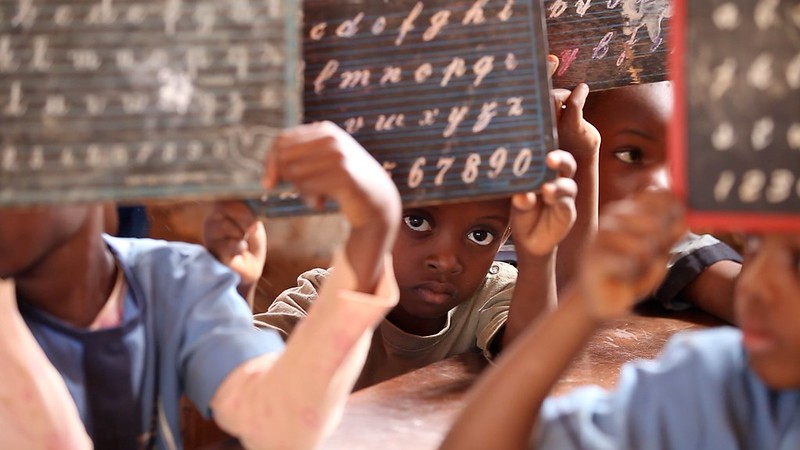 Cameroon is a lower-middle-income country that showcases Africa’s rich geographic and cultural diversity. Its population of around 27 million people inhabits tropical rain forests, vast deserts as well as its volcanic highlands and bustling big cities.
It is home not only to a diverse geographic landscape but also a complex cultural landscape that has been deeply scarred by its colonial past. Since 2017, the English-speaking minority has been waging a war against the Francophone-dominated government. The U.N. estimates that more than half of the population in the Anglophone regions are in need of humanitarian support while about 600,000 children are not able to access standard education because of the conflict.
The spread of COVID-19 across Cameroon brought with it many challenges and forced the entire population to change their habits. With the disruption to normal routines and face-to-face activities, people have become more aware of the importance of technology and how much Cameroon’s education system can benefit from these alternative solutions.
Existing Problems
Cameroon has had a complicated past; following the end of World War I, the League of Nations divided what was then German Kamerun into two new sections, with France ruling most of modern Cameroon and the Western Fifth (today’s Northwest and Southwest regions) under British rule. Tensions between Anglophone and Francophone regions have been consistent since the beginning and education has often been a key battleground in the conflict. In 2019, UNICEF reported that 855,000 children in the Northwest and Southwest regions were out of school.
These social fractures inherited from years of colonial rule have made it hard to create a coordinated countrywide curriculum, with the education system in Cameroon divided between the Anglophone and Francophone systems.
The government does not exactly consider education to be a priority. In 2020, Cameroon spent just 3.2% of its GDP on education, well below the world average of 4.5%.
Attacks that the terrorist organization Boko Haram led mainly targeted schools in northern Cameroon, and involved the killing and kidnapping of thousands of school children and the closure of hundreds of schools.
There is a marked gap between the education of the rural and urban population, boys and girls and rich and poor. The COVID-19 pandemic only exacerbated this and forced schools to close and resort to other alternatives.
The Impact of COVID-19
As in the rest of the world, the pandemic has had damaging effects on Cameroon’s education system. This has led to worries that more people could fall into poverty, and this could further intensify the gap between rich and poor.
On the bright side, the pandemic has also been a chance for Cameroon to demonstrate its desire for technological advancements. The closure of all schools and universities in March 2020 forced students to continue their learning from home. For those with a stable internet connection and television, access to learning resources was more simple; the government transformed the national television channel, CRTV, into a classroom during certain time slots in the day and students were able to send SMS messages (in theory) for any queries they had. Unfortunately, many people, especially those in rural areas were not able to access these classes. This is because around 35% of Cameroonians do not have access to electricity, highlighting the need for other learning alternatives. In light of this, Cameroon adopted a software program known as the Avicenna Virtual Campus Network (AVCN), showing its eagerness to embrace technological solutions.
Avicenna Virtual Campus Network
In July 2019, as part of the response to the Anglophone conflict in the North West and South West regions, the United Nations Educational, Scientific and Cultural Organization (UNESCO), with the support of Education Cannot Wait, implemented an Emergency Response Plan to provide education to all children in the area. Only 20% of formal schools have been able to remain open since the beginning of the conflict. This suggests that home learning initiatives such as the Avicenna Platform have been essential in the continuation of education in Cameroon.
The aim of AVCN is to support the promotion of a more equitable education system in Cameroon with its online and offline learning platform (its Mobile Virtual Avicenna Classroom works without electricity or the Internet). The system comprises a Nano-server, a Nano-projector and solar tablets that allows students to learn even in the most isolated regions of the country. The closure of all schools across the country in 2020 meant that the Avicenna Platform became even more relevant, reaching over 21,000 children who would have otherwise struggled to continue learning.
Looking Ahead
The pandemic has highlighted the importance of developing digital solutions for the education system in Cameroon. Although there is still a lot of work necessary, the rate of digital penetration since the outbreak of COVID-19 has increased by 10%. The ongoing conflict, which has claimed the lives of more than 4,000 civilians and displaced millions of people is now the main problem facing further advancements in the education system. Focusing efforts on technological advancements could be a key part of ensuring a more positive future for the country’s education system.
– Almaz Nerurkar
Photo: Flickr
