Tackling Child Labor And Early Marriage In Yemen
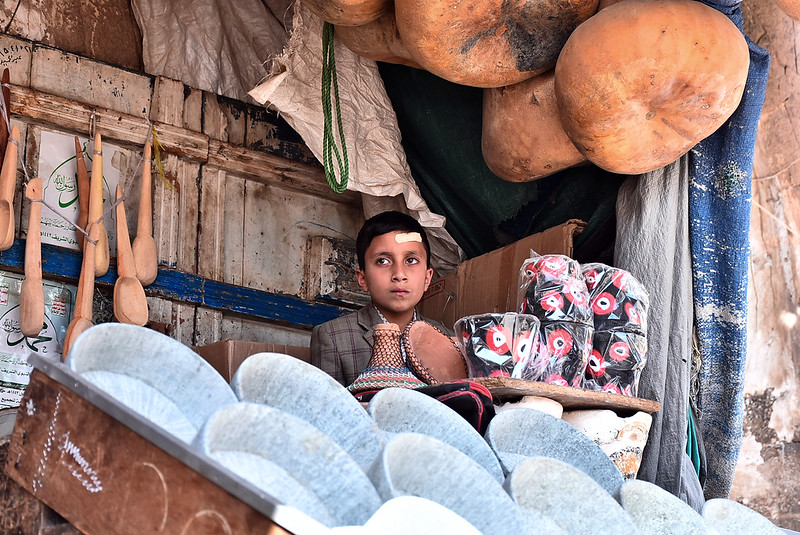 The United Nations International Children’s Emergency Fund (UNICEF) has released a statement on child protection in Yemen. It highlights child labor and early marriage as pervasive issues in the country. A study indicates that, out of Yemen’s 7.7 million children aged 5 to 17, 17% are subject to child labor, with the majority of them working without pay. As of 2019, 4 million child brides reside in Yemen, with families marrying off 1.4 million of them before they reach the age of 15.
The Government’s Unfulfilled Commitment
In 2021, Yemen achieved little progress in fighting child labor despite a training initiative by the International Labor Organization. The government struggled to enforce regulations, with state forces recruiting child soldiers and marginalized children facing increased vulnerability due to school discrimination.
The divided Yemeni government, with Northern Yemen resisting child protection and gender-based violence projects, poses challenges to combating gender-based violence in schools and fully realizing the Global Program’s objectives. In July 2014, the Yemeni government signed a charter at the London Girl Summit, committing to end child marriage by 2020. Despite this commitment, there is still no minimum age requirement for marriage in the country. And with the government’s focus on other humanitarian crises and the ongoing war, child marriage remains a pressing concern.
Impacts on Children
Poverty-stricken families struggle to survive in a country where necessities like food, water and health care are scarce. In the face of such adversity, many parents feel they have no choice but to send their children to work, often in dangerous and exploitative conditions. The Bureau of International Labor Affairs released a report indicating that approximately 13.6% of the working population are children from the ages 5 to 13.
Additionally, child marriage serves as a coping strategy for parents seeking relief from caregiving costs or better protection for their daughters. Amid the conflict, women and girls face worsening conditions, with broken social institutions and 1.83 million children, including 830,000 girls, losing school access. Lacking education and support, child brides suffer increased vulnerability.
UNICEF’s Initiatives to Address Child Labor and Early Marriage in Yemen
UNICEF strengthens child protection systems by supporting community-based committees and case management systems for addressing child protection in Yemen. It contributes to data collection and analysis to guide policy decisions and employs communication strategies to encourage positive social norms and behavior change regarding child marriage.
UNICEF regularly publishes monthly reports to track its humanitarian response in Yemen. The latest report, released on Dec. 31, 2022, shows that UNICEF’s Yemen Humanitarian Action for Children (HAC) aligned with the 2021 Yemen Humanitarian Response Plan (YHRP). The organization reported that it requires $484.4 million to deliver aid in Yemen in 2023. Factors such as the COVID-19 pandemic, economic instability, rising oil prices and global logistical costs have contributed to increased operational expenses in the country.
UNICEF persistently educates 5.5 million children and community members about the dangers of mines, unexploded ordnances and explosive remnants of war. Furthermore, it has provided psychosocial support to over 410,000 children and caregivers in conflict-affected regions and has helped 4.1 million children and women benefit from gender-based violence risk reduction, prevention or response measures. UNICEF and UNFPA jointly tackle child marriage in Yemen through the Global Program, focusing on key drivers and empowering girls with education and life skills.
The Global Program has provided education support to vulnerable girls in conflict-affected regions. Through the Global Partnership for Education, 1,220 vulnerable girls benefitted from enrollment or reintegration into formal education systems. UNICEF also advocates for legal frameworks and policies to protect children from early marriage.
Funding Challenges and International Support
According to the U.N. Office for the Coordination of Humanitarian Affairs (OCHA), most international donations to Yemen are directed towards food security. In fact, the Financial Tracking Service report revealed that 43.7% of the $2.77 billion from other countries to Yemen was allocated for food security. However, child protection receives only $5.55 million and education gets $44.31 million, leaving issues like child labor and early marriage underfunded.
Nonetheless, UNICEF actively promotes support from other countries to aid Yemen. Kuwait, for example, recently signed a $2 million agreement with the United Nations High Commissioner for Refugees (UNHCR) to support internally displaced people in Yemen.
Additionally, 53 international organizations (IOs) and non-governmental organizations (NGOs) are working to help the country. Among these organizations are Save the Children, Islamic Relief and the Yemeni League for Development Foundation (YLDF).
Looking Ahead
In the face of immense challenges, UNICEF is actively working to address child labor and early marriage in Yemen. Its initiatives include strengthening child protection systems, providing education and psychosocial support to children and caregivers and advocating for legal frameworks to protect children. While funding for child protection remains a challenge, UNICEF continues to advocate for international support and collaboration with other organizations to improve the situation in Yemen. Despite the obstacles, ongoing efforts offer hope for a future that is free of child labor and early marriage in Yemen.
– Tanya Hamad
Photo: Flickr
