Addressing Income Inequality in Uganda
 In the past 30 years, Uganda has worked toward economic growth, reforms and poverty reduction. However, the country remains a low-income country and income inequality in Uganda is an issue. In 2019, Uganda scored almost 43 on the Gini income inequality index, where zero reflects total equality and 100 reflects total inequality. According to a 2022 article by Professor John Ddumba-Ssentamu of Makerere University, “Uganda’s inequality has been aggravated by uneven land distribution and the complex land tenure system.” Additionally, “household sizes, disparities in access to education, inequalities in employment opportunities, urbanization and generational poverty,” stand as barriers to equitable access and resource distribution.
Economic Growth in Uganda
Since 2002, Uganda’s economy has been expanding by a minimum of 6% yearly and real GDP per capita has tripled since 1990. In 1992, almost 56% of the population lived below the poverty line set by the nation. However, by 2014, it had decreased to 19.7%. Despite this, the disparity between the affluent and the impoverished has grown significantly since the 1990s. Uganda has experienced “growth with exclusion,” where only a small group of people have gained from the economic expansion.
Income Inequality in Uganda
The wealthiest 10% of the population receives 35.7% of the national income; the poorest 10% earns a meager 2.5% and the poorest 20% just 5.8%. Income inequality in Uganda is not only a problem for the present but also affects future generations. Wealthy families have access to better opportunities, perpetuating the cycle of poverty. Rural areas are worse off, with poverty rates nearly three times higher than urban areas. Poverty is higher in the northern and northeastern regions that have suffered from civil conflicts.
Reasons for the Income Inequality in Uganda
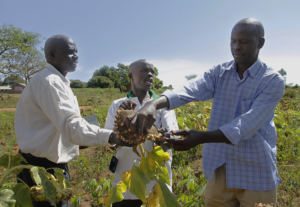
According to the International Trade Administration, agriculture is the mainstay of the Ugandan economy, accounting for a quarter of GDP in FY 2021/22 and 33% of export earnings. About 70% of Uganda’s labor force population is employed in agriculture, however, most farmers are smallholders who own five acres of land or fewer and women often do not have rights to this land. Although women account for more than 70% of the agricultural workforce, they only own about 7% of the land, Oxfam highlights.
The quality of education in Uganda is also a notable reason. While some urban schools boast state-of-the-art facilities, rural schools lack basic infrastructure and teachers are often absent. The poor quality of public schools means that education can no longer be a means of escaping poverty and many young people struggle to find work.
According to Oxfam, “Uganda’s tax system is exploitative and unfair.” Foreign investors receive preferential treatment while local manufacturers do not get tax breaks. The tax system imposes an 18% flat rate for VAT, which disproportionately affects those living in poverty. The government’s high level of domestic borrowing has also created a considerable fiscal deficit, leading to higher interest rates and inflation.
Hope for Reducing Income Inequality in Uganda
Uganda has in place a strategy to meet Sustainable Development Goal 10 of eliminating inequality. Uganda’s Vision 2040 strategy places at its core “balanced development through ensuring that all regions of the country benefit from the growth of the national economy.” The 2020 Voluntary National Review is Uganda’s Second report to the High-Level Political Forum and highlights the country’s progress in meeting the SDGs through frameworks and strategies. In the report, in order to progress on SDG 10, the Government of Uganda highlights an interest to institute initiatives that “support social protection” and looks to make investments in “regional development to accelerate equitable, regional economic growth and development.”
The Ugandan Government also expresses an intention to pass legislation that “supports women’s ownership of critical production factors such as land and also access to technologies that improve agricultural productivity and reduce labor-intensive work.” Furthermore, the government shall “focus on policies that promote inclusive growth and create jobs for the lower segments of society,” the report indicates. By prioritizing policies and programs that promote economic growth and reduce inequality, Uganda has the potential to create a more just and equitable society for all its citizens.
– Amber Kim
Photo: Flickr
