4 Facts About Women’s Rights in Côte d’Ivoire
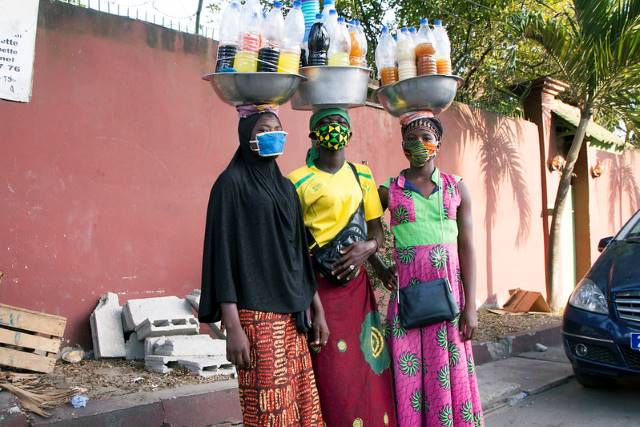 Women in Côte d’Ivoire have grappled with gender discriminatory practices for years. Examples include political exclusion, limited access to land and marginalization from high-paying jobs. According to the National Statistics Institute, 75% of rural Ivorian women live below the poverty line. Without access to basic social services, the chances of reaching economic independence are low for these women. Gender constraints highly limit women’s rights in Côte d’Ivoire.
4 Facts About Women’s Rights in Côte d’Ivoire
- Land Rights: The primary source of wealth in Côte d’Ivoire is land as the economy mainly depends on agriculture. About 66% of the land is used for agriculture and 43% of women participate in the agricultural workforce. However, women often lack rights to land due to customary laws that favor males, depriving women of economic empowerment. A lack of access to land also impacts women’s access to credit services that would also help women economically.
- Unpaid Care Work: In many societies, women shoulder the burden of household chores and caregiving duties. This is also the case in Côte d’Ivoire. According to U.N. Women, “women carry out at least two and a half times more unpaid household and care work than men.” As a consequence, women have less time to participate in paid work and engage in educational opportunities that would help them rise out of poverty.
- Fertility Rates: Côte d’Ivoire’s fertility rate is high. In 2019, it averaged 4.6 births per woman. High fertility rates increase health risks for children and their mothers. It also lessens human capital investment, decelerates economic growth and aggravates environmental threats. High fertility rates correlate with inadequate access to family planning methods, low educational attainment and low levels of empowerment. Studies show that, worldwide, more “empowered women desire significantly fewer children” in contrast to less empowered women.
- Politics and Education: Women lack a voice within the public, social and political domains. The male-centered culture of Ivorian society does not accept the leadership of women in the public arena. In February 2021, just 11% of Ivorian women held positions as members of parliament. Despite the presence of women in Côte d’Ivoire’s government, women’s electoral weight is limited by minimal female representation so women are unable to hold true decisional power in politics. Moreover, in 2018, 40.5% of women were literate compared to 53.6% of men, putting women at a clear disadvantage.
Upholding Women’s Rights
The Organization of Active Women in Ivory Coast (OFACI) is a non-governmental organization founded in 1999 that focuses on fighting for women’s rights in Côte d’Ivoire. Its goals include increasing the literacy of girls and encouraging women’s leadership in social, political and economic environments. By creating programs to educate and support women, OFACI hopes to eliminate gender-based violence and discrimination against women. OFACI has 10 observation locations across the country that monitor and report on women’s rights in Côte d’Ivoire on a monthly basis. The organization has recently been pushing for, at minimum, a 30% representation of women in politics.
Recent progress in the country includes a marriage bill that was approved by the Council of Ministers of Côte d’Ivoire in 2019. Its main goal is to legislate equality between men and women in marriage through specific provisions. These solutions include new rules for the nullity of marriage, inheritance rights and marital property distribution. Another aim of the bill is to increase the age of legal marriage. This legislative progress provides hope for women’s rights in Côte d’Ivoire.
UN Women Shea Butter Program
Another example of an innovative program that targets women’s empowerment is a climate-smart agricultural program launched by U.N. Women in Côte d’Ivoire in 2017. The program, funded by the Government of Japan, seeks to empower rural women in the shea butter production sector. The traditional method used to produce shea butter requires intense labor. The resulting product fails to meet international quality standards so the women who work in this field struggle to make high profits. Since October 2017, U.N. Women trained 300 women on improved production practices and upgraded equipment in manufacturing facilities to meet international standards. The program also assisted women in the shea butter industry with financing and market access.
Despite the discrimination against women in Côte d’Ivoire, change is coming. NGOs and the government are stepping up to ensure greater equality among women and men and uphold the rights of women in the country.
– Virginia Arena
Photo: Flickr
