• Link to X
  • Link to Facebook
  • Link to Instagram
  • Link to TikTok
  • Link to Youtube
  • About
    • About Us
      • President
      • Board of Directors
      • Board of Advisors
      • Financials
      • Our Methodology
      • Success Tracker
      • Contact
  • Act Now
    • 30 Ways to Help
      • Email Congress
      • Call Congress
      • Volunteer
      • Courses & Certificates
      • Be a Donor
    • Internships
      • In-Office Internships
      • Remote Internships
    • Legislation
      • Politics 101
  • The Blog
  • The Podcast
  • Magazine
  • Donate
  • Click to open the search input field Click to open the search input field Search
  • Menu Menu
Blog - Latest News
Global Poverty

Self-Sustaining Agriculture for Nigeria?
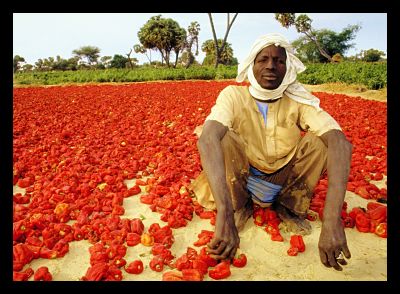
Niger_farmer_man_crop_yield_infrastructure_africa_crops_poverty_international_Aid_government_opt
In a country where 60% of the population are employed as farmers, it is a disheartening fact that Nigeria is not agriculturally self-sustainable. Not only does the country lack the level of food production needed to feed its growing population, but the shortfall is so great that Nigeria is the world’s largest importer of rice, spending $11 billion a year on food importation.

Despite some 100 million farmers, out of a population of 167 million, the majority practice subsistence farming. Less than half of Nigeria’s arable land is currently being used for food production, and some sources claim less than 10% is used optimally. Additionally, many of these farmers still aren’t employing modern methods and tools.

Without government intervention, this is unlikely to change soon. For one, the farming population is aging, despite 70% of Nigeria’s total population being under the age of 30. Youth are moving to the cities rather than remaining in rural areas, and this demographic shift takes a toll on farms as the potential workforce is depleted. Additionally, banks are reluctant to lend money to farmers, as returns on investments are slow. A system of government aid or microcredit may be necessary to allow farmers to update their equipment and buy fertilizer, and so increase their yields.

However, it is a lack of infrastructure in the country that might be the biggest contributor to the constant shortcomings in food production. Roads are often unsuitable for transportation, and water and electricity provision are inconsistent. The lack of suitable roads leads to a huge amount of waste as crops are unable to be transported in a timely manner. According to Nigeria’s Farms Minister, Akinwumi Adesina, 45% of the country’s tomato crop is lost every day, simply because farmers are unable to get them to the market.

The problems in agriculture stems partly from the discovery of oil in Nigeria in the 70s, and the subsequent shift away from farming. But more often it appears to be inefficient methods and insufficient workers. Crops often go unharvested, or yields simply aren’t high enough to provide a surplus.

Nigeria’s president, Goodluck Jonathan, has targeted 2015 to eliminate the need to import rice. With Nigeria’s population quickly swelling, though, it will take more than a simple increase in yields to meet the demand. Infrastructure will need to be improved, and a modernization of the industry must take place.

With the country set to surpass the population of the United States before 2050, this revitalization will be crucial to its future success.

– David Wilson

Sources: The Economist
Photo: IFAD

June 5, 2013
Share this entry
  • Share on Facebook
  • Share on X
  • Share on WhatsApp
  • Share on Pinterest
  • Share on LinkedIn
  • Share on Tumblr
  • Share on Vk
  • Share on Reddit
  • Share by Mail
https://borgenproject.org/wp-content/uploads/borgen-project-logo.svg 0 0 Borgen Project https://borgenproject.org/wp-content/uploads/borgen-project-logo.svg Borgen Project2013-06-05 06:00:552020-06-27 02:53:59Self-Sustaining Agriculture for Nigeria?

Get Smarter

  • Global Poverty 101
  • Global Poverty… The Good News
  • Global Poverty & U.S. Jobs
  • Global Poverty and National Security
  • Innovative Solutions to Poverty
  • Global Poverty & Aid FAQ’s
Search Search

Take Action

  • Call Congress
  • Email Congress
  • Donate
  • 30 Ways to Help
  • Volunteer Ops
  • Internships
  • Courses & Certificates
  • The Podcast
Borgen Project

“The Borgen Project is an incredible nonprofit organization that is addressing poverty and hunger and working towards ending them.”

-The Huffington Post

Inside The Borgen Project

  • Contact
  • About
  • Financials
  • President
  • Board of Directors
  • Board of Advisors

International Links

  • UK Email Parliament
  • UK Donate
  • Canada Email Parliament

Get Smarter

  • Global Poverty 101
  • Global Poverty… The Good News
  • Global Poverty & U.S. Jobs
  • Global Poverty and National Security
  • Innovative Solutions to Poverty
  • Global Poverty & Aid FAQ’s

Ways to Help

  • Call Congress
  • Email Congress
  • Donate
  • 30 Ways to Help
  • Volunteer Ops
  • Internships
  • Courses & Certificates
  • The Podcast
Link to: Italy’s Economy is Taking a Beating Link to: Italy’s Economy is Taking a Beating Italy’s Economy is Taking a Beating Link to: Should the Government Demand Transparency? Link to: Should the Government Demand Transparency? Should the Government Demand Transparency?
Scroll to top Scroll to top Scroll to top