History of the IMF
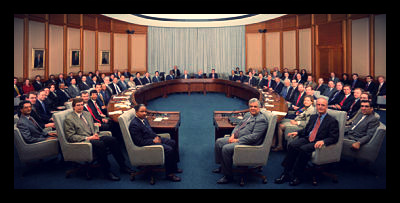
The IMF, or International Monetary Fund, was founded in July of 1944 at the International Monetary and Financial Conference, in New Hampshire. The organization was entered into force in 1945, and the laws were adopted in March of 1946. In the months following the organization’s creation, executive directors and the first managing director, Camille Gutt of Belgium, were elected.
The harsh economic circumstances of the 1930’s and 40’s led the founders of the IMF to plan an institution charged with overseeing the international monetary system in order to prevent self-defeating financial policies. The formation of the IMF would ensure that exchange rate stability was maintained and encourage its member countries to eliminate exchange restrictions that could potentially hinder or complicate trade. In March of 1947, France became the first country to borrow from the IMF.
The IMF: A Cornerstone of the Global Economy
Between 1945 and 1971, member nations of the IMF agreed to keep their exchange rates at a level that could be adjusted only to correct disequilibrium in the balance of payments and only with the IMF’s consent. This system, known as the Bretton Woods system, remained in place until 1971 when the US suspended the convertibility of USD into gold.
After the collapse of the Bretton Woods system, IMF members have been free to choose any form of exchange agreement they wish, other than pegging their currency on gold. Countries are free to allow their currency to float freely, peg it to a different currency, adopt another country’s currency, or other methods. The IMF’s transition to floating exchange rates made it easier for economies to adjust to external shocks.
The IMF has since been redefined by the major global economic crises around the world. Since the mid-1970s, the IMF has helped many of the world’s poorest countries by providing concessional loan programs. These programs came during the oil crisis of the 1970s. The oil crisis forced many countries to borrow from commercial banks, which led to interest rate increases, and subsequently, an international debt crisis. The soaring interest rates caused poorer, developing, and non-oil-producing countries to pay roughly $22 billion dollars between 1978-81.
The financial crisis continued to worsen into 1982, when the IMF coordinated global response, realizing that nobody would benefit if the country after the country failed to repay its debts. This strategy calmed the initial panic; however, it also highlighted the long road needed to eliminate the problem.
After the fall of the Berlin wall in 1989, the organization witnessed its greatest influx of member states since the 1960s. The IMF was essential in assisting countries from the Soviet Bloc transition from central planning to market-driven policies. After several years of intense reform and IMF guidance, most economies had transitioned to market economy status.
In 1997, the Asian financial crisis taught the IMF several important things. First, they would need to pay a great deal more attention to weaknesses in countries’ banking sectors and to the effects those weaknesses had on their macroeconomic stability. The IMF also realized that the institutional prerequisites for successful liberalization of international capital flows were more daunting than they had realized. And finally, the IMF realized that they needed to re-evaluate how fiscal policy should be adjusted in a time of economic crisis.
The global economic crisis of 2008 was preceded by large imbalances in global capital flows. This financial crisis uncovered fragility in advanced markets. In response to the recognition that the IMF would be strained during this financial crisis, the fund lending capacity was tripled to $750 billion. They implemented a variety of lending policies and flexible credit lines to countries with strong economic fundamentals, while also assisting poorer, less developed nations.
The IMF has been and continues to be a quintessentially important monetary cornerstone of the international global economy. The IMF is responsible for many of the world’s most comprehensive and influential economic decisions of the 20th and 21st centuries. Without the IMF the global economy would be a drastically different place.
– Caitlin Zusy
Source IMF
