Traditional Medicine Advances Healthcare in Vietnam
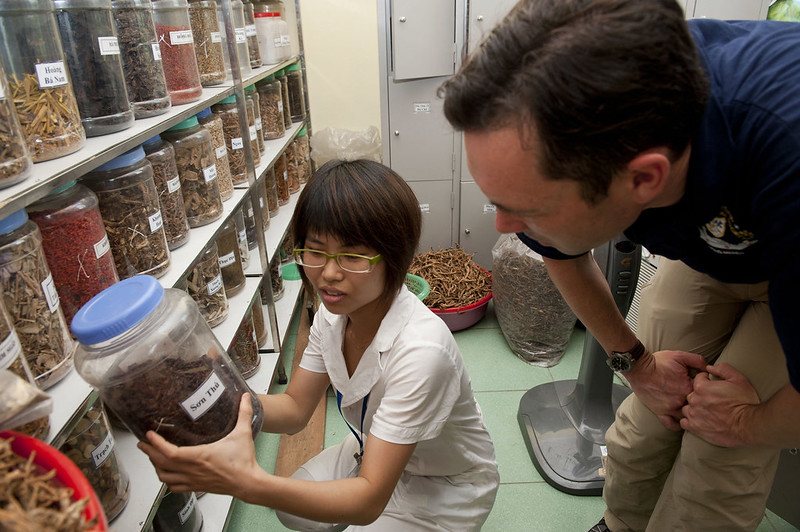 In the fourth century BCE, China became the primary ruler of a northern section of Vietnam. Before this period, northern Vietnam and southern China shared multiple ethnic groups, many of which held traditional healing beliefs. As a result, traditional forms of medicine in Vietnam are very similar to those in China. Shared herbal medicine practices and theoretical frameworks continued to spread when China began its 1,000-year occupation of Vietnam, in 111 BCE. During this time, Vietnam’s medicinal use of plants and China’s theoretical framework around traditional healing merged to create an alternative form of medicine that persists today in healthcare in Vietnam.
Traditional Medicine in the East
Alternative, or traditional, medicine is often overlooked in Western contexts and seen as less effective or taboo. This is because of medical hegemony, or “the dominance of the biomedical model [and] the active suppression of alternatives,” as defined by the International Journal of Complementary & Alternative Medicine. Medical hegemony indicates an underlying power dynamic between the East and the West. While many people in the West believe that Western medicine is best, many others around the world believe that traditional medicine is legitimate. People in Vietnam, China and other countries have used traditional medicine for over 4,000 years. It actually inspired the growth of Western practices, though its treatment methods are now entirely distinct from biomedicine.
Since its origin, traditional medicine has been prescribed by healers and traditional medicine doctors primarily for its preventative properties. Healers commonly use herbal medicines in an oral or topical form to treat developing symptoms of a certain ailment. Traditional healing can also commonly include physical exercise, massage or acupuncture to promote the flow of blood and energy. In addition to the physical effects of treatment, traditional medicine is theorized to have hormonal and energy-balancing properties, like the Chinese concept of yin and yang.
Vietnam’s Healthcare System
While the use of traditional medicine is still common throughout cultures that partake in traditional healing, it is often not used on its own. In contemporary Vietnamese medical culture, individuals seeking care consult both traditional and biomedical practitioners for treatment. The two systems can be complementary: biomedicine aims to physically eradicate an illness, while traditional medicine treats the symptoms and psychosocial harm of the ailment. For example, if a person develops cancer in Vietnam, they might consult a biomedical physician for chemotherapy and a traditional medicine doctor for a remedy that counters the symptomatic effects of chemotherapy.
Gaining a dual perspective from biomedicine and traditional physicians in Vietnam is so common that this practice is reflected in the country’s health insurance system, which makes both kinds of medicine accessible. The payment method for healthcare in Vietnam varies based on the sector in which a person obtains treatment, whether public or private. Treatment in the public sector is covered in full, with an occasional co-pay expense, as public health insurance is compulsory in Vietnam. Private health insurance is paid out of pocket. Both public and private insurance can cover traditional medicine hospital expenses, though the costs for traditional medicine are generally paid privately.
However, when a person is unable to pay for either public or private insurance, they are still able to access traditional forms of medicine. In Hanoi, a major city in Vietnam, there is a full street of vendors that sell traditional medicinal herbs. These vendors can even help to fill prescriptions from hospitals at a reduced price, making traditional medicine more accessible to the public.
Improving Public and Personal Health
The accessibility of traditional medicine with and without health insurance fills gaps in healthcare in Vietnam, making the population healthier overall. In addition, the Vietnamese prioritize preventative medicine because the population is familiar with traditional health values. With ready access to health resources, along with a generalized understanding of the values of self-care, healthcare in Vietnam excels.
– Lilia Wilson
Photo: Flickr
