10 Facts About Sanitation in Cambodia
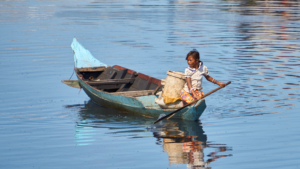
Despite experiencing robust economic growth in recent years, GDP per capita in Cambodia remains low. While urban Cambodians are now able to enjoy increased sanitation services and access to clean water, the majority of the population resides in rural areas where the living conditions are sub-standard. Below are the top 10 facts about sanitation in Cambodia.
10 Facts About Sanitation in Cambodia
- Access to Clean Water and Sanitation: Approximately 50 percent of the population has access to improved sanitation and basic water supply, but only a quarter has safely managed water. More than 2 million people, or about 13 percent of the population, are still living without clean water and 6 million do not have access to safe sanitation.
- Increased Access to Improved Sanitation: The total number of people with access to improved facilities increased from 3 percent in 1990 to 42 percent in 2015. Cambodia has eradicated open defecation in urban areas and 88 percent of urban Cambodians have access to improved facilities. The progress is even remarkable among the poorest urban households with 82 percent now having access to improved sanitation, up from 0 percent in 1990.
- Open Defecation: Cambodia has the highest rate of open defecation in the region with 80 percent of the poorest rural Cambodians defecating in the open. This unsafe practice contaminates the land and water sources, exposing the population to dangerous waterborne infectious diseases and causing preventable deaths. Cambodia is working towards its national target of eliminating open defecation by 2025.
- Disparities Between Urban and Rural Areas: Forty percent of Cambodians in rural areas do not have access to hand-washing facilities compared to only 12 percent of the urban population. Almost 90 percent of the urban population has access to improved latrines while only 40 percent of the people living in rural areas do.
- Economic Costs: Lack of sanitation costs Cambodia up to $448 million annually, which is equivalent to 7.2 percent of the nation’s GDP. Health-related losses are some of the largest contributors to this economic impact, which account for 42 percent of the impact, or $187 million. Costs of accessing cleaner water, welfare and time losses and tourism loss due to poor sanitation also contribute to the high economic impact.
- Asian Development Bank (ADB): To support financing Cambodia’s goal of providing universal access to improved water supply and sanitation services by 2025, the ADB has approved $49 million in funding. Since 2005, more than 1 million people in Tonle Sap Lake have received benefits from ADB-supported water supply and sanitation services projects. The new project will benefit more than 400,000 people in at least 400 Cambodian villages.
- Plan International Cambodia: Since 2006, the program by Plan International has helped to promote the adoption of clean water consumption, hygiene and sanitation practice in hundreds of Cambodian villages. Using the community-led total sanitation approach, the program has helped 750 villages achieve the open defecation free status, as well as construct and install 130 wells, 65 water purifying systems and 700 sanitation facilities at schools.
- Latrine Access: Cambodia is making steady progress in increasing latrine access in the population, doubling the coverage rate in rural households from 23 to 46 percent in five years. Production costs have plunged, making latrines accessible and affordable to an increasing proportion of the population. The director of the Department of Rural Health Care estimates that 80 percent of Cambodians can now afford latrines.
- Cambodia Rural Sanitation: iDE, or previously International Development Enterprises, has announced a $10 million Development Impact Bond (DIB) to support Cambodia’s sanitation initiatives in partnership with USAID and the Stone Family Foundation. It is the world’s first DIB developed for the WASH sector, aiming to eradicate open defecation in 1,600 villages in six provinces by 2023. The impact bond will support iDE’s Sanitation Marketing Scale-up Program, which delivers affordable latrines to 10s of thousands of households annually and has successfully increased sanitation coverage from 29 percent in 2009 to 67 percent in 2018.
- Sanitation Marketing: Traditional programs focusing on education may be successful in raising awareness, but do not always translate to purchases of hygienic toilets. Sanitation Marketing is a market-based approach that aims to increase both the capacity to supply and the demand for sanitation by making owning a toilet more appealing and desirable for families. iDE and WaterSHED implemented this new approach and focused on the rural Cambodian areas, and both have been successful in enabling the sale of more than 260,000 toilets and increasing improved sanitation coverage in Cambodia’s rural communities considerably.
These 10 facts about sanitation in Cambodia give a brief overview of the challenges and progress the country is making regarding the WASH sector. Cambodia is making improving the quality of water and sanitation a priority, which not only ensures the basic rights of people and protects human dignity but also indirectly and directly benefits Cambodia’s socio-economic development. Despite facing many challenges, with support from different international and local NGOs, the government of Cambodia has committed itself to the achievement of its goal of providing universal access to clean water and sanitation services by 2025.
– Minh-Ha La
Photo: Flickr
