Five Reasons to Care About Ending Energy Poverty
 Large portions of the developing world do not have access to electricity. Instead, they have to rely on energy sources that are inefficient, toxic and expensive. Financing universal energy access is urgent. Ending energy poverty is therefore in everyone’s best interest.
Here Are Five Reasons to Care About Ending Energy Poverty:
- Energy poverty is one of the developing world’s greatest struggles.
Approximately one billion people around the world live in energy poverty. An additional one billion people have unreliable access to electricity. Of those living without electricity, 84 percent live in rural areas where resources are scarce. Nearly all individuals suffering from energy poverty, which is over 95 percent, live in sub-Saharan Africa or South Asia. In fact, only 14 percent of people living in rural sub-Saharan Africa have access to electricity. - Energy poverty causes serious health problems.
Much of the developing world lives in energy poverty. Billions of individuals each day are ingesting dangerous amounts of toxic chemicals from their cooking appliances. For instance, biomass-fueled stoves release pollutants in the air that can have serious health consequences. Women and children are the most exposed to these harmful pollutants. If the developed world provided energy access to all, they would be able to lower the premature death toll by 1.8 million people per year. - The burden of energy poverty falls disproportionately on women.
Currently, many women in the developing world rely on biomass-fueled stoves in order to cook their meals. As a result, these women spend, on average, 1.4 hours each day collecting firewood and then several more hours inefficiently cooking on their biomass stoves. Due to the amount of effort it takes to simply cook a meal, many women do not have the time to go to school or obtain a job to become financially independent. In that sense, energy poverty fosters gender inequality. If the developed world invested in universal energy access so that impoverished women could use efficient and cost-effective cooking appliances, women would have significantly more time and money to invest in their futures. - Renewable energy can end energy poverty.
The price of renewable energy continues to decrease, making renewable energy an optimal investment from both a financial and sustainable perspective. Currently, much of the developing world relies on kerosene and candles. This is because these energy sources do not require installation costs. However, kerosene and candles are not cost-effective, long-term. In fact, they are quite expensive. If the developed world invested in the installation costs for the developing world, more people have access to electricity. Furthermore, people would pay less on energy than they currently do. Thus, financing renewable energy projects is a worthwhile investment because renewable energy reduces costs in the long-term. As a result, it creates opportunities for economic growth in the future. - Ending energy poverty can lead to job growth.
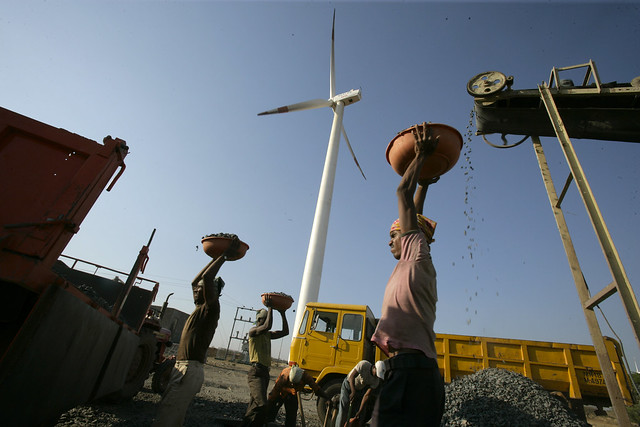
Financing renewable energy development would provide a new market in the developing world that would provide many new jobs for workers with undeveloped skills. These jobs would provide not only steady incomes and safe working conditions but also skill-building opportunities. India, for example, is working toward creating 330,000 jobs in the renewable energy market by 2022. India is doing this to provide electricity and jobs to its poor, rural communities while simultaneously combating climate change. By promoting job growth through the renewable energy market, the world can achieve its goal of economic and environmental sustainability. Furthermore, the sustainable economic development of the developing world would promote the global economy, serving everyone.
Looking Ahead
Although the UN has pledged to provide universal energy access by 2030, the current initiatives the UN has in place to promote this goal is insufficient. In order to achieve its goal of ending energy poverty, the UN would have to invest a total of $52 billion per year. The UN has failed to match even half of this goal in a given year. The importance of financing this mission, however, is essential for the long-term benefits of renewable energy projects in the developing world. By investing in universal energy access through global renewable energy development, women’s rights, world health, clean energy and economic development can all be better promoted. All of this can create a more sustainable world.
– Ariana Howard
Photo: Flickr
