• Link to X
  • Link to Facebook
  • Link to Instagram
  • Link to TikTok
  • Link to Youtube
  • About
    • About Us
      • President
      • Board of Directors
      • Board of Advisors
      • Financials
      • Our Methodology
      • Success Tracker
      • Contact
  • Act Now
    • 30 Ways to Help
      • Email Congress
      • Call Congress
      • Volunteer
      • Courses & Certificates
      • Be a Donor
    • Internships
      • In-Office Internships
      • Remote Internships
    • Legislation
      • Politics 101
  • The Blog
  • The Podcast
  • Magazine
  • Donate
  • Click to open the search input field Click to open the search input field Search
  • Menu Menu
Blog - Latest News
Food Security

Knowledge is Power: Arab Spatial and Food Security in the Middle East
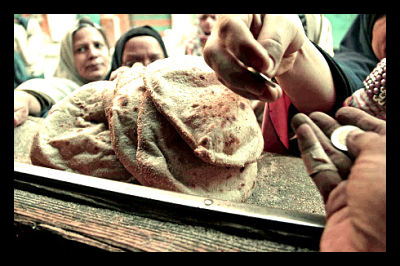
    Arab spatial
    A new tracking tool to measure levels of food security in the Middle East was launched in February. International Food Policy Research Institute (IFPRI) created the tool, known as Arab Spatial, with support from the International Fund for Agricultural Development (IFAD) and the Consultative Group on International Agricultural Research (CGIAR).

    The Middle East has long struggled with food security, and researchers, officials, and activists have had a difficult time addressing the problem due to a lack of information. Now, humanitarian aid workers and policymakers working to address food security issues in the region can turn to Arab Spatial for the most up-to-date information on malnutrition, rainfall, crop yields, and much more.

    Recent political upheaval has amplified food insecurity in the region. Many Middle Eastern countries depend on foreign imports of staples such as wheat flour. Political and social turmoil has disrupted commerce and economies, leading to lost jobs and even greater struggles for everyday people to put enough food on the table. Statistics on poverty in the Middle East are infrequent and often inaccurate; only about half of the countries provide public access to the numbers.

    But Arab Spatial will contribute to more open communication about how best to meet basic human needs in one of the least stable areas of the globe. Perrhian al-Riffai, a senior research analyst with IFPRI, said of Arab Spatial, “High quality and freely accessible knowledge is power, especially for evidence-based research for effective and efficient policy design and implementation throughout the Arab world.”

    Arab Spatial measures food security at the national, regional, and local level. More than 150 food security indicators, including information related to poverty, malnutrition, climate, crop production and prices, disease, and trade, can be used to create maps and data. This valuable information should give governments, NGOs, and non-profit organizations working to end food insecurity in the region more power to do so.

    – Kat Henrichs

    Source: IRN Middle East
    Photo: IRN

March 11, 2013
Share this entry
  • Share on Facebook
  • Share on X
  • Share on WhatsApp
  • Share on Pinterest
  • Share on LinkedIn
  • Share on Tumblr
  • Share on Vk
  • Share on Reddit
  • Share by Mail
https://borgenproject.org/wp-content/uploads/borgen-project-logo.svg 0 0 Borgen Project https://borgenproject.org/wp-content/uploads/borgen-project-logo.svg Borgen Project2013-03-11 13:39:022020-04-24 02:36:02Knowledge is Power: Arab Spatial and Food Security in the Middle East

Get Smarter

  • Global Poverty 101
  • Global Poverty… The Good News
  • Global Poverty & U.S. Jobs
  • Global Poverty and National Security
  • Innovative Solutions to Poverty
  • Global Poverty & Aid FAQ’s
Search Search

Take Action

  • Call Congress
  • Email Congress
  • Donate
  • 30 Ways to Help
  • Volunteer Ops
  • Internships
  • Courses & Certificates
  • The Podcast
Borgen Project

“The Borgen Project is an incredible nonprofit organization that is addressing poverty and hunger and working towards ending them.”

-The Huffington Post

Inside The Borgen Project

  • Contact
  • About
  • Financials
  • President
  • Board of Directors
  • Board of Advisors

International Links

  • UK Email Parliament
  • UK Donate
  • Canada Email Parliament

Get Smarter

  • Global Poverty 101
  • Global Poverty… The Good News
  • Global Poverty & U.S. Jobs
  • Global Poverty and National Security
  • Innovative Solutions to Poverty
  • Global Poverty & Aid FAQ’s

Ways to Help

  • Call Congress
  • Email Congress
  • Donate
  • 30 Ways to Help
  • Volunteer Ops
  • Internships
  • Courses & Certificates
  • The Podcast
Link to: Women in Zimbabwe Demand Answers Link to: Women in Zimbabwe Demand Answers Women in Zimbabwe Demand Answers Link to: Indonesia Seeks to End Shackling of Mentally Ill Link to: Indonesia Seeks to End Shackling of Mentally Ill Indonesia Seeks to End Shackling of Mentally Ill
Scroll to top Scroll to top Scroll to top