The Parliamentary System Versus the Presidential System
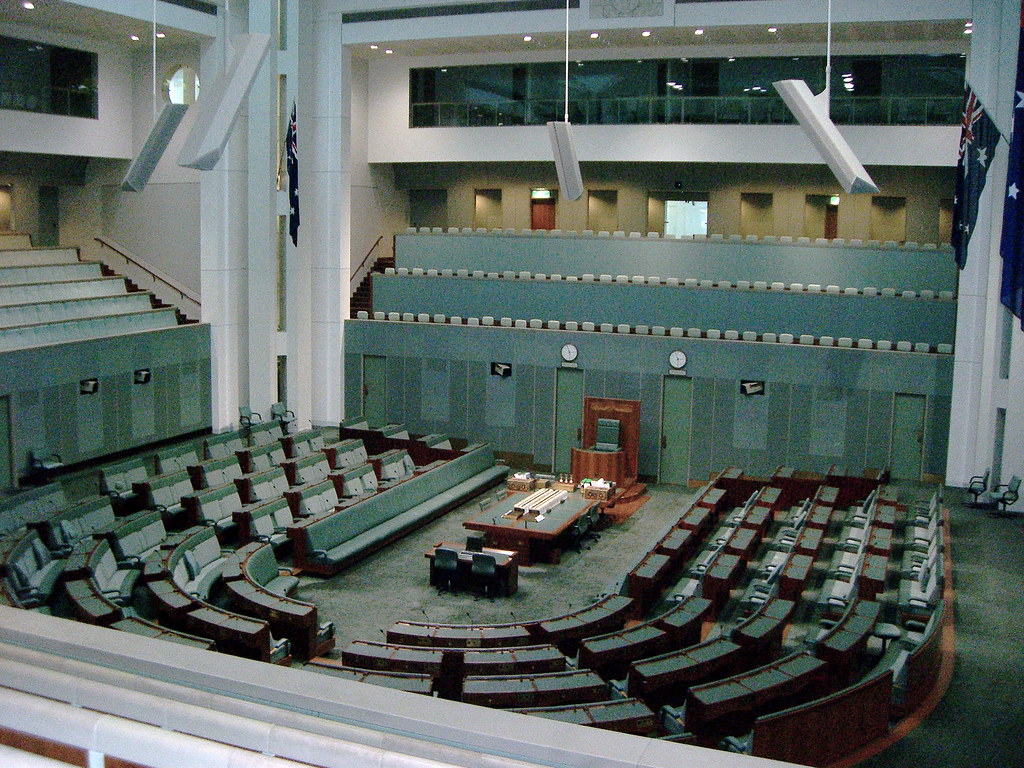
A nation’s type of government indicates how its executive, legislative and judicial levels are organized. There are various constitutional structures of national government throughout the world. The most popular models are the presidential system and the parliamentary system. Both systems are democracies, meaning that citizens have the power to make governmental decisions through their vote. It is critical for citizens to understand the differences between these two systems of government so that they understand the full potential of their votes, as well as their representation. To better understand the parliamentary system versus the presidential system, it’s important to examine how these systems operate within each branch of government.
The Executive Branch
Presidential systems have an executive branch that consists solely of the president. The president is an individual elected by citizens to be head of government and state for a maximum of two terms in office. The President is independent of the legislative branch. Some common responsibilities of the president are to:
- execute and enforce laws of Congress,
- sign the legislation into law,
- veto bills enacted by Congress and
- conduct diplomacy with foreign nations.
In contrast, parliamentary systems have a clear distinction between the head of government and head of state. In this system, the head of government and parliament is the Prime Minister. Rather than participating in a general election, Parliament elects the Prime Minister. Citizens elect the members of Parliament. Additionally, Parliament makes up the legislative branch of government.
The Prime Minister typically has no limit to the time they can stay in office. However, this means that they are dependent on the satisfaction of Parliament, which has the power to remove the Prime Minister from power. This can be accomplished through a no-confidence vote.
Meanwhile, within a parliamentary system, the head of state may be an elected president. But, the head of state is also commonly a hereditary monarch and acts as a figurehead for the nation.
The Legislative Branch
The legislative branch of the parliamentary system versus the presidential system may either be unicameral or bicameral. Unicameral contains one house, whereas two houses make up a bicameral system. A bicameral legislative system consists of a lower house and upper house. The lower house is where most law-making occurs. Many governments opt for a two-house legislative branch to avoid the concentration of power in one body and ensure the federal government is held accountable.
In presidential systems, the legislative branch will write law for a president to ultimately approve. Though the president may suggest laws, it is ultimately the legislative branch that will write them. In contrast, a Prime Minister will write laws along with the legislature and pass them.
The Judicial Branch
Judicial systems across parliamentary system versus the presidential system have a similar structure. Their structures are similar in that they both strive to create a separation of powers between the judiciary branch and other branches of government. However, the exact structure of these systems varies widely across various countries.
Is One Better Than The Other?
Both forms of government are organized in such a way that they both have various strengths. Due to the vote of no-confidence, it is easy to end the term of a Prime Minister within a parliamentary system. Meanwhile, it is much harder to impeach a president. However, Prime Ministers are dependent on the legislature. In contrast, presidents are completely independent of their legislative branches. They are able to make decisions that they believe are best in the nation’s interest without the influence of outside parties.
Despite all the differences between the parliamentary system versus the presidential system, it is ultimately the members of a nation who hold power. By voting, citizens can express their voice and effect change in their respective countries, no matter their system of government.
– Shreya Gaddipati
Photo: Flickr
