• Link to X
  • Link to Facebook
  • Link to Instagram
  • Link to TikTok
  • Link to Youtube
  • About
    • About Us
      • President
      • Board of Directors
      • Board of Advisors
      • Financials
      • Our Methodology
      • Success Tracker
      • Contact
  • Act Now
    • 30 Ways to Help
      • Email Congress
      • Call Congress
      • Volunteer
      • Courses & Certificates
      • Be a Donor
    • Internships
      • In-Office Internships
      • Remote Internships
    • Legislation
      • Politics 101
  • The Blog
  • The Podcast
  • Magazine
  • Donate
  • Click to open the search input field Click to open the search input field Search
  • Menu Menu
Blog - Latest News
Global Poverty

3 Ways Aquaponics Encourage Urban Food Sustainability
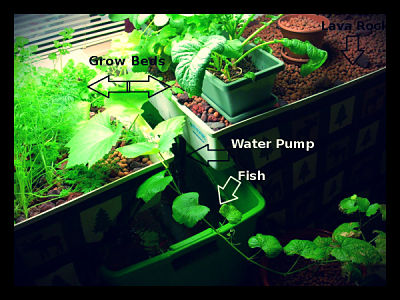
3 Ways Aquaponics Encourage Urban Food SustainabilityImagine staring out over the observation deck of the Empire State Building and seeing a greenhouse covered Manhattan skyline able to provide fresh fish and produce for all of their buildings’ tenants. Thanks to the technological breakthrough of Aquaponics, urban food sustainability might actually be a reality.

Aquaponics is best explained as a closed system in which fish and vegetables are able to thrive and mutually benefit one another, with the vegetables utilizing the wastewater of the fish and in turn, delivering water free of particulates back to the tank. Basically, by enabling the water supply of fish to flow from the tank through the gravel bed of the adjacent garden, the vegetables are both watered and fertilized, enabling the growth of produce ranging from lettuce to tomatoes and limes. Furthermore, the required water supply free of waste materials for the fish is delivered via the filtration effects of the vegetables which enable the full maturation and harvesting of delicious species such as Yellow Perch and Tilapia. This amazing Aquaponic technology is already being deployed in building rooftops across the US and Western Europe, encouraging urban food sustainability in the following 3 ways :

1. It’s self-contained – Unlike the traditional agricultural method of crop or fish production requiring thousands of acres of land or huge tanks and logistical support, the Aquaponic growth method requires little more than a storage container size of available rooftop space. Additionally, the growth system simply requires daily maintenance, a little electrical power, and labor, enabling an apartment building or home to produce their own organic food and fresh fish supply anywhere in the world. This method has the potential to eliminate the environmental damage of topsoil runoff and over-fishing and promote long term urban food sustainability.

2. It’s affordable –  As previously stated, the cost of purchasing the land, equipment, and labor resources necessary for commercial farms is extremely expensive and often prohibitive to nations establishing their own urban food sustainability programs. However, the start-up cost of an Aquaponic system starts at only 3,000 dollars for a beginner package to 7,000 dollars for a package able to significantly impact a family’s annual food costs. Furthermore, the construction of a simple rooftop greenhouse is extremely cheap, and necessary for both environmental protection and the maximum fish and production yield of the Aquaponic system.

3. It provides a source of income – As an added incentive, the market for organic produce and fresh fish is in high demand and given the relatively low start-up costs of the technology and accompanying greenhouse, the Aquaponic system can serve as a viable source of income. Even better, by forming a co-op among buildings tenets for the construction of several Aquaponic greenhouses on a rooftop, the fresh fish and produce can be sold at local farmer’s markets and to fishmongers, generating a passive source of income. Given the ability of the Aquaponic technology to be deployed anywhere in the world, building tenets from Manhattan to Moscow can enjoy the income generated from fresh, year-round fish and products which not only enriches the inhabitants’ wallets but also encourages urban food sustainability.

– Brian Turner
Source: Aquaponics.com
Photo: Aquaponicsfaq

March 7, 2013
Share this entry
  • Share on Facebook
  • Share on X
  • Share on WhatsApp
  • Share on Pinterest
  • Share on LinkedIn
  • Share on Tumblr
  • Share on Vk
  • Share on Reddit
  • Share by Mail
https://borgenproject.org/wp-content/uploads/borgen-project-logo.svg 0 0 Borgen Project https://borgenproject.org/wp-content/uploads/borgen-project-logo.svg Borgen Project2013-03-07 12:31:152024-06-04 02:43:493 Ways Aquaponics Encourage Urban Food Sustainability

Get Smarter

  • Global Poverty 101
  • Global Poverty… The Good News
  • Global Poverty & U.S. Jobs
  • Global Poverty and National Security
  • Innovative Solutions to Poverty
  • Global Poverty & Aid FAQ’s
Search Search

Take Action

  • Call Congress
  • Email Congress
  • Donate
  • 30 Ways to Help
  • Volunteer Ops
  • Internships
  • Courses & Certificates
  • The Podcast
Borgen Project

“The Borgen Project is an incredible nonprofit organization that is addressing poverty and hunger and working towards ending them.”

-The Huffington Post

Inside The Borgen Project

  • Contact
  • About
  • Financials
  • President
  • Board of Directors
  • Board of Advisors

International Links

  • UK Email Parliament
  • UK Donate
  • Canada Email Parliament

Get Smarter

  • Global Poverty 101
  • Global Poverty… The Good News
  • Global Poverty & U.S. Jobs
  • Global Poverty and National Security
  • Innovative Solutions to Poverty
  • Global Poverty & Aid FAQ’s

Ways to Help

  • Call Congress
  • Email Congress
  • Donate
  • 30 Ways to Help
  • Volunteer Ops
  • Internships
  • Courses & Certificates
  • The Podcast
Link to: George Clooney’s Tequila Aid for Sudan Link to: George Clooney’s Tequila Aid for Sudan George Clooney’s Tequila Aid for Sudan Link to: 10 Ways to Help Poor Farmers and Their Communities Link to: 10 Ways to Help Poor Farmers and Their Communities 10 Ways to Help Poor Farmers and Their Communities
Scroll to top Scroll to top Scroll to top