The READ Act: The Impact of Education on Global Poverty
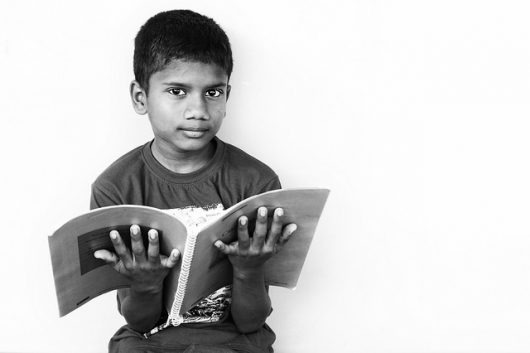
According to the UNESCO Institute for Statistics (UIS), nearly 263 million children and youth around the world are without an education. Of all of the regions, sub-Saharan Africa has the most detrimental number of children out of school – over a fifth of children between the ages of six to 11 and about one-third of children between the ages of 12 to 14. As the children grow older, the rates continue to worsen – almost 60 percent of youth between the ages of 15 to 17 are not receiving an education. The READ Act is a big step forward in the fight to change these numbers.
The Necessity of the READ Act
The UIS and the Global Education Monitoring (GEM) Report show that in Nigeria alone, 8.7 million children who are supposed to be in primary school are not. In Sudan, it is 2.7 million children and in Ethiopia, it is 2.1 million children. These children are not given the chance to thrive and challenge themselves and it is out of their hands due to the vast global poverty they are encompassed in.
Statistics such as this emphasize the importance of laws such as the Reinforcing Education Accountability in Development (READ) Act. This act was signed into law in 2017, and it is this law that is providing these 263 million children (130 million of whom are girls) hope for a deserved and promising education.
Bringing the READ Act into Reality
Representative Nita Lowey (D-NY) and Representative Dave Reichert (R-WA) first introduced the READ Act into Congress. Both Rep. Lowey and Rep. Reichert are important contributors to the passing of this bill, along with Senator Marco Rubio (R-FL) and Senator Richard Durbin (D-IL).
The main causes as to why these 263 million children do not have access to education are conflict and political instability. This law aims to provide education to the children who are in these situations, while simultaneously aiming to improve the overall quality of education. Rep. Reichert commented to World Vision, “By giving young people in impoverished regions the tools to read and write, we will put them down a positive path where they are better able to care for themselves, the needs of their families and their communities.”
The READ Act came about as an idea: what if the United States could make a significant difference by ensuring that every child has an equal and fair opportunity for a safe, quality education? After 13 years of constant due diligence and advocates contacting Congress over 1500 times, today there is widespread global success from this act.
How the READ Act Will Help
UNICEF reports that the READ Act of 2017 “will be tasked with developing a strategy to work with partner countries and organizations to promote basic education in developing countries.” The READ Act creates programs that also promote education as a foundation for economic growth. The act not only recognizes the importance of children having access to a quality education, it emphasizes that the act will create a chain reaction in communities by providing more jobs which will aid in diminishing poverty.
Rep. Lowey stated, “Prioritizing education around the world will not only help students learn to read and write – it will ultimately help protect vulnerable communities from hunger and disease and increase economic advancement, particularly for girls and women.” The READ Act, in providing millions of children around the globe with an education, is generously increasing the chance for these children to find jobs and build stable lives one day as they get older.
It is because of American citizens’ insistence that Congress take action that the READ Act has become an applicable law. More importantly, it is because of the citizens’ efforts that millions of children around the world now have new opportunities open for them and a brighter, more hopeful future to look forward to.
– Angelina Gillispie
To find out more about the past successes of our advocacy work and our current legislative priorities in Congress, head over to our Legislation page.
Photo: Flickr
