10 Facts About Poverty in Karachi
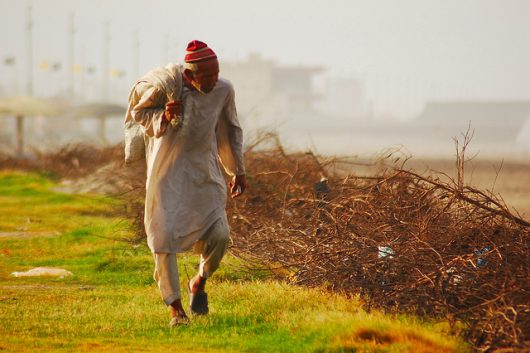
Karachi is Pakistan’s largest city and is the capital of the Sindh province located in southern Pakistan. Karachi is home to a major seaport on the shores of the Arabian Sea as well as massive commercial and industrial infrastructure. Increased development of air travel, in addition to the foreign traffic maintained by the commercial and financial industries, has made this city important to the overall economy in Pakistan. Regardless of these achievements, the city still faces poverty, which these facts about poverty in Karachi will illuminate.
Facts About Poverty in Karachi
- District governments within the city of Karachi do not have the power to increase taxes, which could be used to rectify local issues there. The Provincial Administration maintains the power instead of the taxpayers or the constituent electorate, which creates a democratic deficit within the metropolis.
- In regards to such a deficit, there is a notable underperformance in urban development. Foreign business is the largest part of the industry and economy in Karachi. Because of this, the Provincial Administration puts an emphasis on financial districts and expensive urban building for such purposes.
- A majority of tax revenue goes towards the seaports, airports, franchise business, stock brokers and telecommunication systems. The emphasis on finance and business distracts from the local problems. Most of the citizens live with social injustices daily, but their tax money is not being used to solve these problems.
- In Karachi, residents suffer from congested roads and poorly planned yet expensive public transportation systems. There is effectively no low-cost housing in the city, which has led to the rise of slums. There is also a shortage of water, leaving many without access to water at all, or at least water that is safe to drink.
- Many farmers located in the rural parts of the metropolis are deprived of water from irrigation systems. A large percentage of farmers have turned to using water that is mixed with sewage lines in an effort to grow crops. However, the produce that is harvested is often polluted and unsafe for human consumption, an unfortunate truth in the facts about poverty in Karachi.
- Policies geared towards the rapid industrialization of Pakistan had aimed to bring the country to its “take-off” stage. These policies, in retrospect, have actually made the rural lower class even poorer. More than ₨. 1 trillion (about $14.6 billion) was spent on infrastructure with the intention of lowering the local poverty rates in Karachi. Due to poor governance and irresponsible planning, much of this money was wasted and inflicted more economic harm on the lower-class citizens.
- There is a lack of access to social services and resources in poor households. Fifty percent of the rural population has been left without land, while approximately 75 percent of urban dwellers work in the informal economy.
- There are now more than 600 slum areas in Karachi. These slums are notable for hosting criminal activity as well as hiding criminals. In 2014, following the aerial firing on the Karachi airport, the suspects were found hiding in a local slum. Slums like Afghan Basti, Manghopir, Pehlwan Basti and Sohrab Goth are some of the better-known slums hosting criminal activity within Karachi.
- According to Inspector General Mushtaq Mehar, approximately 65 percent of the Karachi population lives in a slum. Residents of the slums are typically issued official identity papers, yet it remains difficult to verify and monitor them as many give false information. This makes it challenging to track down the criminals who may be hiding there.
- Despite these circumstances, there are many locals who are fighting back against poverty. UNDP’s Youth Employment Project provides employment opportunities as well as job training in the textile/garment industry. Around 30 percent of Karachi’s population is made up of youths aged 15-29. There are more than 5,000 students enrolled in this program. Initiatives such as this help those who cannot afford schooling to receive a valuable education and eventually earn a dependable source of income.
In his paper “Genesis of Urban Poverty”, Tasneem Siddiqui writes: “Poverty was not just about money. It is about access to power. It is deprivation not only in economic terms, but also at the social and political level.” The people of Karachi face this lack of access on a daily basis, one of the driving facts about poverty in Karachi.
The emphasis on business and finance in the city in order to better benefit Pakistan’s foreign affairs has harmed the local community. In doing so, there is a large gap in the socioeconomic ranks. Initiatives like UNDP’s program work to make the best of the given situation; however, until the governing authorities rectify the social and physical injustices, the citizens of Karachi will continue to suffer from this gap.
– Emma Fellows
Photo: Flickr
