A New Model for Education in Developing Countries
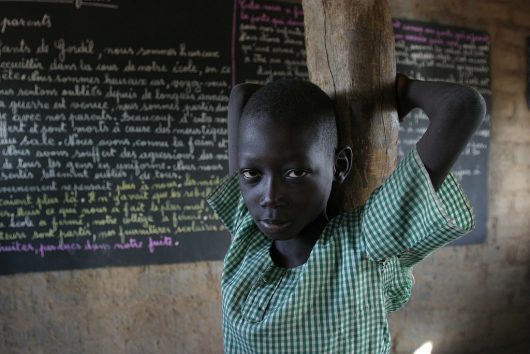 In most developing countries, the majority of children do not finish primary school. For example, only 50 percent complete fifth grade in Ghana, and less than half of them can understand a simple paragraph.
Programs working to achieve the Millennium Development Goals have had great success in increasing school enrollment in developing countries, but many still do not finish school. Obstacles to children completing their education include the difficulty of getting to school and paying for uniforms, books and examination fees.
Another significant factor is the opportunity cost. That is, when a child goes to school instead of working, their family is missing out on an opportunity to bring in extra income. Most of these children will work in agriculture or trade, not in the formal sector. Continuing past primary school does not provide any economic benefit for them or their families.
Education in developing countries tends to adopt traditional western ideals, focusing on literacy, math, social studies and science. For most children, however, these topics are irrelevant to their lives and do not help them improve their real-life circumstances. A new educational model called “school for life” focuses on building the students’ ability to improve their lives. The curriculum focuses on entrepreneurship, health education and empowerment.
Within the realm of entrepreneurship, the curriculum teaches financial management, market analysis and interpersonal skills. Students are also taught how to identify business opportunities and effectively turn them into a revenue stream.
Since many of these children live without access to proper healthcare, teaching them how they can protect their own health is crucial. Many common health issues, such as malaria, dysentery, respiratory infections and nutrition-related illnesses are preventable by simply making small lifestyle changes.
Rote learning dominates education in developing countries, which encourages memorization instead of creativity. The most powerful resource is empowered people, and education systems can unlock this asset for their country with this innovative approach to education. The “school for life” system promotes interactive exercises instead of lectures, so that students have an opportunity to practise desired skills and learn to think critically. For example, students may work on a project to improve the cleanliness of their school. This activity allows students to develop practical skills like planning, collaboration, delegation of tasks and leadership.
A pilot version of the “school for life” curriculum has been adopted in Escuela Nueva in Colombia. If schools switch the focus from improving standardized test scores to empowering students to improve their lives, education can become a powerful tool for lifting people out of poverty.
– Kristen Nixon
Photo: Flickr
