• Link to X
  • Link to Facebook
  • Link to Instagram
  • Link to TikTok
  • Link to Youtube
  • About
    • About Us
      • President
      • Board of Directors
      • Board of Advisors
      • Financials
      • Our Methodology
      • Success Tracker
      • Contact
  • Act Now
    • 30 Ways to Help
      • Email Congress
      • Call Congress
      • Volunteer
      • Courses & Certificates
      • Be a Donor
    • Internships
      • In-Office Internships
      • Remote Internships
    • Legislation
      • Politics 101
  • The Blog
  • The Podcast
  • Magazine
  • Donate
  • Click to open the search input field Click to open the search input field Search
  • Menu Menu
Blog - Latest News
Global Poverty, Hunger

Hunger in Botswana: A Problem of Climate Change
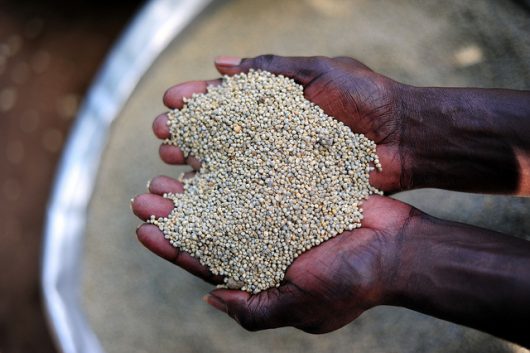

Botswana was rated as Serious on the Global Hunger Index, and hunger in Botswana is a problem that is highly correlated with climate. Botswana has a semi-arid climate that is not opportune to grow food. In the summer, temperatures can climb as high as 40 degrees Celsius (104 degrees Fahrenheit).

For this reason, the nation imports 90 percent of its food. Global food prices in 2011 were particularly high, and this caused Botswana’s food security to suffer. Every few decades, Botswana experiences a drought that can last five years or more. Those in poverty cannot afford imported food, and therefore are most affected by droughts within the country.

From 2008-2012, 31 percent of children in Botswana suffered moderate to severe stunting due to malnutrition, according to UNICEF. In 2016, almost a quarter of the population was malnourished and 23 percent of children under five years old were affected by stunting. In 2012, the amount of stunting in children under five was doubled in children from the most impoverished families compared to children from wealthier families. The government has invested in infrastructure to help increase food production.

Climate change directly affects crops and water for irrigation. Ninety-five percent of crops in sub-Saharan Africa depend on rainwater irrigation. There is an average of 460 mm of rain in Botswana each year, depending on the region. In comparison, the average amount of rainfall in the United States each year is 767 mm.

One solution to hunger in Botswana is to focus on creating jobs in the agricultural sector, rather than creating an abundance of food. In 2010, 26.4 percent of employment in Botswana was in the agricultural sector. Only wealthy farmers can afford the fossil fuels necessary for large scale production. Since expensive farming methods increase food prices, Botswana should focus on farming methods that create jobs for more people.

To alleviate hunger in Botswana, the large role that agriculture plays in the economy should not be ignored.

– Jennifer Taggart

Photo: Flickr

March 17, 2017
Share this entry
  • Share on Facebook
  • Share on X
  • Share on WhatsApp
  • Share on Pinterest
  • Share on LinkedIn
  • Share on Tumblr
  • Share on Vk
  • Share on Reddit
  • Share by Mail
https://borgenproject.org/wp-content/uploads/borgen-project-logo.svg 0 0 Borgen Project https://borgenproject.org/wp-content/uploads/borgen-project-logo.svg Borgen Project2017-03-17 01:30:372024-12-13 17:57:37Hunger in Botswana: A Problem of Climate Change

Get Smarter

  • Global Poverty 101
  • Global Poverty… The Good News
  • Global Poverty & U.S. Jobs
  • Global Poverty and National Security
  • Innovative Solutions to Poverty
  • Global Poverty & Aid FAQ’s
Search Search

Take Action

  • Call Congress
  • Email Congress
  • Donate
  • 30 Ways to Help
  • Volunteer Ops
  • Internships
  • Courses & Certificates
  • The Podcast
Borgen Project

“The Borgen Project is an incredible nonprofit organization that is addressing poverty and hunger and working towards ending them.”

-The Huffington Post

Inside The Borgen Project

  • Contact
  • About
  • Financials
  • President
  • Board of Directors
  • Board of Advisors

International Links

  • UK Email Parliament
  • UK Donate
  • Canada Email Parliament

Get Smarter

  • Global Poverty 101
  • Global Poverty… The Good News
  • Global Poverty & U.S. Jobs
  • Global Poverty and National Security
  • Innovative Solutions to Poverty
  • Global Poverty & Aid FAQ’s

Ways to Help

  • Call Congress
  • Email Congress
  • Donate
  • 30 Ways to Help
  • Volunteer Ops
  • Internships
  • Courses & Certificates
  • The Podcast
Link to: Education in Hungary Link to: Education in Hungary Education in Hungary Link to: Samaritan’s Purse Hospital in Iraq Link to: Samaritan’s Purse Hospital in Iraq Samaritan’s Purse Hospital in Iraq
Scroll to top Scroll to top Scroll to top