5 Facts About Education in Palestine
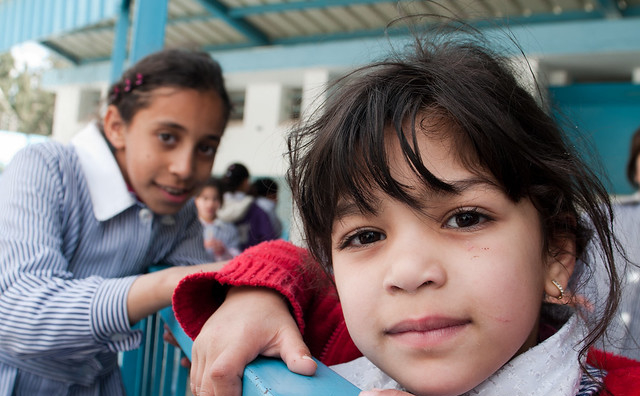 While issues that adversely affect education are yet to be fully resolved, programs that benefit education in Palestine show promise for creating a positive, lasting impact on the country. Here are five facts about education in Palestine:
- Literacy rates in Palestine are extremely high—even when compared to developed countries. According to the most recent data published in 2014, Palestine has a 96.3 percent literacy rate. The UNDP states that this percentage is, “higher than that of the UNDP 2014 HDI ‘high human development’ category average.” With the constant turmoil and poverty within the Gaza Strip and West Bank, these statistics may come as a surprise to many. Ninety-four percent of women in Palestine are literate (compared to 98.4 percent of men). This is a huge improvement from 1995, when less than 80 percent of women could read and write.
- In 2013, only 9.4 percent of children did not complete any level of education in Palestine. The UNDP states that dropout rates among schoolchildren have declined significantly in recent years. Data shows the average amount of schooling for Palestinian children is close to nine years.
- Poor infrastructure and lack of funding are major barriers to quality education in Palestine. Over 280 schools were damaged in Gaza due to the 51-day conflict between Israel and Palestine in 2014. According to UNICEF, the infrastructure problem has yet to be fully resolved largely due to sanctions on the transport of certain construction materials. In addition to infrastructure damage, overcrowding presents a major challenge to the Palestinian education system. Overcrowded schools impede upon the quality of education that children receive on a daily basis.
- The United Nations Relief and Works Agency (UNRWA) is working to improve education within the West Bank and the Gaza Strip. While the West Bank offers adequate primary education, the UNRWA is working to improve secondary education within the area. In the Gaza Strip, the agency is expanding upon educational programs as well as out-of-school initiatives.
- The Palestine Children’s Relief Fund’s “Gaza Educational Initiative” is raising money to support education efforts in the region. Following the 2014 bombings within the West Bank, PCRF started a fund to help provide tutoring and extra education services to affected children. Programs like this and efforts made by the U.N. are helping Palestinian kids achieve higher education despite the unstable state of their home environments.
U.S. foreign aid to Palestine is an incredibly contentious topic in current politics. However, putting past political disagreements for the sake of education is crucial for Palestinian children. Educating younger generations of children can provide hope for less poverty, radicalization and violence within the community.
– Saroja Koneru
Photo: Flickr
