Hunger in Liberia
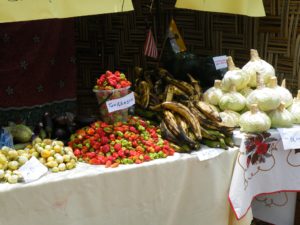 Widespread hunger in Liberia has plagued the country partly as a result of a coup d’état in 1980. However, a combination of president Ellen Johnson-Sirleaf’s poverty reduction programs, other government programs and nongovernmental initiatives has led to a reduction in hunger.
In 1980, a military regime replaced the civilian government in Liberia. The people rebelled in 1989. The resulting conflict continued until 2003, when a peace agreement was signed. Then, in 2006, Sirleaf, the first post-war president, was sworn into office. The relative stability since 2006 proved helpful in the effort of reducing hunger in Liberia.
Nearly one-third of the Liberian population is undernourished. Every fifth household is food insecure, according to a 2012 government-led survey.
The staple food for families is rice. Liberia imports 90 percent of this commodity, so any change in price has a large impact on the Liberian people. For example, in 2008, the price for a 110 pound bag of rice equaled one month’s salary for a security guard in the country’s capital of Monrovia, a relatively well-paying position. That bag of rice could only feed a family of seven (the average is five in Liberia) for around two weeks.
In addition, about 14 percent of children under five are underweight and these children’s mortality rate was 7.8 percent in 2011. At one point in 2009, health officials feared that an estimated 74,000 Liberian children would die from malnutrition by 2015.
That fear motivated them to act.
In 2009, health officials succeeded in getting the government to adopt a policy committing them to improve food security, especially in the rural areas where it were most needed. John Agbor, head of child survival at UNICEF, said back then that the policy “refocuses nutrition and puts it where it ought to be—on the higher agenda of government.”
Sirleaf’s government did even more. Acknowledging that poverty and food insecurity are strongly correlated, Sirleaf’s government first implemented Poverty Reduction Strategy and then Poverty Reduction Strategy II, which built upon the successes its predecessor.
The policies’ successes were possibly reflected in 2013’s Global Hunger Index. While Liberia ranked only 50th out of 78 and remained in a “serious” status, its GHI ranking has been steadily improving since 1995.
Unfortunately, the recent Ebola outbreak in Liberia has presented Sirleaf’s government with new challenges in reducing hunger.
In a controversial move, Sirleaf ordered a quarantine of sizable villages, which have been cordoned off by the military. The villagers lack access to food and medical supplies, and the threat of starvation is motivating some to attempt an escape, which many fear will help Ebola spread.
Unless the government and other organizations can find a way to keep these quarantined populations fed, hunger among the people could make Ebola quite difficult to contain in Liberia.
– Ryan Yanke
Sources: World Food Programme, Action Against Hunger, IRIN, Newsweek, International Food Policy Research Institute 1, International Food Policy Research Institute 2, World Health Organization
Photo: Flickr
