3D Printing Food: A New Solution to World Hunger?
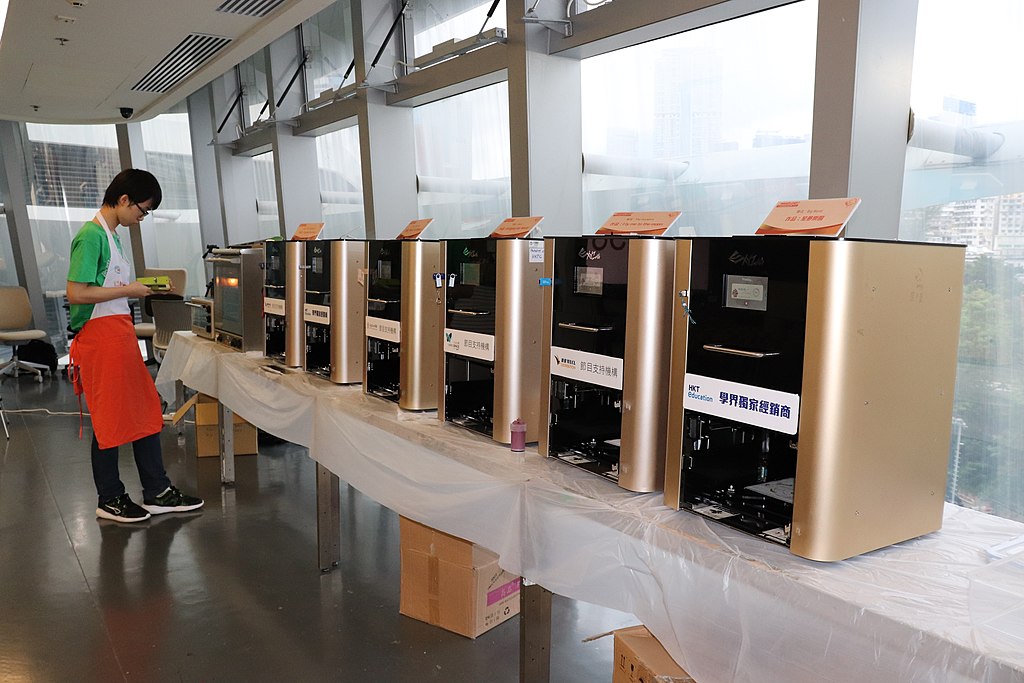
Food insecurity and global hunger remain an international crisis to this day, worsening year after year. In the 79 countries that the World Food Programme (WFP) operates in, more than 345 million people are suffering from high levels of food insecurity in 2023. This number is even more daunting as it has more than doubled since 2020. Specifically, since the COVID-19 pandemic, an additional 200 million people have faced extreme hunger.
To combat hunger and poverty, new technologies have sprouted up around the world. One such technology is the possibility of 3D printing food. Using edible materials, 3D printing food implements an extrusion-based method to ensure the production of high-quality food. In this way, the many benefits of 3D printing food offer an effective way to reduce hunger and the poverty associated with it.
How 3D Printing Reduces Hunger
- Accessibility: People in more than 49 countries are currently at risk of hunger due to droughts, floods, wars and other issues. 3D printing food, however, can overcome these issues as it can readily feed people who lack access to healthy food. The average commercial 3D printer can feed an entire family while industrial printers have the ability for mass production lines. One example of industrial printers comes from an Israeli company, Redefine Meat, that recently agreed with importer Giraudi Meats to introduce 3-D printed steak cuts in 1,000 European restaurants. As 3D-printed food continues to gain traction, it will become a viable solution for the hungry in several developing countries as it exponentially effectively increases access to healthy food.
- Affordability: 3D printing food is also beneficial to the food industry as it compensates for rising food costs around the world. One of the largest portions of food manufacturing expenses is the cultivation and maintenance of raw materials. Compared with traditional beef production, 3D printing beef reduces energy usage by 45% and water usage by 4%. Another major portion of costs associated with food manufacturing is transportation and inventory management. 3D printing lowers transportation and inventory management costs as products can be printed locally and have the ability to be efficiently manufactured to meet consumer demands. In this way, printing food can lead to a significant decline in expenses associated with food manufacturing, thereby lowering consumer costs and increasing affordability.
- Nutritional Value: According to Johnathan Blutinger, a co-author of the paper The Future of Software-Controlled Cooking, 3D-printed food can provide “essential nutrients” to people who lack fresh and healthy food. 3D printing food, in addition, can serve as a preventive check against additives, preservatives and other food chemicals that are unhealthy. One example, Biozoon, is a German 3D printer that can manufacture healthy food products, known as “smoothfood,” for people with specific medical issues. Smoothfood is incredibly high in vital nutrients, such as protein, vitamins and carbohydrates, that many impoverished people lack. As such, 3D printing food allows those in poverty to gain crucial nutrition and allows consumers to target specific nutritional needs.
The Future of 3D Printing Food
While 3D printing food is a relatively novel field, it offers many practical benefits that ensure access to affordable high-quality food. Although much more progress is necessary, printing food is an innovative approach to addressing global hunger and poverty.
– Manav Yarlagadda
Photo: Wikimedia Commons

