• Link to X
  • Link to Facebook
  • Link to Instagram
  • Link to TikTok
  • Link to Youtube
  • About
    • About Us
      • President
      • Board of Directors
      • Board of Advisors
      • Financials
      • Our Methodology
      • Success Tracker
      • Contact
  • Act Now
    • 30 Ways to Help
      • Email Congress
      • Call Congress
      • Volunteer
      • Courses & Certificates
      • Be a Donor
    • Internships
      • In-Office Internships
      • Remote Internships
    • Legislation
      • Politics 101
  • The Blog
  • The Podcast
  • Magazine
  • Donate
  • Click to open the search input field Click to open the search input field Search
  • Menu Menu

Tag Archive for: USAID

Information and news about mobile technology

Posts

Advocacy, USAID

Foreign Aid and the Proposed Budget

foreignaid
President Obama revealed his proposed budget for 2014 and much to the surprise of many, there was a slight increase in foreign aid in the proposal. Requested funds for foreign aid equaled somewhere around $52 billion which is a slight bump over this year’s budget.  Increased funds for global health and development assistance were included as well as a decrease in military aid to foreign countries.  The proposed budget also called for a major overhaul of the US food-aid programme to save money and invest more wisely in food production and improvement rather than on shipping costs.

The International Affairs budget funds USAID and the State Department as well as the United States’ donations to the United Nations and other similar institutions.  It also provides funds for natural disaster emergencies and embassy support. The proposed budget will now be passed to the House and Senate where they will debate the proposed funds.  If an agreement cannot be reached again this year, major across-the-board spending cuts will go into effect again. One thing that did not change in the proposed budget was the proportion of the budget that goes towards foreign aid, which still amounts to only slightly more than 1% of overall spending. Compared to the defense budget, which is around $527 billion, there is still a large gap in appropriated government funds.

Advocates of foreign aid spending have long complained of the disconnect between aid and diplomacy, citing that without increased development, unstable countries will struggle to become stable. Leaders are working with Congress to call for the necessary funds to promote global development, innovation, and provide resources to those in poverty. The proposed budget caused non-profit and non-government leaders to breathe a slight sigh of relief as their funds were not initially proposed to be cut. While budget cuts must be made, foreign aid is an area where the funds are causing global change, reducing poverty, and increasing the safety of both US citizens and citizens of other countries.

The proposed budget is also the perfect time for advocacy.  As Senators and Representatives must make decisions about the final budget, calls advocating for foreign aid and funds focused towards reducing global poverty can make a real impact.

Find your senators and representative here and make a 30 second call to keep foreign aid fully funded.

– Amanda Kloeppel

Source: The International News Magazine
Photo: Council on Foreign Relations
April 14, 2013
https://borgenproject.org/wp-content/uploads/borgen-project-logo.svg 0 0 Borgen Project https://borgenproject.org/wp-content/uploads/borgen-project-logo.svg Borgen Project2013-04-14 13:37:402024-05-24 23:40:28Foreign Aid and the Proposed Budget
Children, Food Security, Foreign Policy, Health, USAID

Guatemala’s Zero Hunger Pact

Guatemala_USAID_Nutrition
The U.S. Department of State recently hosted a number of government officials in a conference on nutrition and hunger in Guatemala. Attendees included representatives from USAID, the Guatemalan Health Minister, officials of the Government of Guatemala, a panel of nutrition experts, and private sector leaders.

As part of the larger Zero Hunger Pact, started by the President of Guatemala in 2012, Guatemala’s goal is to lower chronic malnutrition in children throughout the country by 10 percent by 2015.

In addition to representatives from the United States and Guatemala, members from the World Bank, the World Food Program, and other high-profile organizations appeared at the event. Participants of the event gathered to discuss and strategize on Guatemala’s implementation of the Zero Hunger Pact, which included planning the necessary next steps for the country to take to reduce malnourishment.

Guatemala has one of the highest rates of child malnutrition in the world as nearly half of all children in the country under five years of age suffer from chronic malnourishment; the issue is particularly bad in the Western highlands of Guatemala. U.S. government officials praised the Guatemalan government’s efforts to tackle child nutrition at the conference and also praised their efforts for sustainable results in fighting hunger.

In addition to the Zero Hunger Pact, Guatemala is also a focus area for the United State’s global hunger and food security initiative called Feed the Future.

– Christina Kindlon

Source: State Department

April 14, 2013
https://borgenproject.org/wp-content/uploads/borgen-project-logo.svg 0 0 Borgen Project https://borgenproject.org/wp-content/uploads/borgen-project-logo.svg Borgen Project2013-04-14 11:00:452020-05-13 21:55:34Guatemala’s Zero Hunger Pact
Education, Foreign Aid

USAID to Expand Its Teacher Training Project in Pakistan

USAID to Expand Its Teacher Training Project in Pakistan
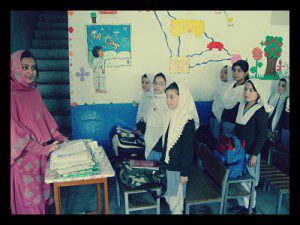
The USAID Teacher Education Project in Pakistan has expanded to provide teaching services to every province in the country. This $75 million project has been working since 2011 to modernize Pakistan’s education system. With the help of Pakistan’s Higher Education Commission (HEC), over 2,600 students have enrolled in 15 universities and 57 colleges across the country. USAID hopes to see this number increase as more teachers emerge from the Teacher Education Program.

In order to reach out to more potential teachers, USAID realized the need to enlarge its program. Not only will the Teacher Education Project offer more locations, it is also giving 1,900 scholarships to students based on merit and financial need.

This higher education program will be implementing suggestions from a study conducted in 2006 that found flaws in Pakistan’s current teacher training system. The study discovered a trend of the government setting unrealistic goals for its education system and then, when it fails to meet those goals, creating new, also idealistic targets that are never reached. By making its goals more realistic, USAID is confident in its ability to improve Pakistan’s education system by producing high quality teachers.

As Pakistan trains more well qualified teachers, the country will begin to experience higher quality of education for its younger students as well. Javaid Laghari, chair of the HEC, is optimistic about Pakistan’s future, “We hope for a good change, when today’s students become tomorrow’s teachers.”

– Mary Penn

Source: UWN
Photo: BarakatNews

April 14, 2013
https://borgenproject.org/wp-content/uploads/borgen-project-logo.svg 0 0 Borgen Project https://borgenproject.org/wp-content/uploads/borgen-project-logo.svg Borgen Project2013-04-14 09:00:472020-06-07 21:59:02USAID to Expand Its Teacher Training Project in Pakistan
Health

Fighting HIV/AIDS in Honduras Through the Arts

fighting-hiv-aids-honduras-arts-opt
The Garifuna people of Honduras have an HIV infection rate of 4.5 percent – higher than any nation in the Western hemisphere, and five times higher than Honduras as a whole. Those affected by the virus are finding new and creative ways to fight HIV/AIDS in Honduras.

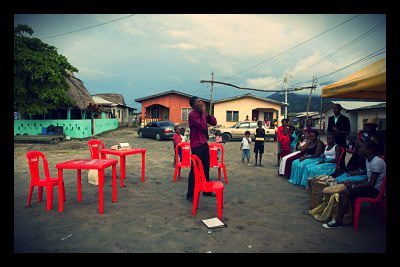
According to an NPR report funded by the Pulitzer Center on Crisis Reporting, the Garifuna are using traditional music and theater to raise awareness of HIV, and to combat stigmas surrounding the disease. Musician and singers perform traditional celebratory Garifuna songs to draw listeners, and then enact a play in which actors put HIV on trial.

Many Hondurans who are HIV-positive are reluctant to seek help, even though HIV clinics provide medical care and antiretroviral medication to patients at almost no cost. They deny having the problem because they fear judgment or ostracization, and for good reason. Lack of education has been a major contributor to high infection rates. Women infected with the virus report being rejected by family and unable to find work.

Widespread poverty and migration also contribute to new infections. In some areas it is socially acceptable to have multiple sexual partners. Testing facilities are not widely used, and communication between sexual partners is nonexistent in some cases.

Participants in the Garifuna theater group believe that theater, music, and other community activities are more engaging than books or pamphlets around such complex social and medical issues. Fighting HIV/AIDS in Honduras, especially among rural populations, is a challenge. But the creative approach is working well so far.

USAID and the Honduran government are funding theater groups like the Garifuna’s. A USAID official reported a decline in the rate of HIV infection among program beneficiaries: the 30 members of the theater group are living safer lives, and encouraging others to do so. The problem of HIV/AIDS in Honduras is not yet resolved, but community engagement through the arts is a step in the right direction.

– Kat Henrichs

Source: NPR

April 9, 2013
https://borgenproject.org/wp-content/uploads/borgen-project-logo.svg 0 0 Borgen Project https://borgenproject.org/wp-content/uploads/borgen-project-logo.svg Borgen Project2013-04-09 09:13:192024-05-24 23:47:14Fighting HIV/AIDS in Honduras Through the Arts
Global Poverty

World Poverty: Three Big Questions and Three Simple Answers

USAID and three questions/answers
While there are numerous questions regarding world poverty and why we should protect it, here are three big questions and three simple answers that make eliminating poverty a foreseeable future.

Question 1 – Is the Problem too big to address? 

In the case of poverty, no action is too small to make a lasting impact. Food, water, and shelter are basic human needs and when teaching people that are living in poverty how to provide these basic needs for themselves, the solution is very simple. Something small, such as installing a well in an impoverished village can improve the lives of hundreds of people by reducing illnesses caused by dehydration and poor sanitation and creating a source of water for crops to grow.

Question 2 – Doesn’t the US do enough already?

In general, most Americans believe that 25 percent of the United States’ federal budget is allotted to foreign aid. In reality, only one percent of the budget goes to funding programs that provide aid and reduce poverty. To give a bit of perspective, $30 billion goes to foreign aid and $663 billion goes to military spending. When it comes to foreign aid and wealthy countries that can afford to give, the United States ranks among those who give lowest percentage of their GDP, in line after Sweden, Norway, Luxemburg, the United Kingdom, and Ireland. The United States allots only 0.2 percent of gross national income to programs that fight poverty across the world while the highest ranking countries give between 0.5 percent and one percent of their national incomes.

Even so, over the years, there have been many successes in poverty reduction. Today poverty remains as one of the biggest problems in the world, however, according to USAID the number of people living in poverty has been reduced by 50 percent in the last 20 years, smallpox has been eradicated worldwide and since 1990, 800 million people have gained access to improved water supplies and 750 million to improved sanitation. If the U.S. only allots 0.2 percent of the gross national income to foreign aid focused programs, there could be tremendous gains and millions more people would benefit if the U.S. allotted another 0.2 percent or more of the federal budget.

Question 3 – Does corruption in developing nations prevent aid from reaching the most impoverished people?

Yes, corruption exists everywhere, but it is not a justifiable excuse for ignoring the billions of people in developing countries that continue to suffer. In fact, experts have developed strategies of transparency that eligible countries must address before receiving aid. These strategies ensure that the aid coming from the United States goes directly to the people and programs that need it the most.

There it is; three big questions and three simple answers when it comes to world poverty. Eliminating poverty is not too big, and funding to end poverty is increasingly protected from supporting corruption. Advocating for foreign aid from the United States, does not simply eradicate illnesses or provide food and knowledge, but lifts men, women, and children out of poverty and assists in establishing long-term development.

– Kira Maixner

Source: The Borgen Project, USAID
Photo: Global Communities

April 6, 2013
https://borgenproject.org/wp-content/uploads/borgen-project-logo.svg 0 0 Borgen Project https://borgenproject.org/wp-content/uploads/borgen-project-logo.svg Borgen Project2013-04-06 10:04:502024-05-24 23:46:40World Poverty: Three Big Questions and Three Simple Answers
Global Poverty

USAID’s NEAT Program in Nepal

USAID's NEAT Program in NepalThe United States Agency for International Development (USAID) recently completed another phase of their Nepal Economic, Agriculture, and Trade Activity (NEAT) project by creating a packet containing important agricultural information that is to be distributed to disadvantaged farmers in Nepal. USAID is working with Nepal’s Ministry of Agriculture Development in a joint effort to improve food security in the region while also helping farmers sell their crops in markets more easily.
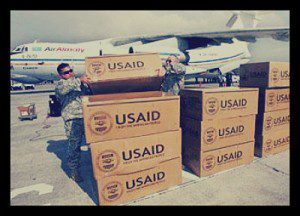

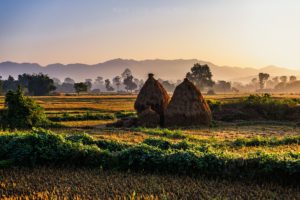
The information packets were made to be durable and they contain information on 13 types of crops. The information was prepared for illiterate and semi-literate farmers so charts and photos are used throughout the information packet. Another focus of the NEAT effort is to make it easier for farmers to take their goods to market to sell while also making seeds and fertilizers more easily available to the nearly 70,000 farmers that the program helps.

Overall, the farmers have experienced a gain of $85 million since the program began and nearly all of the program participants have increased market access for their goods. While the NEAT initiative will end this August the resources that USAID has compiled will continue to be helpful for farmers and the aid centers that they have established will continue to be staffed and will offer help to the Nepalese farmers. This is just one more great program that USAID has undertaken to fight poverty worldwide and promote food security.

– Kevin Sullivan

Photo: The Borgen Project

April 3, 2013
https://borgenproject.org/wp-content/uploads/borgen-project-logo.svg 0 0 Borgen Project https://borgenproject.org/wp-content/uploads/borgen-project-logo.svg Borgen Project2013-04-03 11:15:472020-06-01 05:57:47USAID’s NEAT Program in Nepal
Foreign Aid, Foreign Policy, Global Poverty

Foreign Aid Creates Jobs in the US

Foreign_Aid_Job_Creation_USAID
There are many disputing ideas on whether or not America should continue to invest in foreign aid, especially while in the throes of an economic recession. While spending US funds to support countries and people that most citizens will probably never visit or meet may seem counter-intuitive, foreign aid will be a factor in pulling America out of its recession. Lifting developing countries out of poverty creates more customers to buy American products, which in turn creates jobs in America.

Foreign aid job creation is not merely speculation. Currently almost half of US exports go to developing countries and this number can be expected to increase as these new, developing markets continue to open. This will greatly improve the US economy since one in five American jobs, like cell phone chips and food production, are export-based. American businesses recognize the opportunity to grow by alleviating world poverty. In 2012, over 50 US corporations delivered a letter to Congress in support of continuing funding for foreign investment. These corporations included Google, Cisco, Coca Cola, Johnson & Johnson and Caterpillar.

These corporations are aware of the huge potential payoffs of foreign investment. For example, the US has given Mexico $1.7 billion in aid over the past 45 years and now exports $16.3 billion in goods to their neighbor every year. The US has also seen its investment in Brazil offer an enormous return. America exports $35.4 billion annually to Brazil after giving $2.8 billion in aid from 1960-2005. Given that a majority of the United States’ top trading partners had previously accepted aid from the US, it is obvious that foreign aid is a good investment.

Foreign aid does not have to be strictly a question of moral obligation; it is also financially and developmentally smart. Many Congressmen are now referring to foreign aid as investment for this very reason. It may take many years until US citizens see the financial benefits of foreign investments but the eventually, revenues from these new markets will be well worth the wait. Foreign aid is less than 1% of United States’ budget and has the potential to create jobs to bring the US out of rough economic times. Contact your Congressional representatives and ask them to support funding for foreign aid.

– Mary Penn

Source: Orange County Register
Photo: Soda Head

April 1, 2013
https://borgenproject.org/wp-content/uploads/borgen-project-logo.svg 0 0 Borgen Project https://borgenproject.org/wp-content/uploads/borgen-project-logo.svg Borgen Project2013-04-01 12:16:012020-06-01 06:01:39Foreign Aid Creates Jobs in the US
USAID

US AID First Forward Progress Report

US AID First Forward Progress Report
The U.S. Agency for International Development released a progress report on its signature reform initiative USAID Forward at an event co-hosted by the American Enterprise Institute (AEI) and the Center for American Progress (CAP).
Three years ago, President Obama and former Secretary of State, Hillary Clinton called for the elevation of development as a key part of America’s national security and foreign policy.

Some highlights that need us to focus are listed as follows:

USAID Forward, the mission with renewed capacity, is focused on seven key
 areas: budget management, policy capacity, implementation and procurement reform, monitoring and evaluation, innovation, science and technology, and talent management.

Delivering results on a meaningful scale through a strengthened USAID:
Designed 
by our missions in close collaboration with partner governments and citizens, our Country Development Cooperation Strategies now guide our development investments. When evaluations failed to meet the standard, the three most common concerns were: (1) evaluation teams received too many questions—especially questions that are too general and ill-defined—relative to the resources available for the evaluation, (2) the data collection and analysis methods were not appropriate to answer the evaluation questions, or (3) evaluation reports did not clearly demonstrate how evidence led to new findings and conclusions. Given these findings, we need to increasingly focus on taking early action to improve the quality of our evaluations.

Promoting sustainable development through high-impact partnerships:
USAID set out to employ the central pillars of aid effectiveness—county ownership, systems strengthening and sustainability—derived from global meetings in Paris, Accra and Busan. Putting these tenets into practice required us to take a hard look at our own systems and our capacity to work with a broader community of diverse partners while holding them accountable for delivering results. Going forward, we will build on the commitment
 to increase direct support to partner country governments, local private sector firms and non- governmental organizations. We will integrate this work more closely into our strategic planning process with the goal of institutionalizing it still further.

Identifying and scaling up innovative, breakthrough solutions to intractable development challenges:
In November 2012, the Higher Education Solutions Network, a groundbreaking partnership with seven top American and foreign universities designed to engage young people in the discovery of new solutions to development challenges, was launched. Each of the seven universities—The College of William and Mary, Texas A&M University, Michigan State University, University of California, Berkeley, Duke University, Massachusetts Institute of Technology, and Makerere University in Uganda—will establish a development laboratory to incubate and scale up new innovations. The large-scale transformation of a federal agency is a long-term and complex endeavor. The transformation will be successful if it not only changes the way we do business but also results in improved results and continued development progress. USAID is committed to continuing our forward progress and calls on all of our partners to join us in our collective efforts to end extreme poverty.

– Caiqing Jin(Kelly)

Source: USAID
Photo Source: ETFTrends

April 1, 2013
https://borgenproject.org/wp-content/uploads/borgen-project-logo.svg 0 0 Borgen Project https://borgenproject.org/wp-content/uploads/borgen-project-logo.svg Borgen Project2013-04-01 10:04:522024-05-24 23:45:18US AID First Forward Progress Report
Education, Food Security, Foreign Aid, USAID

US AID and Nepal Partner to Educate on Agriculture

US AID and Nepal Partner to Educate on Agriculture
Nepal Economic, Agriculture, and Trade Activity (NEAT), a 32-month program funded by USAID, aims to “promote economic growth, reduce poverty, increase food security, and improve lives” throughout Nepal. As part of the program, USAID and Nepal have partnered up through the Nepal Ministry of Agriculture Development to distribute educational materials on agricultural practices in the hopes of improving the production of agriculture in the country.

Through the funding provided by USAID, more than 263,000 pamphlets were handed out detailing specific agricultural instructions, both written in Nepali and as visuals in order to aid those citizens who are illiterate. The pamphlets detail “critical agriculture practice” on 13 types of crops and 3 species of livestock.

The NEAT program has improved the agricultural education of 67,510 households throughout 20 districts of Nepal with a regular lack of access to proper food sources. Thus far, the project has already allowed area farmers to see an increased income of $8.5 million collectively. These farmers and households have had increased access to markets and are better educated on agricultural practices such as pest and disease control, use of fertilizer, improved seed, and “post-harvest handling.”

The Director of USAID’s Social, Environmental, and Economic Development Office, John Stamm, maintained that USAID is dedicated to creating sustainable development solutions, including the NEAT program – which will allow Nepalese citizens greater resources for continuing to improve their lives long after the program ends in August of 2013.

– Christina Kindlon

Source: USAID

March 31, 2013
https://borgenproject.org/wp-content/uploads/borgen-project-logo.svg 0 0 Borgen Project https://borgenproject.org/wp-content/uploads/borgen-project-logo.svg Borgen Project2013-03-31 14:30:432020-06-01 00:46:00US AID and Nepal Partner to Educate on Agriculture
Health, Malaria, USAID

Mosquito Nets Save Lives in Mozambique

Mosquito Nets Save Lives in Mozambique
Many foreign aid organizations assist developing countries not by sending money, but by providing health and educational equipment for impoverished people. The United States Agency for International Development (USAID) is among the organizations that employ this method. A case in point is that since 2007, USAID has delivered 20 million insecticide-treated mosquito nets to Mozambique.

The impact of these mosquito nets has been invaluable, says Polly Dunford, the interim USAID Director in Mozambique. The nets have decreased the number of malaria cases in the country, most notably in cases of children.

USAID partnered with the President’s Emergency Plan for AIDS Relief (PEPFAR) to fight malaria in Mozambique. PEPFAR uses aid money from USAID to distribute the mosquito nets and insecticide spray, counsel pregnant women about malaria prevention, and produce more effective malaria drugs.

In addition to providing assistance to reduce cases of malaria, USAID has been focusing on helping farmers become more successful. Given Mozambique’s ocean accessibility, it has the potential to become a regional food supplier, says Dunford. USAID has been supporting the agriculture sector through training programs that educate farmers on how to more productively sell their food products.

Mozambique receives about $500 million from USAID annually and a majority of that money goes towards the health sectors, like PEPFAR and other malaria prevention programs. The country has high levels of experienced economic growth, however, many people are still living in poverty. With the help of USAID, the number of impoverished and those dying from malaria in Mozambique will continue to decrease.

– Mary Penn

Source: AllAfrica
Photo: World Vision

March 30, 2013
https://borgenproject.org/wp-content/uploads/borgen-project-logo.svg 0 0 Borgen Project https://borgenproject.org/wp-content/uploads/borgen-project-logo.svg Borgen Project2013-03-30 14:20:322024-05-24 23:45:41Mosquito Nets Save Lives in Mozambique
Page 91 of 92«‹89909192›

Get Smarter

  • Global Poverty 101
  • Global Poverty… The Good News
  • Global Poverty & U.S. Jobs
  • Global Poverty and National Security
  • Innovative Solutions to Poverty
  • Global Poverty & Aid FAQ’s
Search Search

Take Action

  • Call Congress
  • Email Congress
  • Donate
  • 30 Ways to Help
  • Volunteer Ops
  • Internships
  • Courses & Certificates
  • The Podcast
Borgen Project

“The Borgen Project is an incredible nonprofit organization that is addressing poverty and hunger and working towards ending them.”

-The Huffington Post

Inside The Borgen Project

  • Contact
  • About
  • Financials
  • President
  • Board of Directors
  • Board of Advisors

International Links

  • UK Email Parliament
  • UK Donate
  • Canada Email Parliament

Get Smarter

  • Global Poverty 101
  • Global Poverty… The Good News
  • Global Poverty & U.S. Jobs
  • Global Poverty and National Security
  • Innovative Solutions to Poverty
  • Global Poverty & Aid FAQ’s

Ways to Help

  • Call Congress
  • Email Congress
  • Donate
  • 30 Ways to Help
  • Volunteer Ops
  • Internships
  • Courses & Certificates
  • The Podcast
Scroll to top Scroll to top Scroll to top