• Link to X
  • Link to Facebook
  • Link to Instagram
  • Link to TikTok
  • Link to Youtube
  • About
    • About Us
      • President
      • Board of Directors
      • Board of Advisors
      • Financials
      • Our Methodology
      • Success Tracker
      • Contact
  • Act Now
    • 30 Ways to Help
      • Email Congress
      • Call Congress
      • Volunteer
      • Courses & Certificates
      • Be a Donor
    • Internships
      • In-Office Internships
      • Remote Internships
    • Legislation
      • Politics 101
  • The Blog
  • The Podcast
  • Magazine
  • Donate
  • Click to open the search input field Click to open the search input field Search
  • Menu Menu

Tag Archive for: USAID

Information and news about mobile technology

Posts

Development, Food & Hunger, Food Security, USAID

Partnership to Develop Climate-Resilient Crops

three-nations-create-climate-resilient-crops
The United States, Australia, and India have come together to develop climate-resilient varieties of rice and wheat that make up two of the “big three” crops that are imperative to feeding people worldwide. The United States Agency for International Development (USAID) is supporting a new public-private research partnership between the Australian Centre for Plant Functional Genomics (ACPFG) and India’s Vibha Agrotech.

With ACPFG’s unique gene technologies that are already in use and Vibha’s field evaluation and rice transformation capabilities, farmers will acquire new rice and wheat varieties that will allow more stable crop production when facing sudden drought and evolving salt-water intrusion. The most successful varieties evaluated will eventually be transferred into the varieties that the farmers already grow.

While the research and crop growth will take place in Australia and India in the preliminary stages, the technologies will eventually be available to developing countries globally. The climate-resilient crops will be most useful in countries where climate change and subsequent stresses impact cereal yields and will help to ensure that farmers will have a good harvest despite these unpredictable climate changes.

The partnership is part of Feed the Future, the US Government’s global hunger and food security initiative. According to Dr. Julie Howard, USAID’s Chief Scientist in the Bureau for Food Security and Senior Advisor to the Administrator on Agricultural Research, Extension and Education, in order to ensure food security, global food production must increase by 60% by 2050. Unfortunately, climate change is already affecting yields globally. “That means we must use all the tools available to us to grow more food on less land and with less water,” she said.

– Kira Maixner

Source: Business Standard
Photo: Rising Pyramid

June 1, 2013
https://borgenproject.org/wp-content/uploads/borgen-project-logo.svg 0 0 Borgen Project https://borgenproject.org/wp-content/uploads/borgen-project-logo.svg Borgen Project2013-06-01 05:43:302024-12-13 17:49:22Partnership to Develop Climate-Resilient Crops
Global Poverty

Nike, NASA, USAID and Sustainability

Nike, NASA, USAID and Sustainability
Nike has partnered with NASA, USAID and the US Department of State to bring together specialists, designers, academics, manufacturers, entrepreneurs and NGOs to take action around a global challenge — sourcing and utilizing sustainable materials. A three-day LAUNCH 2020 Summit is planned for September 2013, highlighting the importance of innovation and collaboration in developing materials that will not have a negative impact on people and the planet.

It is estimated that around 150 billion garments were produced around the world in 2010, and by 2015 the global apparel industry is expected to produce more than 400 billion square meters of fabric every year. This massive industry has a tremendous effect on agriculture, natural resources, communities, and environmental damage due to toxins, waste and carbon emissions.

LAUNCH, started in 2010, seeks “innovations that will transform the system of fabrics to one that advances equitable global economic growth, drives human prosperity and replenishes the planet’s resources.”  This is what sustainability is all about; finding business practices that are not detrimental, while also allowing for continued growth.

There is also a LAUNCH 2013 Challenge Statement, an open call for innovators to invent new systems of producing fabrics. In August, 2013, the 10 strongest ideas will be selected and participants will take part in an intensive program to provide them access to “capital, creativity and capacity.” Three years ago LAUNCH chose astronaut Ron Garan’s innovation on clean water. Garan developed a concept to deliver clean water, energy and sanitation to poor communities, through the combination of sustainable development and carbon credits. As part of the LAUNCH process, Garan met with experts and investors to bring his idea to life. His Carbon for Water project has now successfully distributed one million filters that provide clean water to 4.5 million people in Kenya.

Nike also recently joined 32 other multinational companies, including eBay, IKEA, L’Oréal and Limited Brands, in signing a “Climate Declaration” asking federal policymakers to take action on climate change. As part of the declaration, the companies also asserted that over coming climate challenge is also one of the biggest American economic opportunities of the 21st century.

– Mary Purcell
Source: Sustainable Brands, LAUNCH


May 29, 2013
https://borgenproject.org/wp-content/uploads/borgen-project-logo.svg 0 0 Borgen Project https://borgenproject.org/wp-content/uploads/borgen-project-logo.svg Borgen Project2013-05-29 04:00:352024-05-24 23:53:56Nike, NASA, USAID and Sustainability
Global Poverty

What is Microenterprise?

What is Microenterprise?
What is microenterprise? Microenterprise is the mom and pop shop on the corner. It is the lemon-aid stand on the side-walk. It is the vegetable stand in the local market. Microenterprises are entrepreneurs working towards a livelihood with a small number of products and often limited access to financial security and support.

USAID uses financing of microenterprises as an anti-poverty program. Economic growth on its own is not enough. Poor people in developing countries often do not share in the wealth creation. The distribution of income from economic growth through empowering poor people to participate is a crucial and fundamental challenge undertaken by USAID.

An additional challenge, particularly for women in developing countries, is finding a safe place to keep their savings. Without a reservoir of savings, obtaining credit and making investments in their business is next to impossible. The savings they do accumulate are often drained when natural disasters and social/cultural events occur. Their lack of access to insurance means they spend their available money on purchasing life saving medicine for an ailing relative or purchasing new seeds when drought kills a crop.

The USAID provides financial services to many of those lacking access through their national and private institutions. These services include savings and credit. These two basic financial tools allow entrepreneurs to invest in technology, connect to professional networks and most importantly, get their products to market.

The USAID microfinance programs have three goals:
1. “Improve the quality and affordability of financial services.
2. “Extend access to excluded populations such as women, the disabled, and those living in remote areas
3. “Assist smallholder farmers and small business entrepreneurs in selling their products by linking them with buyers and suppliers of good and services.”

The approach USAID and partners use is called the Value Chain Approach. The VCA views each business as a unique cog in the intricate clockwork of the global marketplace. To assess the potential of projects VCA focuses on influencing “structures, systems and relationships that define the value chain.” Manipulating these factors increases competitiveness by improving/upgrading processes and products. The scope of industry analysis and inputs to intervention design yield a unique perspective that has led to great success.

• “A market system perspective
• “A focus on end markets
• “Understanding the role of value chain governance
• “Recognition of the importance of relationships
• “Facilitating changes in firm behavior
• “Transforming relationships
• “Targeting leverage points
• “Empowering the private sector”

By working to fulfill these goals, USAID and entrepreneurs make higher quality products and increase the visible to consumers. In the experience of USAID, when micro financing options are offered alongside education, health and energy services, household earnings are increased allowing people to “graduate themselves out of poverty.”

– Katherine Zobre
Sources: USAID , Microlinks
Photo: USAID

May 29, 2013
https://borgenproject.org/wp-content/uploads/borgen-project-logo.svg 0 0 Borgen Project https://borgenproject.org/wp-content/uploads/borgen-project-logo.svg Borgen Project2013-05-29 04:00:232024-05-24 23:53:48What is Microenterprise?
Advocacy, USAID

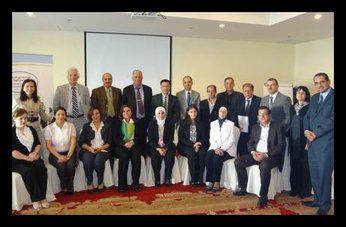
Jordanian Law Students Receive Human Rights Coursework

Jordanian Law Students
Jordanian law students will get human rights coursework thanks to the American Bar Association and USAID. The Human Rights Curriculum for Jordanian law students was launched on May 15th to Jordanian law faculties. This curriculum hopes to bring innovative, multimedia approaches to the law classrooms of Jordan and improve the quality of students’ legal education. Students have been dissatisfied with their education as it has failed to keep up with evolving technologies, and this program is one solution to the complaints.

The launch brought 19 human rights law professors together as well as several other faculty members to experience and use the curriculum. Demonstrations were done as well as hands-on simulations. The curriculum was created as part of the American Bar Association’s program “Enhancing Protection and Promotion of Human Rights in Jordan.” The program was designed by Jordanian and international professors and human rights experts to provide a complete picture of Jordanian law and human rights principles.

The coursework is designed to be interactive and deviates from the lecture model found in most legal classrooms. The material is conveyed through role play, case analysis, and video segments.  Each section includes history and theory regarding different aspects of human rights law.  The workshop done at the launch gave professors a glimpse into the curriculum. It gave professors the ability to learn how to implement the program and various outlets for additional resources and help.

The hope is that Jordanian law students will gain greater knowledge and skills through the more hands-on program and have a greater ability to apply the principles to real life law cases.  It will also give them a greater appreciation of the depth of human rights law and the many areas in which it applies.

-Amanda Kloeppel
Source: AME Info

May 27, 2013
https://borgenproject.org/wp-content/uploads/borgen-project-logo.svg 0 0 Borgen Project https://borgenproject.org/wp-content/uploads/borgen-project-logo.svg Borgen Project2013-05-27 04:00:252020-06-18 19:34:23Jordanian Law Students Receive Human Rights Coursework
Health

The 21st Century Global Health Technology Act

global-health-technology-act
The Global Health Technology Act amends the Health Technologies Program of the Foreign Assistance Act of 1961 under which the US Agency for International Development supports the development of technologies for global health and other purposes. The bill entered the house committee on Foreign Affairs on April 11, 2013 and was introduced by Congressmen Diaz-Balart of Florida.

The bill describes the importance of research and development in global health and explains how research and development on global health technology help break the cycle of dependency by creating sustainable solutions to long-term problems. The bill describes the progress and advances investments in global health have created. It details that funding global health technology today will save the United States a great deal of money in the long run, as well as how overall, the bill and global health technology can greatly benefit the US in terms of an inflated economy and increased national security.

The purpose of the act is to acknowledge USAID’s role in product development, introduction and up-scale of new global health tools and to authorize USAID’s Health Technologies program to improve global health, reduce maternal, newborn and child mortality rates, lower the incidence of HIV/AIDS, malaria, tuberculosis, and other infectious diseases, overcome technical, supply and policy hurdles to product introduction and scale-up, and to support research and development.

The creators of the bill would like to see the introduction of a new Health Technologies Program, which would function as a part of USAID. The program would be aimed at developing, advancing and introducing affordable, available, and appropriate late-stage technologies to the problems listed in the previous paragraph. Additionally, the bill codifies an agreement with USAID for support of the development of technologies for global health.

The act calls for Action Plans to incorporate global health research and development programs with support from coordinating agencies that establish metrics to measure progress. It also calls for Priority Global Health Interventions in order to accelerate the innovation and impact of USAID. The Global Health and Technology Act charges USAID to submit an annual report summarizing yearly research and development activities as well as submit to annual consultation with heads of other Federal agencies to improve alignment of USAID’s health-related research strategy with similar agencies.

-Caitlin Zusy
Source: GovTrack
Photo: Global Health Technologies Coalition

May 27, 2013
https://borgenproject.org/wp-content/uploads/borgen-project-logo.svg 0 0 Borgen Project https://borgenproject.org/wp-content/uploads/borgen-project-logo.svg Borgen Project2013-05-27 04:00:202020-06-18 19:35:57The 21st Century Global Health Technology Act
Advocacy, Aid Effectiveness & Reform, Development, Technology, USAID

USAID and Qualcomm Expand Relationship

cell_phone
USAID and Qualcomm announced a formal agreement to work to expand global technology and increase collaborative efforts in development.  Qualcomm, a San-Diego based telecommunications company, has been working with USAID in recent years to improve access to technology in developing countries. The formal agreement will give Qualcomm’s Wireless Reach Division the ability to carry out projects.

Those that have already benefited from USAID and Qualcomm’s projects are fishermen in Brazil, police officers in El Salvador, and health workers in the Philippines.  In Brazil, the joint project provided small-scale fisherman with mobile devices and applications to connect with buyers, track sales, and get weather updates. Qualcomm was able to equip police in high-crime neighborhoods in El Salvador with smart phones that allowed them to connect to a database to work to reduce crime. Collaboration in the Philippines helped rural health clinics establish electronic records.

USAID commended Qualcomm for being an innovative, nimble, and strategic global technology leader.  USAID and Qualcomm share a vision of how to address the challenges in the developing world. Among the current goals of the formal agreement are to close the mobile phone gender gap, expand access to broadband, reduce the negative effects of climate change, and connect small farmers to market data.  Projects in Africa and Asia are the top priority and future consideration will be given to other areas including Latin America.

The future of technology in developing nations is changing quickly and this is just more step in the right direction.

– Amanda Kloeppel

Source: UT San Diego
Photo: CIAT News

May 26, 2013
https://borgenproject.org/wp-content/uploads/borgen-project-logo.svg 0 0 Borgen Project https://borgenproject.org/wp-content/uploads/borgen-project-logo.svg Borgen Project2013-05-26 07:33:012020-06-18 19:49:50USAID and Qualcomm Expand Relationship
Advocacy, Aid Effectiveness & Reform, USAID

UTSA Partners with Small Business in Tunisia

tunisia

The International Trade Center housed within the UTSA (University of Texas at San Antonio) institute of Economic Development is partnering with USAID to train small businesses in Tunisia.  UTSA will take their Small Business Development Center (SBDC) Counselor and Director Certificate Training program to Tunisia.  The goal of the training is to help Tunisia establish SBDCs to train and support small business owners and entrepreneurs. Many of these are women and young adults with little hope of a sustainable future.

UTSA’s training program is just one component of a larger initiative focused on strengthening Tunisia’s economic development. The initiative is funded and led by USAID.  UTSA and USAID will provide the SBDC training in Tunisia, as well as stay involved with providing technical support to owners and employees of small and medium-sized enterprises.  The program will work to provide a competitive  advantage to these small business owners and work to improve  their lifestyles.

North Africa’s smallest country, Tunisia, is working to rebuild its democracy after the 2011 revolution. It is bordered by Algeria, Libya, and the Mediterranean Sea. Tunisia is ready to promote economic growth and trade opportunities with a special focus on small and medium businesses.

The International Trade Center at UTSA has grown to be one of the largest trade assistance organizations in Texas. They have been  working with countries in Central and South America.  The trade center helps companies increase their global competiveness through technical trade consulting, market research, and innovative training. Follow them on Twitter (@TexasTrade) or find them on Facebook (facebook.com/texastrade).

– Amanda Kloeppel
Source: UTSA

May 23, 2013
https://borgenproject.org/wp-content/uploads/borgen-project-logo.svg 0 0 Borgen Project https://borgenproject.org/wp-content/uploads/borgen-project-logo.svg Borgen Project2013-05-23 05:00:132020-06-16 13:20:16UTSA Partners with Small Business in Tunisia
Food Aid, Food Security

Effects of Food Aid Reform

Effects of Food Aid Reform

Since the proposed changes to the US system of food aid, many have voiced concerns about the shift away from domestic agriculture and towards local food supplies in developing countries. But how will food aid reform affect US shipping and agriculture?

Devex journalist, John Alliage Morales, reports after the US Agency for International Development (USAID) Administrator Rajiv Shah testified before the Senate Appropriations Subcommittee on State and Foreign Operations held May 7, 2013. Shah defended President Obama’s proposal to reform the $1.5 million US Food Aid Program: it would only affect about 300 employees in the shipping industry and 0.2 percent of American agricultural exports.

The six-decade old food aid program was designed primarily to help American farmers by purchasing their surplus, and American shipping companies by requiring at least 75 percent of the goods to be transported to countries in need on U.S.-flagged vessels.

Under Obama’s proposal for fiscal year 2014, the government would still buy food from farmers, but only up to 55 percent of the total, allowing the USAID to source the remaining 45 percent from local or regional markets closer to the crisis areas. USAID estimates that the $1.8-billion new program could reach an additional four million people simply by freeing up money spent on shipping and other costs.

Responding to queries from senators on the reform’s impact to local agriculture, Shah said: “We think the net change would be close to 0.2 percent of total value of U.S. agriculture export.”

“There are other sources of market demand,” added the USAID chief, who stressed that it is “inaccurate” to say that no one will buy the agricultural produce that would no longer be purchased by the government.

Ten years ago, USAID bought and shipped 5.5 million metric tons of food, but today this figure is down to 1.8 million metric tons. In addition, shipping costs have tripled over the same period of time, eating away about 25 percent of the budget, which could have been used to buy more food.

Shah noted that if the reform is approved by Congress, only about eight to ten ships or about 300 employees of the shipping industry will no longer benefit from the food aid program. That accounts for 0.2 percent of the total 15,000 workers in the American maritime shipping sector, he added.

“Of course, we expect that those ships will have other business activities, some of which will come from Department of Defense, some of which will come from elsewhere that they can pursue,” the official said.

– Maria Caluag

Source: Devex
Photo: US News

May 21, 2013
https://borgenproject.org/wp-content/uploads/borgen-project-logo.svg 0 0 Borgen Project https://borgenproject.org/wp-content/uploads/borgen-project-logo.svg Borgen Project2013-05-21 08:00:492020-06-21 22:23:35Effects of Food Aid Reform
Global Poverty

USAID Launches Infrastructure Fund for Africa

USAID Launches Infrastructure Fund for Africa

The Administrator of the U.S. Agency for International Development (USAID), Rajiv Shah, the President of the African Development Bank (AfDB), Donald Kaberuka, and the Swedish Minister for International Development Cooperation, Gunilla Carlsson, recently announced a new fund called the Agriculture Fast Track. The Agriculture Fast Track is a $25 million fund that will spur greater private investment in agricultural infrastructure projects in sub-Saharan Africa. The Agriculture Fast Track fund is the first of its kind.

The announcement was made at the Grow Africa Forum in South Africa. Grow Africa is a partnership of the African Union, the New Partnership for Africa’s Development, and the World Economic Forum. It works with eight African countries to engage governments, civil society, and the private sector to advance sustainable agricultural growth.

The Agriculture Fast Track will spur agriculture infrastructure development in countries that are members of the New Alliance for Food Security and Nutrition, strengthening the links from farmers to markets to tables. It will also finance upstream work of project design, including feasibility studies, market analyses, site surveys, business plans, financial modeling, and other activities necessary to ensure project quality and bank-ability by supporting each project with up to $1.5 million. These project preparation grants will ultimately facilitate access to more funding for agriculture infrastructure because banks and other investors require this documentation to issue commercial loans.

The New Alliance for Food Security and Nutrition was launched last year by President Obama at the G-8 summit and includes six member countries: Burkina Faso, Côte d’Ivoire, Ethiopia, Ghana, Mozambique, and Tanzania. The New Alliance matches market-oriented regulatory reforms in these six countries with $3.7 billion in commitments from the private sector in agriculture.

The fund will be managed by the African Development Bank with the USAID pledging $15 million and the Government of Sweden, pledging $10 million, respectively.

Shah said, “Since the New Alliance for Food Security and Nutrition was founded last year, we’ve seen member countries make serious reforms that have led to real progress. The launch of the Agriculture Fast Track allows African farmers to take advantage of these reforms through fast-tracked infrastructure projects that will better deliver their products to markets.”

Carlsson noted, “By targeting the project preparation stage of projects, the Agriculture Fast Track will advance infrastructure projects when funding is most acutely needed to pivot from planning to construction. This targeted approach allows us to catalyze significantly more private sector investments and ensure the highest standards in terms of social and environmental sustainability.”

–  Essee Oruma

Source: USAID
Photo:NEPAD

May 18, 2013
https://borgenproject.org/wp-content/uploads/borgen-project-logo.svg 0 0 Borgen Project https://borgenproject.org/wp-content/uploads/borgen-project-logo.svg Borgen Project2013-05-18 04:00:072024-05-24 23:42:43USAID Launches Infrastructure Fund for Africa
Advocacy

Modernizing Foreign Assistance Network

Modernizing Foreign Assistance Network
Modernizing Foreign Assistance Network (MFAN) supports the modernization of foreign assistance through collaboration with both Republican and Democratic Administrations and Congress to reform US development policy and practice. The coalition is composed of international development and foreign policy practitioners, experts, concerned citizens and private sector organizations that believe that the US should play a leadership role in achieving economic growth and reducing poverty and suffering around the world. MFAN believes that we can play this role with more effectiveness, efficiency, and transparency.

On May 2, Co-Chairs David Beckmann, George Ingram, and Jim Kolbe commended Congressman Gerry Connolly for introducing the Global Partnerships Act of 2013. The bill would eventually overhaul the Foreign Assistance Act (FAA) of 1961 and allow for more efficiency and effectiveness in providing US foreign assistance.

MFAN supports the Global Partnerships Act of 2013 because it prioritizes several reform principals including the promotion of local ownership and partnerships with governments and citizens. As well, the Act strengthens accountability and transparency through budget planning and ensures program decisions are evidence-based. The approach to development adopted by the Act is one that is more integrated, coordinated, and outcome-based. It is flexible within sectors and agencies and elevates USAID as the US Government’s lead development agency.

Along with the Global Partnerships Act of 2013, MFAN also supports Obama’s latest budget requests and hopes that more representatives and members of the Obama Administration will support the bill. According to MFAN, these budget requests reaffirm Obama’s commitment to an approach to foreign assistance that is more evidence-based and selective. This will allow the US to maintain leadership on global health issues like HIV/AIDS and exercise new leadership with a strong proposal to reform the way the US delivers food aid.  MFAN looks forward to playing a constructive role in this effort to make our foreign assistance more effective and accountable.

– Kira Maixner
Source Modernize Aid
Photo US Embassy

May 11, 2013
https://borgenproject.org/wp-content/uploads/borgen-project-logo.svg 0 0 Borgen Project https://borgenproject.org/wp-content/uploads/borgen-project-logo.svg Borgen Project2013-05-11 04:00:062024-05-24 23:51:09Modernizing Foreign Assistance Network
Page 89 of 92«‹8788899091›»

Get Smarter

  • Global Poverty 101
  • Global Poverty… The Good News
  • Global Poverty & U.S. Jobs
  • Global Poverty and National Security
  • Innovative Solutions to Poverty
  • Global Poverty & Aid FAQ’s
Search Search

Take Action

  • Call Congress
  • Email Congress
  • Donate
  • 30 Ways to Help
  • Volunteer Ops
  • Internships
  • Courses & Certificates
  • The Podcast
Borgen Project

“The Borgen Project is an incredible nonprofit organization that is addressing poverty and hunger and working towards ending them.”

-The Huffington Post

Inside The Borgen Project

  • Contact
  • About
  • Financials
  • President
  • Board of Directors
  • Board of Advisors

International Links

  • UK Email Parliament
  • UK Donate
  • Canada Email Parliament

Get Smarter

  • Global Poverty 101
  • Global Poverty… The Good News
  • Global Poverty & U.S. Jobs
  • Global Poverty and National Security
  • Innovative Solutions to Poverty
  • Global Poverty & Aid FAQ’s

Ways to Help

  • Call Congress
  • Email Congress
  • Donate
  • 30 Ways to Help
  • Volunteer Ops
  • Internships
  • Courses & Certificates
  • The Podcast
Scroll to top Scroll to top Scroll to top