• Link to X
  • Link to Facebook
  • Link to Instagram
  • Link to TikTok
  • Link to Youtube
  • About
    • About Us
      • President
      • Board of Directors
      • Board of Advisors
      • Financials
      • Our Methodology
      • Success Tracker
      • Contact
  • Act Now
    • 30 Ways to Help
      • Email Congress
      • Call Congress
      • Volunteer
      • Courses & Certificates
      • Be a Donor
    • Internships
      • In-Office Internships
      • Remote Internships
    • Legislation
      • Politics 101
  • The Blog
  • The Podcast
  • Magazine
  • Donate
  • Click to open the search input field Click to open the search input field Search
  • Menu Menu

Tag Archive for: USAID

Information and news about mobile technology

Posts

Development, Education, USAID

USAID Summer Start in Liberia to Educate 480 Students

liberia_opt
In Liberia, adults have received an average of only 2.5 years of schooling in their lifetime. According to the CIA World Factbook, approximately 85% of Liberian citizens are unemployed, and 80% live below the poverty line. In 2012, GDP per capita was only $700, making Liberia ranked 224 of 229 nations for GDP. But since the country held peaceful elections in 2005 the economic situation has been slowly improving with the help of private overseas investors in the mining and agriculture industries. More than ever, Liberia needs successful students who can run these industries to help pull the nation out of its extreme poverty. That’s why the USAID Excellence in Higher Education for Liberian Development Project (EHELD) was created in 2011.

The project aims specifically at helping faculty at Cuttington University and the University of Liberia to develop high quality agriculture and engineering programs for its students, attracting students to the programs, and working with local business leaders to create employer linkages for the students.

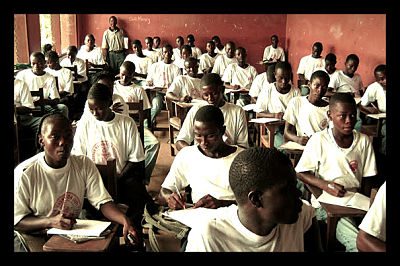
Currently the EHELD team is holding its yearly USAID Summer Start program for high school students that runs from July 15 – 26. The programs, which will focus on experiential learning, are being held at 6 different high schools, accommodating 80 students each. The programs, which will be taught by a team from the University of Michigan, Peace Corps Volunteers, and faculty of Cuttington University and the University of Liberia, will teach important life skills such as computer science and math, while also providing career counseling in agriculture and engineering.

In addition, the EHELD summer programs are partnering with the Cuttington University Upward Bound program to run at the same time under the same leadership. The Upward Bound program will specifically focus on educating 10th -12th graders, while the summer start program will focus on incoming engineering and agriculture students at Cuttington University and the University of Liberia and returning summer start students.

Superintendent of Bomi County (where the high schools are located) Samuel Browne spoke during the camps opening ceremonies, urging the students to appreciate the opportunity and take full advantage of it and telling them the “sky is the limit” when it comes to education.

USAID-EHELD is also currently providing scholarships for over 100 talented engineering and agriculture students at the two universities.

– Emma McKay

Sources: Nation Master, All Africa, Nation Master
Photo: Harvard News
July 30, 2013
https://borgenproject.org/wp-content/uploads/borgen-project-logo.svg 0 0 Borgen Project https://borgenproject.org/wp-content/uploads/borgen-project-logo.svg Borgen Project2013-07-30 06:23:352017-03-20 13:03:37USAID Summer Start in Liberia to Educate 480 Students
USAID, Women and Female Empowerment

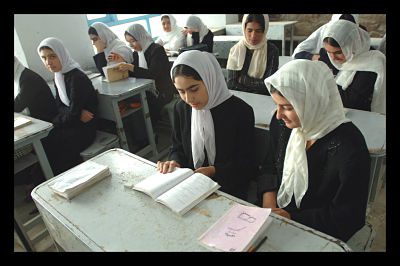
USAID Seeks to Empower Afghan Women

Education_Afghan_Women_USAID
Despite the progress Afghanistan has made in regard to women’s rights since the end of the Taliban regime in 2001, the position of Afghan women in society is deplorable. Afghan women have won the vote and the opportunity for jobs and education, but there is much work to be done. Afghanistan is still a male-dominated culture, one that is rampant with forced marriages, cruelty, and violence against Afghan women.

Recently, the United States Agency for International Development (USAID) launched the “Promote” program to further the position of Afghan women in society. With “Promote,” the U.S. will fund a $200 million program to empower women between the ages of 18 and 30 in Afghanistan. With expressed interest in assistance from Australia, Britain, Japan, and the European Union, the funding for this program could double. In addition to furthering women’s position in society, this program also seeks to engage in economic development in Afghanistan.

This five-year program, the largest of its kind to date, intends to help at least 75,000 women overcome the restraints on their true potential and attain economic and educational security. Rajiv Shah, head of USAID in Afghanistan, states that this program seeks to create 3,500 small businesses by providing women entrepreneurs with credit and microfinance to promote economic growth. Training will also be provided to women who want an active role in the economy so that women will seek out government and policymaking positions in higher numbers.

USAID’s Women in Government Internship Program over the last three years has provided training and placed more than 440 interns in Afghan government agencies. This program seeks to increase female representation in government to 30%. Currently less than 20% of government officials in Afghanistan are women.

If women are successful, Afghanistan will be successful, which is why Shah demonstrates that there must be progress on women’s role in Afghan society. If the withdrawal of U.S. forces after the Afghan presidential elections scheduled for 2014 results in the resurgence of the Taliban, women will continue to be undermined, and all developments in women’s rights issues may be lost. Shah urges that the opportunities for women to be successful must increase because their role in society is vital for poverty reduction efforts and economic development. It is now more crucial than ever to empower women, because after foreign troops withdraw from Afghanistan, there will likely be a decrease in foreign assistance.

– Rahul Shah

Sources: Khaama, Washington Post, Al Arabiya, USAID
Photo: Women of Vision

July 29, 2013
https://borgenproject.org/wp-content/uploads/borgen-project-logo.svg 0 0 Borgen Project https://borgenproject.org/wp-content/uploads/borgen-project-logo.svg Borgen Project2013-07-29 04:23:292017-11-30 10:45:19USAID Seeks to Empower Afghan Women
USAID, Water

USAID to Improve Water Systems in Karachi

Karachi_Water_USAID
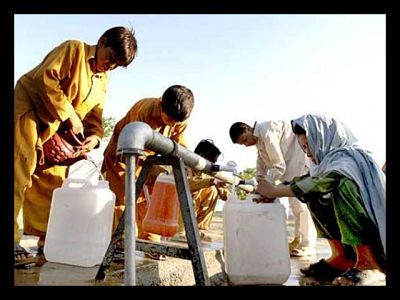
As a part of the US Agency for International Development’s (USAID) Power Distribution Program, the agency is currently helping Karachi Water and Sewage Board to improve water supply for the 21 million inhabitants of Karachi, Pakistan’s biggest city. The Power Distribution Program is a 5 year, $60 million project to improve electric power utilities across Pakistan.

Karachi currently uses a 20-year old system of pumping stations that pump water from filtration plants into the city, but are extremely energy inefficient. The pumps use huge amounts of electricity from the grid, creating expensive electricity bills for the city, and providing less water to its citizens. Some areas of the city are unable to access water several times a month, simply because the pumps are unable to provide enough for the entire city.

The new pumps installed by USAID will be modern, and highly efficient. 41 out of 75 new pumps have already been installed, and the rest are expected to be completed by the end of September. The electric efficiency rate before the new pumps was at an average of 29 percent, but the new pumps will boost that to 55-65 percent, decreasing the city’s energy cost by $1.15 million per annum. All residents of Karachi will now be able to access water on a regular basis. In addition to saving energy and providing more water, the new pumps will save time and money spent on daily maintenance for the pumps.

In addition to improving the water systems in Karachi, the Power Distribution Program is also working directly with Pakistan’s government owned power distribution companies to increase their efficiency by introducing new technologies, training in human resources management and customer service, and creating legal and political space for the companies to operate.

– Emma McKay

Sources: PDIP, Daily Times

July 29, 2013
https://borgenproject.org/wp-content/uploads/borgen-project-logo.svg 0 0 Borgen Project https://borgenproject.org/wp-content/uploads/borgen-project-logo.svg Borgen Project2013-07-29 04:22:342024-06-05 01:53:35USAID to Improve Water Systems in Karachi
Global Poverty

How Do Kenyan Men React to New Marriage Bill?

kenya_marriage_bill_borgen_project_opt
A bill on marriage introduced in the Kenyan parliament has generated outrage amongst Kenyan men. The marriage bill is intended to unify the many and various local marriage laws and customs in the country to a single code. However, in doing so, the bill also strengthens some aspects of women’s rights in the country.

The bill allows for polygamy in Kenya under Islamic and customary traditions. However, the code will stipulate that men disclose the possibility of polygamy to his future spouse prior to marriage. All marriages will also be issued a certificate, even those performed under traditional laws. Issuing this certificate is intended to provide a legal proof of the union. Many marriages performed under traditional customs are not currently issued certificates, leaving spouses without a legal proof of the marriage.

Many wives are unaware that their husband has additional spouses and children until he passes away leaving behind a custody battle for assets. Polygamy is not permitted in Christian or civil marriages.

The majority of negative reactions seem to be caused by a clause stating “damages may be recoverable by a party that suffers a loss when the other party refuses to honor a promise to marry.” This clause seems to imply a man making a promise of marriage is required to follow through or pay for any monetary loss. In Kenya, a dowry is often paid from the prospective husband’s family to his intended wife’s family. The bill limits these payments to “token amounts” in the hope to dissuade poor families from selling daughters into marriage. The bill also sets the minimum age for marriage at 18.

Under Kenya’s 2010 constitution women gained the right to own and inherit land, unprecedented in the country’s history. While the constitution provides additional rights for women, these are often unknown or ignored in more traditional rural areas of the country.

A program launched in 2011 by Landesa and USAID in Kenya engages rural tribal leaders and elders in a discussion about women’s rights and the new constitution. Through this the program has seen progress in male acceptance of women’s rights provided in the constitution. As a result, some areas served by the program have seen increased female enrollment in schools and engagement of women in the community. Engaging community members in a frank conversation about the benefits of women’s rights and their impact is an essential element to gaining widespread acceptance. While many constitutions in sub-Saharan Africa include women’s rights they remain largely ineffective if many rural villages ignore them.

– Callie D. Coleman

Sources: Thomas Reuters Foundation, The Huffington Post
Photo: Thomas Reuters Foundation

July 27, 2013
https://borgenproject.org/wp-content/uploads/borgen-project-logo.svg 0 0 Borgen Project https://borgenproject.org/wp-content/uploads/borgen-project-logo.svg Borgen Project2013-07-27 07:04:482024-05-25 00:09:23How Do Kenyan Men React to New Marriage Bill?
Global Poverty

5 Facts About Mogadishu

When most people consider Mogadishu, the capital of Somalia, they often associate the city with piracy, terrorism, or instability. However, after a long history of violence and political volatility, Mogadishu is actually on an upswing. This is not to say that all of the problems plaguing Mogadishu in recent years have been solved, but there is slow and steady progress being made since the injection of foreign aid.

  1. Somalia has been a war-torn nation since 1991 and has been called the most unstable nation according to the Failed States Index. As the capital of Somalia, Mogadishu was no exception. During this period of political instability, it suffered greatly economically. Makeshift camps were set up throughout Mogadishu, and many of the city’s buildings, universities, schools, and colleges were also transformed into refugee camps.
  2. Evidence of the violence in the country can be seen throughout Mogadishu. As a result of the political instability, there are hundreds of military checkpoints throughout the city and many of the buildings are pock-marked from machine gun fire.. Also, even though the Bakara market thrives as an economic center of the city, those who can afford to shop there usually have to hire armed escorts to protect them just to browse the shop’s offerings.
  3. However, in late 2012, Somalia achieved a huge success by having its first election since the start of the civil war, ending the rule of an unstable interim government. Additionally, a new and widely praised constitution was put in place. Although the civil war continues to rattle the nation, the effects of Somalia’s newly achieved political prosperity has had a substantial impact on Mogadishu’s economy. In fact, as a sign of good faith in the nation’s new direction, USAID has announced plans to allocate an additional $20 million in development aid to Somalia. This aid includes building solar-powered lights in Mogadishu.
  4. Mogadishu’s economy is booming in 2013. The city once known for violence is now known for its rampant construction and expansion.  Besides the real estate market, the telecommunications and agricultural industries have been thriving as well. The money that USAID has been investing in Mogadishu in recent years has had a major impact.
  5. Mogadishu’s success has been so dramatic that it may someday become a tourist hotspot. Because of the returning diaspora of Somalis who wish to aid the city’s development now that it is much safer, hotels and beach resorts are already underway under the advisement of ambitious Somali businessmen.

– Sagar Desai

Sources: BBC, The Borgen Project
Photo: CNN

July 26, 2013
https://borgenproject.org/wp-content/uploads/borgen-project-logo.svg 0 0 Borgen Project https://borgenproject.org/wp-content/uploads/borgen-project-logo.svg Borgen Project2013-07-26 05:46:492013-08-09 12:37:305 Facts About Mogadishu
Global Poverty

What is ACDI/VOCA?

With a vision to encourage global economy success, ACDI/VOCA began in 1963 as product of major U.S. farm co-ops and partners like Nationwide. ACDI/VOCA received its name as an economic development organization and 501(c)(3) non-profit in 1997 after nonprofits Agricultural Cooperative Development International and Volunteers in Overseas Cooperative Assistance merged. The U.S. cooperative organization combined the ACDI’s long term development goals with VOCA’s interpersonal volunteer activities. The ACDI/VOCA is now led and organized by President and CEO, Carl H. Leonard and Chief Operating Officer, Bill Polidoro.

Driven to promote economic opportunities, ACDI/VOC strives for positive global economic and social change. The ACDI/VOC achieves their commitment to poverty alleviation and broad-based economic growth through their diverse team, experience and knowledge of developmental resources, and commitment to over-sea beneficiaries.

The ACDI/VOCA’s total revenue of approximately $168 million funds practices of agribusiness, enterprise development, financial services, food security, and community development. With more than 1,500 employees, currently the ACDI/VOCA, organizes 79 active projects in 35 countries. ACDI/VOCA’s first major project helped create a cooperative in India that became the region’s largest fertilizer producer. ACDI/VOCA has also found success in developing local markets. From 2002 to 2010, ACDI/VOCA devoted every two acres of land in Kenya to maize through implementation of the USAID-funded Kenya Maize Development Program.

ACDI/VOCA’s focus on finance has implemented over 11,000 volunteer assignments in 138 countries since 1971. Examples of recent ACDI/VOCA projects include an Aga Khan Foundation awards program to aid rural Malian farmers, turning organic waste into ‘Green’ Fuel for Peruvian coffee plants, and a USAID awards program to create jobs and livelihoods in Iraq.

The team of 170 U.S employees and 1,330 overseas employees delivers 300-400 short-term technical consulting assignments yearly. Through their list of 55,000 technical experts, public sector and multilateral organizational allies, and affiliates, the ACDI/VOCA is able to make a larger-than-life global impact.

With worldwide reputations for food security solutions, social benefits and economic opportunities, ACDI/ VOCA strives to be a learning and “doing” institution. Staff at ACDI/VOCA receive training in various e-Cornell and Harvard online and Rosetta Stone language courses. In 2010, OpportunityKnocks.org recognized ACDI/VOCA as the winner of the Opportunity Knocks People’s Choice Award for Best Non-Profit to Work for. ACDI further expands their influence by providing international, volunteer, and graduate student opportunities.

– Danielle Doedens

Sources: ACDI/VOCA, Devex, Facebook
Photo: Facebook

July 25, 2013
https://borgenproject.org/wp-content/uploads/borgen-project-logo.svg 0 0 Borgen Project https://borgenproject.org/wp-content/uploads/borgen-project-logo.svg Borgen Project2013-07-25 05:16:192024-12-13 17:49:31What is ACDI/VOCA?
Technology, USAID

How is NASA Related to Development?

How is NASA Related to Development?
A recent event held by the Society for International Development in Washington, DC highlighted the SEVIR program, a joint venture of NASA and USAID. Started in 2004 the program provides essential geospatial and earth-based observations to developing countries in Central America, Africa and the Himalayas. This information is used to monitor environmental impacts and natural disaster damages.

Science experts help convert the raw data into a usable form that governments and non-governmental organizations can use. USAID provides the developmental expertise to assist in directing this information to useful topics and applicable to issues confronting developing nations. SERVIR provides information in the following areas of interest for developing nations: water, weather, biodiversity, climate, disasters, ecosystems, and air and health quality.

USAID also assists the host governments to build technological capacity. The program’s goal is for host governments to assume responsibility for the scientific data and application. In order to support this self-sustaining aspect, the program implementers work closely with the host nations.

NASA and USAID signed a Memorandum of Understanding (MOU) in 2011 that expanded SERVIR’s programs to include food security, climate change, and environmental and energy management.

NASA and USAID also partner with the State Department and Nike on LAUNCH, a program encouraging technology innovation in the private and public sectors to help create a better world. In April the LAUNCH partners held a conference focusing on sustainable material development. Under this call for technological innovation, individuals or teams may submit project ideas. Those selected will participate in a creative immersion project with funding opportunities.

Previous recipients of LAUNCH support include projects for clean water, renewable energy, and biodegradable vaccination needles, and future projects supported by NASA and USAID feature the promotion of education in the sciences.

The SID Washington event focused on SERVIR’s projects in the Hindu-Kush Himalayan region. The Himalayan regional node, launched in 2010, provides satellite imagery of rural, mountain areas previously unavailable. Countries served by the Himalayan regional node include Afghanistan, Bangladesh, Bhutan, China, India, Nepal, and Pakistan.

– Callie D. Coleman
Sources: NASA, SIDW, Nike Inc.
Photo: Engadget

July 24, 2013
https://borgenproject.org/wp-content/uploads/borgen-project-logo.svg 0 0 Borgen Project https://borgenproject.org/wp-content/uploads/borgen-project-logo.svg Borgen Project2013-07-24 07:15:472020-07-19 22:16:20How is NASA Related to Development?
Health

What the Supreme Court Did for HIV Prevention

What the Supreme Court Did for HIV Prevention
On June 20, the United States Supreme Court delivered their decision in the case of the US Agency for International Development (USAID) v. Alliance for the Open Society Institute International (AOSI). The highest court in the country ruled 6-2 that USAID had violated the first amendment of the U.S. Constitution by requiring private organizations to take a pledge not to provide funding for HIV prevention to sex workers. The landmark decision means that HIV/AIDs prevention organizations all over the world will now be able to seek USAID funding without having to sign a pledge that would exclude the very people they are trying to serve.

In 2003, USAID implemented a new law that required all groups receiving U.S. government funds for international HIV/AIDs work to adopt policies opposing prostitution. The “anti-prostitution loyalty oath” mandated that these organizations take the official position on prostitution that the U.S. government does, which is that all forms of sex work are illegal. The oath resulted in the defunding of numerous HIV prevention organizations that deliberately serviced sex workers.

The government, and by proxy USAID, officially equate prostitution with human trafficking. These organizations, however, take the stance that not all sex work is the result of trafficking and that some women and men willfully enter into prostitution. They want to make sex work safer for those involved, recognizing that it will continue despite attempts to stop it.

In September 2005, AOSI began challenging the loyalty oath in federal courts, labeling it unconstitutional. They argued that the oath was in violation of private organizations’ first amendment rights because it required them to adopt the government’s point of view and restricted what they could say or do. The Supreme Court agreed. This ruling brings the U.S. one step closer to accomplishing its goal of eradicating HIV. Instead of adopting policies that contradict their objective, USAID will now have to align itself with it.

– Allana Welch

Sources: Huffington Post, Johns Hopkins, PR News Wire
Photo: Politics PA

July 23, 2013
https://borgenproject.org/wp-content/uploads/borgen-project-logo.svg 0 0 Borgen Project https://borgenproject.org/wp-content/uploads/borgen-project-logo.svg Borgen Project2013-07-23 11:28:012024-12-13 17:49:31What the Supreme Court Did for HIV Prevention
Food & Hunger, Food Aid

USAID Sends Food Aid to Djibouti

us_food_aid
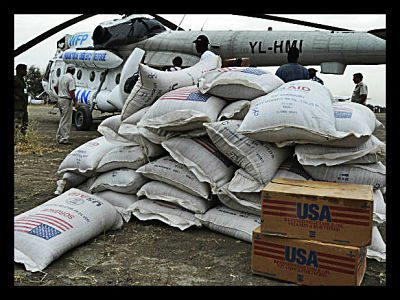
The decision made by the United States Agency for International Development (USAID) to send financial support to the United Nations World Food Program for the Republic of Djibouti is coming at an imperative time for the country. Djibouti has been experiencing a drought for the past several years and its population, particularly those living in rural areas, is in desperate need of food assistance. USAID has already sent the first installment of the $4 million dollar commitment to Djibouti.

Almost immediately, USAID and its partner, Food for Peace, jumped in to restock Djibouti’s stores of yellow spit peas and vegetable oil. Djibouti is where USAID stores these items for its food assistance programs so it was vital to keep the warehouses fully stocked. As the drought continues, the food situation is expected to become even worse.

This current partnership between USAID and Food for Peace is not the beginning of a relationship between the U.S. government and Djibouti. For the past decade, USAID has been working with the country to reduce hunger and malnutrition. Since 2006, the number of child deaths as a result of malnourishment has reduced from 20% to 0.2% in 2012. This is in part due to USAID’s support of the Famine Early Warning System, a program that observes the country’s food security and raises alerts when the food situation turns for the worse.

This program, and many others that USAID supports, are helping the government of Djibouti to not only recognize famine and hunger, but also learn how to combat and prevent it. While short-term solutions are critical for aiding in ending immediate hunger, USAID is also concerned with long-term solutions, including services that guarantee food for children, pregnant and nursing women, building community gardens, and the overarching issue of reducing poverty.

As for now, USAID’s most recent contribution will be critical for those living through this devastating drought. More food aid will be delivered in the next few months.

– Mary Penn

Sources: Sabahi Online, All Africa
Photo: Council on Foreign Relations

July 23, 2013
https://borgenproject.org/wp-content/uploads/borgen-project-logo.svg 0 0 Borgen Project https://borgenproject.org/wp-content/uploads/borgen-project-logo.svg Borgen Project2013-07-23 04:23:102019-08-13 16:16:01USAID Sends Food Aid to Djibouti
Technology, USAID

Peanuts and Feed the Future Empower Women in Zambia

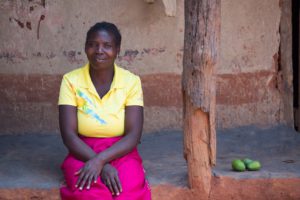
Peanuts and Feed the Future Empower Women in ZambiaMany think of them as a fun salty snack for baseball games or a key ingredient in the classic PB&J, but for a large group of women in the eastern province of Zambia where nearly 85 percent of the labor force works in agriculture, peanuts are a way of survival and the means to a better life. Peanuts are the number one crop grown in this area by women. To improve the efficiency of the production and sale of this crop would mean a huge increase in their quality of life.

One project by President Obama’s Feed the Future initiative is working to teach female peanut farmers how to double their yield of peanuts, and increase their product market by producing a variety of different peanut products, like peanut oil and peanut butter. The initiative is partnering with the Zambian Government Agricultural Research Institute to train the women to become certified to grow higher quality hybrid seed varieties. Selling these seeds will bring in a much higher profit than the seeds the women were originally producing.

In order to help the women create different peanut products, Feed the Future provided a grant to the Katete Women’s Development Association, an organization that empowers women to grow crops like peanuts, for peanut oil expeller, which will help the women enter into the market of peanut processing. The new presser will help the women’s work to remain sustainable even after their donors have left. As long as they have the expeller, they can work themselves to turn their peanuts into profitable peanut products.

Not only will the higher quality peanut crop and new processing technologies help the women increase their quality of life, but they will be working in a business usually reserved for men. In most other countries, men are primarily in charge of producing and marketing the product, giving them all of the opportunities for further success. Feed the Future’s work is giving women the same opportunities and breaking the social boundaries of agricultural work in Africa.

– Emma McKay

Sources: USAID, CIA World Factbook
Photo: Flickr

July 22, 2013
https://borgenproject.org/wp-content/uploads/borgen-project-logo.svg 0 0 Borgen Project https://borgenproject.org/wp-content/uploads/borgen-project-logo.svg Borgen Project2013-07-22 06:00:462024-05-25 00:03:23Peanuts and Feed the Future Empower Women in Zambia
Page 86 of 92«‹8485868788›»

Get Smarter

  • Global Poverty 101
  • Global Poverty… The Good News
  • Global Poverty & U.S. Jobs
  • Global Poverty and National Security
  • Innovative Solutions to Poverty
  • Global Poverty & Aid FAQ’s
Search Search

Take Action

  • Call Congress
  • Email Congress
  • Donate
  • 30 Ways to Help
  • Volunteer Ops
  • Internships
  • Courses & Certificates
  • The Podcast
Borgen Project

“The Borgen Project is an incredible nonprofit organization that is addressing poverty and hunger and working towards ending them.”

-The Huffington Post

Inside The Borgen Project

  • Contact
  • About
  • Financials
  • President
  • Board of Directors
  • Board of Advisors

International Links

  • UK Email Parliament
  • UK Donate
  • Canada Email Parliament

Get Smarter

  • Global Poverty 101
  • Global Poverty… The Good News
  • Global Poverty & U.S. Jobs
  • Global Poverty and National Security
  • Innovative Solutions to Poverty
  • Global Poverty & Aid FAQ’s

Ways to Help

  • Call Congress
  • Email Congress
  • Donate
  • 30 Ways to Help
  • Volunteer Ops
  • Internships
  • Courses & Certificates
  • The Podcast
Scroll to top Scroll to top Scroll to top