• Link to X
  • Link to Facebook
  • Link to Instagram
  • Link to TikTok
  • Link to Youtube
  • About
    • About Us
      • President
      • Board of Directors
      • Board of Advisors
      • Financials
      • Our Methodology
      • Success Tracker
      • Contact
  • Act Now
    • 30 Ways to Help
      • Email Congress
      • Call Congress
      • Volunteer
      • Courses & Certificates
      • Be a Donor
    • Internships
      • In-Office Internships
      • Remote Internships
    • Legislation
      • Politics 101
  • The Blog
  • The Podcast
  • Magazine
  • Donate
  • Click to open the search input field Click to open the search input field Search
  • Menu Menu

Tag Archive for: USAID

Information and news about mobile technology

Posts

Activism, Advocacy, Foreign Aid, Foreign Policy, Global Poverty, USAID

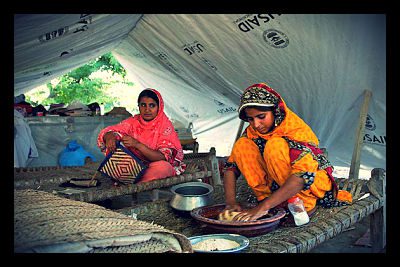
An Overview of USAID

usaid_pakistan
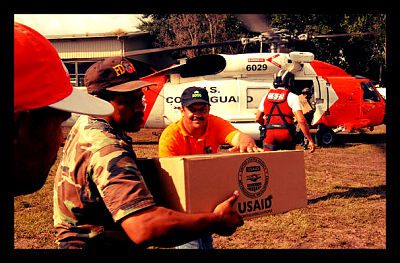
The United States Agency for International Development (USAID) was created in 1961 by The Foreign Assistance Act, which established a separate administration for non-military foreign aid. This consolidated the many separate foreign aid organizations within the US government at the time into one effective agency.

USAID advocates for making international aid the focus of foreign policy.  Under President Truman, foreign policy had two goals:  creating new markets for U.S. exports by relieving global poverty and helping countries prosper through capitalism. Later, in the 1970s, USAID shifted its focus to basic human needs: food security, health, education, jobs and resource management.

Today, USAID focuses on creating sustainable markets, transitioning countries into democracies and rebuilding former areas of conflict. USAID works mainly through non-governmental organizations (NGOs) and diversified aid packages.  Food security, economic growth, education, environmental protection, gender equality, health, innovation, sanitation and conflict management are at the forefront of US foreign policy.  All these factors go into creating sustainable trade partners and positive political relations.

USAID’s $20.4 billion funding comes directly from the U.S. government.  Of this, only about $1.35 billion is spent on operating costs.  The rest of the funding goes to “bilateral assistance” provided to countries and regions in need.  Afghanistan is the largest recipient of US economic assistance at $2.24 billion, followed by Pakistan with $970 million.

Past successes include family planning, immunization programs, improved farming techniques and booming energy sectors in developing countries.  Life expectancy in the developing world has increased by 33 percent, immunizations have eliminated smallpox, and infant and child death rates have decreased by 50 percent in the developing world.  HIV/AIDS education and prevention has been a major focus of USAID, with programs set up in 32 countries.  Meanwhile, 1.3 billion people have access to safe drinking water thanks to USAID-led UN Drinking Water Supply and Sanitation Decade.

– Stephanie Lamm

Sources: USAID History, USAID Sites
Photo: Business Week
October 23, 2013
https://borgenproject.org/wp-content/uploads/borgen-project-logo.svg 0 0 Borgen Project https://borgenproject.org/wp-content/uploads/borgen-project-logo.svg Borgen Project2013-10-23 15:14:362024-05-25 00:30:10An Overview of USAID
Children, Global Poverty, Health, Sanitation, USAID, Women & Children

Hand Washing Can Save Millions of Lives

A mother’s typical question to a child, “did you wash your hands?” may have seemed like a pesky reminder when growing up, but research shows that hand-washing is one of the most important and live-saving habits that can be instilled in a society. Hand-washing with soap has been shown to reduce the incidence of diarrhea by almost one half and of acute respiratory infections by roughly one third.

Since hand-washing is one of the most cost-effective ways to reduce deaths of children under five from diseases like diarrhea and pneumonia – possibly by up to 70% -, the global health soap brand Lifebuoy is teaming up with USAID to create a neonatal program designed to raise awareness of the link between newborn survival and hand washing with soap.

The program targets new mothers and birth attendants through antenatal clinics and health workers. The campaign also uses innovative videos to appeal to the mother’s maternal instinct by communicating the message “hand-washing helps your child survive.” Persuasive advocates such as the Indian actress Kajol also support the cause and help generate awareness of the importance of hand-washing, especially after having used the toilet or before preparing food.

Another initiative which aims to modify everyday behavior is the Global Scaling Up Hand-washing Project, supported by the World Bank in countries such as Peru, Senegal, Tanzania, and Vietnam. These interventions found that while will and motivation to change habits might be present, hand-washing is also dependent on the ease of access to both water and soap. In this way, the program has aimed to make changes in the way soap and water are accessed in households.

The initiative has also found that in countries such as Senegal, men can also play a critical part in the behavior-changing process. Since they are seen as the role-models or leaders of their households, future interventions will also incorporate campaigns that include or are aimed at men.

– Nayomi Chibana
Feature Writer 

Sources: USAID, World Bank
Photo: Old Picture of the Day

October 21, 2013
https://borgenproject.org/wp-content/uploads/borgen-project-logo.svg 0 0 Borgen Project https://borgenproject.org/wp-content/uploads/borgen-project-logo.svg Borgen Project2013-10-21 11:06:442024-05-25 00:29:42Hand Washing Can Save Millions of Lives
Food & Hunger, Food Security, Global Poverty, USAID

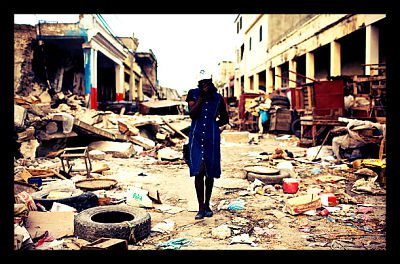
Haiti’s Hunger Crisis

Haiti Hunger Crisis Earthquake Reconstruction
Last June, when reports abounded of the chronic hunger and food insecurity crisis that was ravaging Haiti, the world learned that 1.5 million people were in need of food assistance in the struggling nation, while another 6.7 million people were failing to meet their food needs on a regular basis.

Soon, images of broomstick-thin children with distended stomachs crossed the globe, while international donors and NGOs pledged additional donor dollars to the nation that was devastated by an earthquake in 2010. Despite the international assistance, a staggering 67 percent of the population still has limited access to food, according to the government’s National Coordination of Food Security.

Much of the crisis stems from extreme weather conditions such as floods and droughts which destroyed key crops last year. Worse still, scientists predict that more natural disasters are on their way due to climate change.

Klaus Eberwein, general director of the government’s Economic and Social Assistance Fund believes that the current hunger crisis is due to “decades of bad political decisions,” last year’s storms and drought, and the fact that hunger is not new to Haiti.

The country’s food insecurity issues also have to do with the fact that 80 percent of Haiti’s rice and half of all its food is imported now. With so much depending on imports, meals are becoming harder to obtain on a minimum wage, which is about $4.54 a day.

To make matters worse, Haiti has lost almost all of its forest as poor Haitians continue to chop down trees to make charcoal. Consequently, the loss of trees does not help to contain heavy rainfall or to yield crop-producing soil.

One of the organizations that continues to help stem the widespread hunger is USAID, which has provided over $38 million for emergency and development food assistance in Haiti. This past month, the organization launched a four-year food security program to improve nutrition and access to locally produced foods for the most vulnerable households in Haiti. The project, the Kore Lavi Program, is part of the U.S. government’s global hunger and food security initiatives Feed the Future and Title II.

The program supports the Haitian government in establishing a voucher-based safety-net system to increase poor household’s access to food and prevent malnutrition in children under 2 years of age. It is expected to reach 250,000 households by providing food vouchers, improving maternal and child health and nutrition knowledge, strengthening links between households and health systems, and improving the quality of health and nutrition services. Additionally, it aims to develop a national database system within the Government of Haiti’s Ministry of Social Affairs and Labor to target vulnerable households.

The goal is to change the harsh reality of the statistic that two in three Haitians currently face hunger as the country’s woes continue to mount.

– Nayomi Chibana
Feature Writer

Sources: USAID AP
Photo: TIME

October 20, 2013
https://borgenproject.org/wp-content/uploads/borgen-project-logo.svg 0 0 Borgen Project https://borgenproject.org/wp-content/uploads/borgen-project-logo.svg Borgen Project2013-10-20 17:19:212024-06-05 01:53:40Haiti’s Hunger Crisis
Children, Food & Hunger, Food Aid, Food Security

Optifood Software Analyzes Diets to Address Malnutrition

Working through the World Health Organization (WHO), a team of scientists and programmers have created a new software that is capable of analyzing a person’s diet and determining what in their geographic area can be used to supplement nutritional deficits cheaply. The software is currently undergoing USAID-approved trials in Guatemala, with promising results.

According to the Food and Nutritional Technical Assistance III Project (FANTA), malnourished children in the two studied Highlands communities of Huehuetenango and Quiche can be adequately fed for 25-50¢ US each day. The study consists of randomly selected children in the two communities between the ages of 9 and 11 months, and suggests that in addition to breastmilk, potatoes, beans, eggs, tortillas, and fortified cereal, a local powder called Chispitas would complete the children’s diet. Currently, Chispitas is only available to some communities in Guatemala.

With the average Guatemalan woman giving birth to three children, and the average Highlands household earning US$3.15 per day, even Optifood’s findings will require effort to become reality. Most families simply cannot spend 8-15 percent of their income feeding a single baby. And despite the fact that the ingredients in Chispitas can be found locally, the finished product is most available in urban areas where poverty is more severe than in the Highlands.

Whatever the practical limitations, Optifood takes a great step forward by simply identifying, in almost real time, what the nutritional problems are and the optimal, if ultimately impossible, solutions. With workshops being offered in Guatemala and a handful of other countries, to educate local aid workers in the use of the software, hard data can begin to emerge from poor areas and provide international agencies like the WHO the information it needs to assess priorities. It also gives national programs, such as Guatemala’s Zero Hunger Initiative, with a clear set of objectives to accomplish.

As one of the major criticisms of aid organizations is the uncertainty about what funding can actually accomplish, Optifood is able to provide a nutritional “before and after” comparison, elucidating the problem and demonstrating the effects of policy changes or investments.

– Alex Pusateri

Sources: USAID Blog, Google Translate, CIA, INCAP, FANTA Project
Photo: Hunger and Undernutrition Blog

October 11, 2013
https://borgenproject.org/wp-content/uploads/borgen-project-logo.svg 0 0 Borgen Project https://borgenproject.org/wp-content/uploads/borgen-project-logo.svg Borgen Project2013-10-11 04:00:392024-05-25 00:24:30Optifood Software Analyzes Diets to Address Malnutrition
Food & Hunger, Food Aid, Foreign Aid, Global Poverty, USAID, Water

Foreign Aid, Where Does It Go? A Look at USAID

American Foreign Aid USAID
The United States Agency for International Development (USAID) is a successful program engineered to combat poverty. USAID has focused on diminishing poverty in several aspects. Improving nutrition, assisting in food aid, and advancing water supplies are all important USAID goals. These three issues are connected on a deeper scale, as improving nutrition levels is conjoined with clean water supply and food aid assistance.

Proper nutrition is a basic necessity for every human. Malnutrition leads to approximately 2.6 million deaths per year, deaths that could be prevented if steps were taken to counteract malnutrition. USAID has partnered with Scale Up Nutrition (SUN) to help achieve basic nutritional improvement in impoverished areas throughout the world.

USAID and SUN have laid out a strategic approach to achieve their goal. They plan to prevent malnutrition through a package of maternal, infant, and young children programs. USAID and SUN will also combat malnutrition by targeting supplementation to vulnerable groups, managing malnutrition through community based projects, providing nutritional care for those living with HIV/AIDS, and improving the quality of food in the food assistance programs.

USAID is not only well prepared to handle global malnutrition levels; they are also prepared on the food assistance front. USAID works with the UN World Food Programme (WFP) to effectively deliver lifesaving aid to food-barren areas. USAID and WFP have developed a working protocol that efficiently delivers food supplies to shortages worldwide.

USAID and WFP are constantly upgrading their food science programs, allowing them to deliver greater amounts of healthy food to needy areas. USAID is using a supply-chain management system that allows food to be sent out more efficiently. The programs have also combined to implement an emergency food service, which allows USAID and WFP to purchase emergency food in disaster-stricken areas. In addition, USAID also funded the Famine Early Warning System (FEWS), which is highly regarded as one of the best early-warning systems in the world.

Food and nutrition are two basic necessities in life. These epidemics are two of the most common problems known worldwide, yet a third is often overlooked. Lack of clean water supplies is just as important, and it receives a similar amount of attention from USAID. USAID has a specifically laid out plan to implement clean water supplies in needy areas. USAID focuses on increasing access to a sustainable water supply for all communities, finding a way to sanitize the water supplies, and teaching the community key hygiene behaviors to keep the water sanitized.

Through the actions of USAID, positive results can be seen in all of the targeted areas. In 2011, 3.8 million people had better access to clean water. USAID and affiliated programs provided over 1.5 metric tons of food to communities in 2012. The nutrition programs have been equally effective, with predictions that malnutrition will decrease by 20 percent in the next two years in targeted countries. The progress can be easily seen; all of which were made possible by the foreign aid budget that often falls under much criticism.

– Zachary Wright

Sources: USAID, USAID: Food Aid, USAID: Nutrition
Photo: Flickr

October 7, 2013
https://borgenproject.org/wp-content/uploads/borgen-project-logo.svg 0 0 Borgen Project https://borgenproject.org/wp-content/uploads/borgen-project-logo.svg Borgen Project2013-10-07 18:15:212024-05-25 00:23:47Foreign Aid, Where Does It Go? A Look at USAID
USAID

Counterpart International

Counterpart_International
There are thousands of non-profits that work in less developed countries with a responsibility to be ethical. Counterpart International is a nonprofit organization that stresses a commitment to integrity, transparency and respect in its work across the world.

The three main development sectors that Counterpart International focuses on are:

1) Food Security and Nutrition – Food security involves the obtainment of affordable, quality food in sufficient quantities.

2) Economic Development – Economic development involves creating opportunities for people to increase incomes and provide better for their families.

3) Effective Governance and Institutions – Addressing citizens’ needs by connecting civil groups within a country or region.

In January 2013, Counterpart International joined the United Nations Global Compact—an 8,000 plus member international initiative committed to corporate responsibility. The UN Global Compact has its volunteer members commit to 10 universally accepted principles in the areas of human rights, anti-corruption, labor, and the environment.

In Niger, extreme drought causes food shortages in which the marginalized populations suffer the most. Handicapped and blind children are often purposefully overlooked. Counterpart saw the need for these disabled people to get sufficient nutrition and created FAIR. FAIR, or Food Aid for Disabled Children Project, now provides over 300 children and 1,500 adults with hot meals or food rations. The children receive the hot meals at schools that are designed to teach the blind, deaf, or physically disabled.

Even more impactful work is being done in Mauritania, another drought-stricken country in Western Africa. Counterpart was hired by the United States Agency for International Development (USAID) to implement a Multi-Year Assistance Program titled the Community Action Nutrition and Livelihoods project. This particular project provides sustainable solutions to poverty for Mauritanians through micro-enterprise opportunities, community healthcare training and agriculture practices.

$250,000 in loans through Counterpart’s program helped approximately 3,500 Mauritanian entrepreneurs, most of which were women. Women empowerment is crucial in a region where women lack most of the UN’s Universally Declared Human Rights. In addition, nearly 600 healthcare workers were trained, providing local care to individuals who may be suffering from diseases and deficiencies that can easily be prevented and treated. Healthcare for farm animals was also implemented under the program in Mauritania. Training veterinary assistants not only provided jobs for the people, but prevented the loss of livestock.
Counterpart International is in charge of the Global Civil Society Strengthening Leader with Associates (GCSS LWA). This association teams up with the United States Agency for International Development and Global Civil Society Strengthening to encourage civic growth and participation. In addition to promoting better governance, GCSS LWA and its over 23,000 local and regional partners seek to empower independent media outlets.

This year, as Counterpart International celebrates its 48 year anniversary, nearly half a century of development work in over 65 countries, it continues to maintain transparency and uphold its responsibility to be ethical in all of its interactions.

– Aysha Rasool
Feature Writer

Sources: Counterpart International: News, Counterpart International: Blog, Global Civil Society Strengthening
Photo: Counterpart International

August 26, 2013
https://borgenproject.org/wp-content/uploads/borgen-project-logo.svg 0 0 Borgen Project https://borgenproject.org/wp-content/uploads/borgen-project-logo.svg Borgen Project2013-08-26 14:48:162020-07-09 21:23:55Counterpart International
Developing Countries, Development, Food & Hunger, Food Aid, Foreign Aid, Global Poverty, Poverty Reduction, USAID

US Foreign Aid to Africa: What We Give and Why

us_foreign_aid

In 2012, the United States provided nearly $12 billion in official development assistance (“ODA”) to African nations. The ODA is allocated to education, health, infrastructure and economic development programs in recipient countries. Currently, the United States allocates foreign aid to 47 African nations and USAID operates 27 missions on the continent.

US Foreign aid to Africa began in the 1960s as many African nations gained independence and the United States sought strategic alliances to counter the influence of the Soviet Union. With the exception of disaster and famine relief, most foreign aid to Africa began to decrease with the collapse of the Soviet Union.

In the 2000s, President Bush more than tripled aid to Africa by establishing programs such as the Child Survival and Health Programs Fund as well as the Global HIV/AIDS Initiative.

Though foreign aid programs are designed to assist recipient nations with development, they also benefit the United States in a number of ways.

First, these programs help build strategic alliances and foster support for democratic transitions. It also stimulates Africa’s growth and development, which provides opportunities for increased trade and direct investment in the continent’s emerging markets.

But for all the benefits, foreign aid to Africa has no shortage of detractors. Many critics point out that much of the money allocated to Africa never reaches the people who most need the assistance. “Eighty percent of U.S. aid to Africa is spent right here in America — on American contractors, American suppliers, and so forth,” said George Ayittey, president of the Free Africa Foundation.

In more corrupt nations, politicians and civic leaders are often charged with misappropriating funds designated for the people. Others critics claim that foreign aid to Africa simply does not work—after 50 years of assistance, Africa still confronts the same issues.

But even critics would have to agree on one crucial point: foreign aid is an integral part of U.S. foreign policy. In Africa, aid programs support a large framework of social and economic assistance for developing nations.

Critics are correct that American companies and corrupt politicians siphon a large portion of foreign aid. But aid to Africa has also done much to improve infrastructure, bolster economic development and improve health care conditions for millions of people on the continent.

– Danial Bonasso
Sources: Foreign Policy Initiative, Washington Post, NPR, One.org
Photo: James Bovard

August 21, 2013
https://borgenproject.org/wp-content/uploads/borgen-project-logo.svg 0 0 Borgen Project https://borgenproject.org/wp-content/uploads/borgen-project-logo.svg Borgen Project2013-08-21 11:44:212024-12-13 17:49:39US Foreign Aid to Africa: What We Give and Why
Development, Global Poverty

Tourism in the Philippines to Help the Poor

Tourism_Philippines_Poverty
USAID and the Philippines Department of Tourism and Department of Social Welfare and Development recently announced a program to include pro-poor tourism activities in areas of high poverty in the country. The Departments and USAID signed a Memorandum of Understanding (MOU) August 5th. Tourism in the Philippines has significant potential to boost the economy and alleviate poverty.

The program, dubbed “The One-Step Project,” will seek to incorporate pro-poor aspects in the tourism trade in five pilot areas characterized by high poverty and high tourism. These five areas are chosen from the 78 tourism development areas designated by the Department of Tourism. Regional and provincial officers in the five areas will be consulted by a central technical working group. While a project amount has not yet been set, The One-Step Project will take place over four years and will focus on infrastructure, job creation through community-based projects, and private sector engagement.

In 2010, the Philippines received 3.5 million visitors, generating US$2.4 billion from tourism. The Philippine government has focused on the tourism industry in recent years, but, despite its many natural attractions the Philippines, still trails other regional countries in tourism numbers.

A variety of factors contribute to this sluggishness: remote location, susceptibility to natural disasters, and unrest often resulting in kidnappings. However, tourism does hold the potential for new job creation. Including the poor in tourism strategies and job creation is an important development opportunity within this sector. While the Department of Tourism has included these strategies in the past, this will be their first partnership with USAID.

This will not be the first time the Philippine Department of Tourism has focused on pro-poor tourism actions. In 2000, the Department’s regional branch helped villagers in Sta. Juliana organize in order to take advantage of a new influx of tourism.

Residents of the village, suffering from a decade of neglect, struggle to make ends meet. They are hampered by lack of appropriate infrastructure to get their agriculture goods to market and a lack of telecommunications. The regional Tourism department helped the villagers form the Sta. Juliana Tourism Council, Inc. which has educated residents on the trade’s benefits. New jobs and livelihoods evolved to capitalize on this influx.

The One-Step Project falls under USAID’s Partnership for Growth program, running until 2016. Additional projects in the Philippines will be implemented by USAID focusing on tourism. Most of these projects will take the form of technical assistance and policy reform. The USAID Philippine budget reached $102 million for fiscal year 2011. This is distributed across USAID’s four focus areas: democracy and governance, economic growth, health and education, and energy and environment. The US government is the Philippines largest grant donor. The collaborative One-Step Project has great potential to continue tourism-focused aid to the poorest communities in the Philippines.

– Callie D. Coleman

Sources: Business Mirror, CNN, The Philippine Department of Tourism , USAID
Photo: AUSTRONESIA

August 16, 2013
https://borgenproject.org/wp-content/uploads/borgen-project-logo.svg 0 0 Borgen Project https://borgenproject.org/wp-content/uploads/borgen-project-logo.svg Borgen Project2013-08-16 09:43:022024-05-25 00:15:35Tourism in the Philippines to Help the Poor
Global Poverty

Microfinance and the World’s Poor

microfinance-world-poor
Poor populations in developing countries worldwide are often ignored by most lending institutions. Traditional banks typically do not loan to those with little income or other forms of collateral. As a result, it is extremely difficult for those in poverty to advance economically without access to forms of credit, insurance, or savings mechanisms.

Microfinance services provide these low-income individuals with a broad range of financial tools involving small amounts of money in the hopes that services like capital, banking, and insurance will assist them in rising out of poverty. The World Bank estimates that there are around 160 million people in developing countries that are currently benefiting from microfinance. Many of the institutions that provide microfinance services are nonprofit organizations like Kiva and government agencies such as the United States Agency for International Development (USAID).

Many case studies have demonstrated that microfinance is responsible for helping low-income households meet basic needs, improve their economic welfare, and grow their livelihoods. Microfinance also helps to empower women by providing microcredit, thereby promoting equality and economic opportunities.

Microcredit provides poor entrepreneurs the ability to start or expand their businesses. Having this reliable source of credit makes it easier for them to manage cash flow and business activities. Even though the size of the capital lent seem comparatively small, sometimes less than a couple hundred dollars, it is a significant sum for half of the world’s population, who lives on less than $2 a day.

After using credit to start a business or buy land, poor individuals in developing countries can benefit from savings services that microfinance institutions provide. Since the poor are more likely to lose control of their money due to mismanagement, fraud, and corruption, secure financial services allow safer and more responsible transactions. Additionally, low-income families in developing countries are more likely to be adversely affected economically due to many uncontrollable factors such as death, illness, and natural disaster. Access to credit, insurance, and savings can make these precarious conditions easier to manage and maintain financial security.

Empirical evidence from the Consultative Group to Assist the Poor (CGAP) shows the benefit that microfinance services can provide to the world’s poor. For example, members of the Grameen Bank, a nonprofit microfinance organization for women, who use microfinance services have over 40% higher incomes than those who do not. Development in countries like India, the Philippines, and Morocco has also been advanced due to microcredit. Businesses have expanded and industries have diversified.

Individuals in developing countries are in dire need of a broad range of financial services. Microfinance services provides these people with the opportunity to develop their own businesses, build assets, and manage their incomes and risks. Those who are given access to microfinance services live in significantly better economic conditions than those who do not. And in time, many of these people are able to pull themselves out of poverty.

– Rahul Shah 

Sources: KIVA, CGAP, Lend with Care
Photo: The Guardian

August 8, 2013
https://borgenproject.org/wp-content/uploads/borgen-project-logo.svg 0 0 Borgen Project https://borgenproject.org/wp-content/uploads/borgen-project-logo.svg Borgen Project2013-08-08 05:17:142016-04-25 11:14:48Microfinance and the World’s Poor
USAID

USAID Helps Myanmar Become a Global Leader

mynamar_usaid_beach
Two years ago, Myanmar (also known as Burma) was the runt of Southeast Asia. For decades, it had suffered under autocratic military rule, entrenched human rights violations, and, at a 26% poverty rate, one of the region’s worst economies. But all that is starting to change.

In 2008, Cyclone Nargis devastated the seaside nation, prompting a flood of international aid. Despite skepticism about aid impact, the global attention kickstarted major national reform in Myanmar. Jim Della-Giacoma, the director of the International Crisis Group in Asia, recently applauded the nation for handling the abrupt largesse transparently and efficiently—tendencies not often reflected in emerging governments.

In 2011, the decades-long civil war between the government and the Kachin rebels in Myanmar came to a ceasefire. The unprecedented peace has opened the gates wide for fostering economic growth and forging new global connections. The sprawling country is making visible strides out of almost 30 years of internal conflict and isolation and has become a harbor for international development work.

Not only is the nation poised for amplified development efforts, however—Myanmar has launched itself to the head of its league. In 2014, it will assume chairmanship of the Association of Southeast Asian Nations, a bloc it joined in 1997. Its leadership will, among many things, be key to improved environmental policy in the region.

“I never thought I’d be talking about Myanmar’s influence in Southeast Asia,” said Carter Roberts, CEO of the World Wildlife Fund. “Sometimes there are moments when countries change governments and things happen, then shame on us if we don’t provide the right technical assistance at the right time.”

His words could almost be the roadmap for USAID, the US bilateral development agency that has been providing technical assistance in Myanmar since the country first opened international relations a few years ago. Under the “U.S.-Burma Partnership for Democracy, Peace and Prosperity” launched by President Obama last November, USAID is unfolding a three-pronged strategy to end health insecurity, boost the hi-tech industry, and encourage participatory governance in Myanmar.

The nation still faces serious human rights challenges, such as military persecution of its Muslim minority. Still, its ascent from hopeless destitution and obscurity to growing prosperity and leadership is staggering and offers hope to its many poor neighbors.

“There’s a real dialogue and engagement with government at a broad range of levels,” said Rajiv Shah, a USAID administrator in Myanmar. “There’s real progress.”

— John Mahon

Sources: Reuters, World Bank, Devex
Photo: Times Live

July 30, 2013
https://borgenproject.org/wp-content/uploads/borgen-project-logo.svg 0 0 Borgen Project https://borgenproject.org/wp-content/uploads/borgen-project-logo.svg Borgen Project2013-07-30 11:31:002017-03-20 13:05:52USAID Helps Myanmar Become a Global Leader
Page 85 of 92«‹8384858687›»

Get Smarter

  • Global Poverty 101
  • Global Poverty… The Good News
  • Global Poverty & U.S. Jobs
  • Global Poverty and National Security
  • Innovative Solutions to Poverty
  • Global Poverty & Aid FAQ’s
Search Search

Take Action

  • Call Congress
  • Email Congress
  • Donate
  • 30 Ways to Help
  • Volunteer Ops
  • Internships
  • Courses & Certificates
  • The Podcast
Borgen Project

“The Borgen Project is an incredible nonprofit organization that is addressing poverty and hunger and working towards ending them.”

-The Huffington Post

Inside The Borgen Project

  • Contact
  • About
  • Financials
  • President
  • Board of Directors
  • Board of Advisors

International Links

  • UK Email Parliament
  • UK Donate
  • Canada Email Parliament

Get Smarter

  • Global Poverty 101
  • Global Poverty… The Good News
  • Global Poverty & U.S. Jobs
  • Global Poverty and National Security
  • Innovative Solutions to Poverty
  • Global Poverty & Aid FAQ’s

Ways to Help

  • Call Congress
  • Email Congress
  • Donate
  • 30 Ways to Help
  • Volunteer Ops
  • Internships
  • Courses & Certificates
  • The Podcast
Scroll to top Scroll to top Scroll to top