• Link to X
  • Link to Facebook
  • Link to Instagram
  • Link to TikTok
  • Link to Youtube
  • About
    • About Us
      • President
      • Board of Directors
      • Board of Advisors
      • Financials
      • Our Methodology
      • Success Tracker
      • Contact
  • Act Now
    • 30 Ways to Help
      • Email Congress
      • Call Congress
      • Volunteer
      • Courses & Certificates
      • Be a Donor
    • Internships
      • In-Office Internships
      • Remote Internships
    • Legislation
      • Politics 101
  • The Blog
  • The Podcast
  • Magazine
  • Donate
  • Click to open the search input field Click to open the search input field Search
  • Menu Menu

Tag Archive for: Innovation

Posts

Health

Global Health Focused Social Entrepreneurship on the Rise

Social Entrepreneurship
Oftentimes, business and altruism seem to be at odds. Social entrepreneurship aims to dismantle that notion. This effort takes a number of shapes, but specifically, entrepreneurial initiatives addressing global health are on the rise. These types of businesses intend to implement solutions to health care problems faced by marginalized groups in ways that bureaucratic governments and health organizations cannot.

To backtrack, a social entrepreneur is someone who seeks to establish sustainable social change on a large-scale. They intend to promote social values while keeping fiscal responsibility in mind.

A key characteristic is innovation. A social entrepreneur should be able to adapt new or improved methods to fit the targeted populations in order to help the world. A social business is one that does not sacrifice responsibility for profit, but rather shoots for responsibility while turning a profit.

According to the Journal of the American Medical Association (JAMA), the rise in social entrepreneurship is an unmistakable trend in full force. At least 27 universities worldwide are currently offering courses or programs in that particular field of study. There are at least 25 annual competitions for social entrepreneurship, which reflects the rising popularity of this sect of the business world.

Unlike other businesses, social ventures do not rely on patented technologies or methods, but rather search to inject something new, namely perspective, into an already existing system. With healthcare, this means companies can circumvent the norm and introduce a unique lens through which healthcare is delivered.

Outside of the private sector, social entrepreneurship is changing the way the public sphere operates as well. Governments and NGO’s are learning from these ventures. From organizations in Bangladesh and Thailand to the U.K.’s own Oxfam, NGO’s are adopting entrepreneurial methods to maximize the effectiveness of their operations.

Governments are beginning to endorse social entrepreneurship as a valuable ally to local economies and social change.

– Connor Borden

Photo: The Startup Couch

August 4, 2016
https://borgenproject.org/wp-content/uploads/borgen-project-logo.svg 0 0 Borgen Project https://borgenproject.org/wp-content/uploads/borgen-project-logo.svg Borgen Project2016-08-04 01:30:022024-12-13 18:05:19Global Health Focused Social Entrepreneurship on the Rise
Development, Global Poverty

Crowdsourcing Multinationals Solve Social Problems

Crowdsourcing
The process of collecting contributions in the form of ideas and services is not a new phenomenon. In fact, crowdsourcing has historically been used to solve challenging innovation problems.

Companies have for a long time used consumer wisdom to tackle tough scientific and technological challenges, design new products, generate marketing ideas and increase customer satisfaction. Platforms like the Heineken Ideas Brewery, BMW customer innovation lab and My Starbucks Ideas show how major organizations are successfully tapping into the power of the crowd to co-create innovative concepts.

Beyond simply a new approach to research and development, some companies have taken crowdsourcing a step further. Organizations are now using the powerful platform to tackle social challenges in the areas of sustainability and poverty reduction.

Unilever Foundry Ideas is a crowdsourcing platform that was launched by a corporate giant, Unilever in 2015. Through the platform, Unilever seeks to make sustainable living mainstream by sourcing ideas from customers and entrepreneurs. An article in CSR Asia talks about the success of Unilever Foundry ideas highlighting how it has generated over 300 ideas to encourage recycling of bathroom products, reduction of water dependency while doing laundry and invention of concepts for more luxurious and sustainable showers for the future.

“Big social, environment and economic issues are so huge that no one organization or company or group can solve them alone,” says a Unilever Foundry Ideas representative. “Aspects of sustainability affect all of us and so all of us have ideas.”

General Electric has the open innovation branch of its Ecomagination program. This is a collaborative problem-solving environment.

Open innovation posts a variety of challenges and creates an open call to the global brain, a growing community of over 400 million, to submit creative ideas to tackle these challenges. Contributors of winning ideas normally receive cash prizes, internships and future collaboration opportunities.

Open innovation has so far fielded challenges in the areas of solving water scarcity through Water Reuse and managing chronic disease by developing wearable monitoring technologies to mention a few.

BASF, one of the world’s leading chemical companies, has the co-creation platform the Creator Space. In 2015, Creator Space conducted a tour in six cities around the globe, Mumbai, Shanghai, New York, Sao Paulo, Barcelona and Ludwigshafen. Creator space aimed to develop solutions for problems that citizens in the different cities were facing. It did this through enlisting inputs from government officials, NGOs, the society as well as artists.

In Mumbai, for example, BASF Creator Space was tackling the challenge of water accessibility. According to a white paper on the Mumbai visit, a holistic approach has been developed to augment Mumbai city’s plans to revamp the on-grid water infrastructure.

Coca-Cola takes part in the crowdsourcing space by hosting an annual grant challenge known as “Shaping a Better Future”. For the grant, Coca-Cola has partnered with the Global Shapers Community of the World Economic Forum to scale proven solutions to the world’s biggest problems.

There are over 500 Global Shaper hubs around the world that comprise of young people with an exceptional drive to make a contribution to their communities. They have a focus on matters such as bettering the environment, kick-starting civic engagement and eradicating poverty to name a few.

Coca-Cola offers five 10,000 dollar grants through the program to accelerate the most impactful and promising Global Shaper hub projects.

François Pétavy, eYeka CEO notes that crowdsourcing often has its beginnings in the creation of better products and experiences, but often results in a more collaborative and sustainable world.

– June Samo

Sources: BASF 1, BASF 2, Coca-Cola, Crowdsourcing.org, CSR Asia, Entrepreneur, GE 1, GE 2, Open Innovation, Unilever

April 4, 2016
https://borgenproject.org/wp-content/uploads/borgen-project-logo.svg 0 0 Borgen Project https://borgenproject.org/wp-content/uploads/borgen-project-logo.svg Borgen Project2016-04-04 01:30:032024-05-27 09:33:29Crowdsourcing Multinationals Solve Social Problems
Children, Global Poverty

Froggy Sink: Better Hygiene and Sanitation Saves Lives

froggy_sink
Parents know that it can be difficult to get their child to wash their hands or brush their teeth. Sometimes, to get kids to do what is best for them, you have to make it fun.

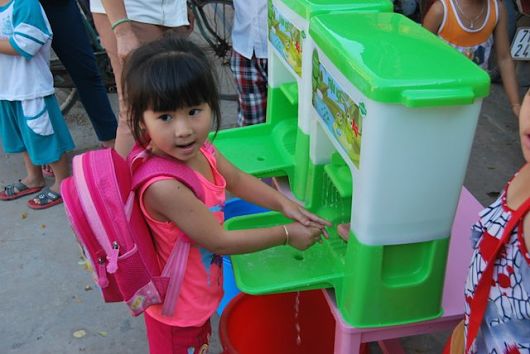
A new toy can help prevent children from getting sick with diseases or diarrhea. It is a bright green and white plastic box that has frogs and a colorful logo on it.

LaBobo is the newest toy sink produced by nonprofit WaterSHED. It has been launched in Cambodia, where access to basic hygiene and sanitation needs ranks last in Southeast Asia and 110th in the world, contributing to the deaths of 10,000 children per year.

The World Health Organization (WHO) reports that nearly 800,000 children die every year from lack of sanitation, which leads to diseases.

LaBobo sells the frog toy sink at $15, making it a very affordable product, and the sink dispenses 15 liters of water. Instead of giving out buckets and soap, WaterSHED takes an innovative approach to helping solve sanitation problems in developing countries.

“If you give people a bucket and a piece of soap, more often than not you will find the bucket ends up being used for something else,” says Geoff Revell, WaterSHED’s regional program manager.

In one year, WaterSHED has sold 10,000 units in Cambodia. Regular hand-washing and sanitation is a significant challenge in Cambodia, where only 44 percent of Cambodians are able to wash their hands with soap and 60 percent of the rural population defecate in the open.

WaterSHED is working on marketing tools to bring LaBobo to Vietnam, which also has low sanitation standards.

Forty percent of the global population lacks basic sanitation. LaBobo does not help decrease the number of people who do not have access to sanitation, but it does increase the number of children who will wash their hands.

In places like Niger, where only 18.3 percent of the population has access to improved sanitation facilities, there needs to be stronger commitments from the international community to ensure that residents can access proper sanitation.

Diseases are a cross-national threat. But by investing in sanitation facilities and innovative ways to improve children’s sanitation, the large number of deadly diseases these children could become afflicted with can be reduced.

– Donald Gering

Sources: Good News Network, Reuters, Social Progress Imperative, WaterSHED, WHO
Photo: Good News Network

August 9, 2015
https://borgenproject.org/wp-content/uploads/borgen-project-logo.svg 0 0 Borgen Project https://borgenproject.org/wp-content/uploads/borgen-project-logo.svg Borgen Project2015-08-09 01:30:402024-05-27 09:27:21Froggy Sink: Better Hygiene and Sanitation Saves Lives
Global Poverty

The Shoe That Grows and Helps Save Lives

shoe_that_grows
According to the World Health Organization, about 300,000 people are infected with parasitic worms around the world. Between 10,000 and 135,000 of them die each year due to these parasites. These deaths could have been prevented with something as simple as adequate footwear.

Many people who live in poverty do not have access to adequate shoes that fit and have no holes in the sole. This is dangerous. Sanitation in poverty-stricken areas is not reliable, and it is not uncommon for children to go barefoot almost all the time in areas where sharp objects and human waste are on the ground. Without shoes, exposure to human waste can lead to parasitic worm infestations that come with a host of side-effects, “…including abdominal pain, diarrhea, blood and protein loss, rectal prolapse, and physical and cognitive growth retardation,” according to the Centers for Disease Control and Prevention.

Kenton Lee, a designer, inventor and reverend, wants to make these illnesses a thing of the past. He has collaborated with the company, Proof of Concept, to design a simple way to keep children from contracting soil-borne illnesses. The project, launched by charity, Because International, has partnered with organizations in Ecuador, Haiti, Ghana and Kenya to bring his solution to the children who need it most.

The Shoe That Grows is an inexpensive, durable sandal that can expand up to five sizes. Made from compressed rubber, leather and common metal snaps, the shoe comes in two sizes, large and small. The small shoe lasts from kindergarten to fourth grade, and the large lasts from fourth to about ninth grade. The materials are easy to repair and replace, even in countries with few resources. Because they are also very light, it is easy to transport large shipments of the shoes wherever they need to go. A donation of 50 pairs of shoes can fit into a duffel bag and be treated as a carry-on item for an airplane flight.

While an individual pair of shoes costs about $30 to make, larger orders bring the price down to $12 or even $10 each.

The project’s website has successfully distributed hundreds of shoes through its “Fill a Duffle” campaign. For $10 a pair, a duffel bag is filled with about 50 pairs of shoes. Once full, the duffel is sent to areas in need, and donors can even choose the areas they want their donation to reach.

The shoes are sold out right now, but will be available to donate and to buy in America again come July.

– Marina Middleton

Sources: World.Mic, In Habitat, Geek.com, The Shoe That Grows
Photo: Because International

May 10, 2015
https://borgenproject.org/wp-content/uploads/borgen-project-logo.svg 0 0 Borgen Project https://borgenproject.org/wp-content/uploads/borgen-project-logo.svg Borgen Project2015-05-10 12:00:372024-06-05 01:58:29The Shoe That Grows and Helps Save Lives
Global Poverty

Design for Extreme Affordability

Design for Extreme Affordability, a graduate course offered by Stanford University, aims to give students the tools needed to “design products and services that will change the lives of the world’s poorest citizens.”

Offered by the university’s Institute of Design, 40 students from a variety of different disciplines complete the course each year, producing ten final projects that aim to achieve cheap solutions to serious global problems.

They are taught design and marketing principles, form student teams, collaborate with local partner organizations, travel to their project sites, prototype and test their products and present their final projects product proposals. According to the Stanford course website, emphasis is placed on “design for the developing world, including economic, technological and cultural considerations.”

When the course is completed, many students actually fulfill their proposal and see their idea through to completion. In fact, a considerable number of Design for Extreme Affordability projects have found global success.

For example, Embrace, an international nonprofit maternal and child health organization, was created as a result of the course. The Embrace Warmer, the organization’s central product, is a low-cost innovation to help care for premature infants in developing countries.

Usually, the solution for premature infants is to place them in an incubator until they are able to regulate their own body temperature. However, incubators are expensive and require electricity, training to use and maintenance. Consequently, mothers in less-developed countries must find different methods to save premature infants from hypothermia. They often resort to using fire, light bulbs or hot water bottles, all of which are dangerous and ineffectual. There was a clear need for an affordable, non-electric and safe method to keep infants warm.

This was the challenged posed to one team of graduate students taking the Design for Extreme Affordability course, and the Embrace Warmer was its result. The price tag is under 1 percent of the cost of a standard incubator, and its wraparound design is durable, portable, safe, hygienic and very effective.

The Embrace team’s idea has blossomed into an international organization that has reached over 50,000 infants across the world and made a real impact.

Stanford’s Design for Extreme Affordability is not just another school project. It is an intensive year where dedicated and motivated students–with support from expert staff–create practical solutions to life-threatening global problems.

With the courses direction, students have been able to consistently create innovative products that are making a difference in the world today. Hopefully the course will continue to inspire the university’s gifted students to direct their talents toward the global community.

– Emily Jablonski 

Sources: Embrace Global, Huffington Post, Stanford
Photo: Stanford Daily

July 22, 2014
https://borgenproject.org/wp-content/uploads/borgen-project-logo.svg 0 0 Borgen Project https://borgenproject.org/wp-content/uploads/borgen-project-logo.svg Borgen Project2014-07-22 12:32:492024-05-27 09:18:49Design for Extreme Affordability
Development, Nonprofit Organizations and NGOs

Six Successes of Plant With Purpose Around the World

Plant With Purpose is a San Diego-based Christian development organization. It assists the impoverished living in rural areas “where poverty and environmental degradation intersect” globally.

Through agricultural training, restoring the land and providing financial education, Plant With Purpose helps poor farming families become self-sufficient. To date, they have helped plant 11.9 million trees since their founding in 1984.

Plant With Purpose is currently present in more than 325 communities, providing aid and support to over 17,132 individuals within Burundi, the Dominican Republic, Haiti, Mexico, Tanzania and Thailand.

Location: Davi, Haiti

The Need: In Haiti, only 2 percent of its original forestry remains. Eighty-four percent of the population lives in poverty, and the country imports 60 percent of its food needs. Half of Haitian children under 5 are undernourished. With the help of Plant With Purpose, smallholder farming families are planting trees, implementing soil conservation methods and preventing soil erosion. Locals are educated on sustainable agriculture methods that restore the land and increase their food production and incomes. Village Savings and Loan Associations are also implemented.

Instead of providing food aid, Plant With Purpose is educating for self-sufficiency.

The communities in Davi are facing particular hardships. Floods and landslides cause destruction every rainy season, washing away the fertile topsoil and preventing farmers from growing crops. Families are forced to migrate to cities to find work. Plant With Purpose is working to reverse deforestation through its various methodologies.

Progress: Assisted families showed a 46 percent decrease in cholera and a 50 percent decrease in typhoid, compared with others. They also now actively save cash four times more frequently. They cultivate about 20 percent more land, own 30 percent more land and protect 20 percent more land through reforestation or erosion control.

These families also plant about three times as many trees as non-assisted local families.

Location: Panasawan & Pang Dang Nok, Thailand

The Need: The government of Thailand refuses to recognize many hill tribe members as citizens. Thus, they have few legal rights. They also have limited access to healthy fields, leaving them to grow crops on devastated hillsides. Plant With Purpose has been working with these communities to help them learn sustainable farming techniques and advocate for legal status in Thailand.

The village of Panasawan suffers from extreme poverty and a destroyed environment. Soil erosion, poor water quality and sanitation, difficult access to land rights and lacking availability of credit has ensnared the community in the cycle of poverty and environmental degradation. Plant With Purpose is providing farmers with environmental and financial training and economic opportunities necessary to break the cycle.

Progress: Hill tribe farming families are gaining access to land and basic rights. Village Savings and Loan Associations are providing a means to save and gain credit. Plant With Purpose is also helping congregations better meet the needs of their communities by training leaders.

Families aided now have twice as many children enrolled in high school, are 31 percent more likely to actively save cash, are 41 percent more likely to own land that is protected, have planted 2.5 times more trees, have shown a 19 percent decrease in admitted gambling and are 20 percent more likely to eat meat, eggs or fish on a daily or weekly basis.

Location: Lyasongoro, Tanzania

The Need: In Tanzania, Plant With Purpose mainly works with women, many of whom are widows or single mothers, because women and children there represent the poorest segment of the communities. Roughly 98 percent of these women who work earn through agriculture, but because they don’t have access to the same training their male counterparts receive, their yields suffer.

Plant With Purpose  provides agricultural training, which doubles crop output, and plants over a million trees each year around Mt. Kilimanjaro. They are also establishing Village Savings and Loan Associations.

Progress: Assisted families showed a 65 percent decrease in diarrheal disease and a 70 percent decrease in typhoid incidence. It’s also true that 99 percent of these families actively save cash, compared with 48 percent previously, and 50 percent have enough savings to cover household expenses for six months, compared with 6 percent previously.

Of participant families, 80 percent own cattle, which is 42 percent higher than those not assisted, and 66 percent of participants earn some household income through microenterprise endeavors, a significant 43 percent higher than those who were not trained.

Location: El Café, Dominican Republic

The Need: While the Dominican Republic is gaining wealth, there is a growing gap between the rich and poor. The most impoverished, deforested regions exist near the border of the Dominican Republic and Haiti.

The Dominican government relies on Plant With Purpose to help with their reforestation programs.

El Café mainly profits off of its oregano crop, but recent deforestation threatens this trade. Plant With Purpose is helping to replenish the soil and diversify their economy. The organization has started a nursery, growing seedlings, fruit trees and other plants to replenish the forests and provide an additional source of income. Plant With Purpose has also provided a solar drier to villagers to convert their oregano into a marketable good. They are also offering workshops teaching sustainable farming and land conservation methods.

Progress: Families who work with the organization own twice as much land and protect 75 percent more land than non-participant families. These households are 60 percent more likely to own cattle as well.

Cacao, a valuable cash crop, is harvested 30 percent more often by Plant With Purpose farmers than other locals. Assisted families have planted almost three times as many trees than before.

Location: Kiremba, Burundi

The Need: In the world’s hungriest country, 80 percent of Burundi’s 8.5 million people live below the poverty line. At least 90 percent of Burundians depend on agriculture, but their farmland has been devastated by deforestation, drought, war and over-farming. Plant With Purpose is helping these farmers access land and maximize their productivity. They are also working with agriculture research institutions to provide disease-resistant crops. Through the introduced Village Savings and Loan Associations, villagers are saving their money and providing loans to others.

Progress: Plant With Purpose reports that 95 percent of farmers in associations have shared their knowledge with other farmers; each farmer shares with an average of 23.5 people. Participants are 24 percent more likely to save cash than non-participants, have planted three times as many trees as non-participants and have harvested 31 different crops, compared with 20 crops harvested by non-participant farmers.

Location: Tamazola, Mexico

The Need: In Oaxaca and Chiapas, two of the poorest states in Mexico, more than 75 percent of indigenous people live in extreme poverty. As men migrate to find work elsewhere, women are frequently left to care for their children and households.

Plant With Purpose is teaching families in rural communities to plant vegetable gardens that will increase their food production and incomes. Village Savings and Loan Associations have also been established to provide financial security and opportunity.

Progress: Plant With Purpose reports that participant households actively save cash 68 percent of the time, while non-participants save cash only 45 percent of the time, with participants being 43 percent more likely to have enough savings to cover six months of needs. Seventy-seven percent of participants own cattle, compared with 51 percent of non-participants, with the number of cattle owned by participants being twice that of the number owned by non-participants. Only seven percent of participant households have dirt floors in their homes compared with 29 percent of non-participant households. Participant farmers harvested 22 different crops, compared with eight by non-participants.

Plant With Purpose has seen measurable success from its efforts, objectively putting donations to good use. If seeking an effective, Christian-based charity that assists the poor on the ground, look no further. Personal contributions can be guaranteed to yield maximal benefit in the hands of this organization.

– Elias Goodman

Sources: Charity Navigator, Plan with Purpose, Scribd
Photo: New Identity Magazine

July 22, 2014
https://borgenproject.org/wp-content/uploads/borgen-project-logo.svg 0 0 Borgen Project https://borgenproject.org/wp-content/uploads/borgen-project-logo.svg Borgen Project2014-07-22 10:26:312024-05-27 09:18:44Six Successes of Plant With Purpose Around the World
Global Poverty, Refugees and Displaced Persons

Architectural Award Winner Receives Acclaim for Refugee Work

Celebrated architects are mostly known for the great buildings they design in expensive, multi-million dollar projects. Thus, when the Japanese architect Shigeru Ban was honored with the Pritzker Architecture Prize, it was remarkable in that he has largely been known for his innovation in refugee shelters. The refugee work that Ban has done in his home nation of Japan has helped many displaced by the earthquake/tsunami disaster of 2011, as well as refugees in other parts of the world.

The innovation from Ban comes from his use of disposable and recyclable material. The voters of the award said of Ban, “His buildings provide shelter, community centers and spiritual places for those who have suffered tremendous loss and destruction.” In 2011 the famous Christchurch Cathedral was decimated after a New Zealand earthquake. Ban built a temporary devotional structure out of cardboard tubes for those left without their religious sanctuary, giving the community an outlet in their time of difficulty.

Ban first got involved with refugee structures in the wake of the Rwandan genocide in 1994. Ban saw the conditions the refugees were living in, and he said, “I thought we could improve them.” Working with the United Nations High Commissioner for Refugees (UNHCR) Ban designed tents using paper tent poles that gave a cheap yet efficient and easily transportable shelter for the refugees. The UNHCR made Ban a consultant after his work in Rwanda.

His work in Kobe, Japan after the 1995 earthquake foreshadowed the work he would do in this decade. Ban designed houses made of cardboard for those displaced and even built a “Paper Church community center.” Some of the structures he made in Kobe were “meant to be used for three years were used for 10.” Ban’s work in these places has not only made a lasting emotional impact, but clearly a physical impact on the landscape as well.

The work that Shigeru Ban has done is exactly the type of innovative refugee work that should be encouraged in dealing with burgeoning international crises. Resources are stretched thin when working at so many different levels at once, and innovative minds like Ban’s can help remedy that strain. The Borgen Project and advocacy groups like it encourage funding for this type of innovative relief work.

The work that Ban has done in Japan since the 2011 disaster has capped off a career of humanitarian work. Ban has built partitions for families living in gyms, making life easier in a difficult situation. He even designed a three-story refugee shelter on the grounds of a baseball stadium. Ban sees the work that he has done in his home country as a necessity that is seen too little among the best of his profession. Ban says, “I was very disappointed in our profession. Because we are mostly working for privileged people, with power and money.”

With this recent award and the $100,000 grant that comes with it, one can hope that Ban is starting a wider trend in the architectural profession.

– Eric Gustafsson

Sources: BBC, New York Times, PBS
Photo: CNN

April 9, 2014
https://borgenproject.org/wp-content/uploads/borgen-project-logo.svg 0 0 Borgen Project https://borgenproject.org/wp-content/uploads/borgen-project-logo.svg Borgen Project2014-04-09 04:00:072024-05-26 23:24:51Architectural Award Winner Receives Acclaim for Refugee Work
Global Poverty, Technology

10 Innovations That Are Changing the Face of Africa

bridge_international_academies.jpg
Although Africa has long been seen as the forgotten continent, it is more important now to the United States and the rest of the world than ever before. Home to 6 of the 10 fastest growing economies in the world, the continent is increasingly in the eye of foreign investors from London, New York, Shanghai and Dubai. Here are some of the innovations that are changing the face of Africa in this rapid transformation from an allegedly “lost” continent to a new growth engine.

1. Start-ups and incubators

Innovation hubs like iHub in Nairobi, Co-Creation Hub in Lagos and the Silicon Cape Initiative in South Africa are now competing with the already well-established initiatives in the start-up capitals of San Francisco, London and Berlin. These communities are giving African start-ups access to capital and the advice they need to take new products to the market.

2. Afro-entrepreneurs

Omidyar Network has highlighted the growing number of “afro-entrepreneurs” that are emerging all across the continent with innovations that are uniquely African. One such example is Bridge International Academies, with over 46,000 students enrolled in their schools across Kenya. This is an initiative that commoditizes schools; pupils pay just $5 dollars a month to study at one of their “Academies-in-a-Box.”

3. Local technology producers

Several African technology firms have begun to design and produce mobile and computing hardware tailored to local needs. In the Republic of Congo, for example, there is VMK’s Way-C, an affordable Android tablet, and in Kenya, the Nairobi-based company Ushahidi developed BRCK, a black box designed to address unreliable power and data connections that has been dubbed the “backup generator for the Internet.”

4. Smartphones built for Africa

Major firms are starting to produce smartphones made specifically for African consumers. The Chinese company Huawei, for example, recently introduced its new product, 4Afrika, an affordable smartphone which will let users benefit from the growing data connectivity across the continent.

5. The maker movement

This trend from the developed world, which has seen millions of people creating and selling self-made products, has officially made it to Africa. The movement’s trademark event, the Maker Faire, took place last year in Lagos. The most notable locally produced product that resulted from this event was a generator designed and built by four teenage girls that uses 1 liter of urine to produce 6 hours of electricity.

6. Greater connectivity

Africa is leading the way when it comes to developing innovative solutions for limited connectivity. By taking advantage of unused radio and TV frequencies, providers are able to widen data coverage to include countless rural areas through white space technology. Microsoft has already partnered with Kenyan regulators and Google with South Africa’s ICASA to show that broadband can be offered over white spaces.

7. Mobile money

Africa is frequently seen as leading the world in mobile money solutions. In December 2012, Visa launched mVisa in Rwanda to serve the unbanked, improve ATM services across Rwanda and promote electronic payments which will contribute to formalizing the economy.

8.  mHealth

Health organizations have started to use mobile technology to address critical medical needs. SMS, in particular, is being used for countless needs, such as sharing vital information with expectant mothers or sending reminders to HIV/AIDS patients about taking their anitretrovirals. In Malawi, Baobab Health is developing solutions to replace traditional paper-based systems.

9. eLearning

Initiatives like One Laptop Per Child, Samsung’s e-learning technology platform, and solar-powered schools are innovative ways to ensure that students across the continent have access to up-to-date information and online resources, and are able to interact with teachers even when geographical obstacles stand in the way. Other organizations such as Wikipedia have teamed up with Orange to provide free access to the online encyclopedia to anyone with a mobile phone in Africa.

10. Social media

The use of social media is rising at astronomical rates in Africa. Besides Twitter, Facebook and YouTube, Africans are also creating and using local social media platforms, such as MXit, which has over 50 million users who can use the platform to chat and play games at low data costs.

– Nayomi Chibana
Feature Writer 

Sources: Portland, Center for Global Development
Photo: Education Innovations

December 5, 2013
https://borgenproject.org/wp-content/uploads/borgen-project-logo.svg 0 0 Borgen Project https://borgenproject.org/wp-content/uploads/borgen-project-logo.svg Borgen Project2013-12-05 04:00:072024-12-13 17:49:4510 Innovations That Are Changing the Face of Africa
Global Poverty

Imongo: The Next Facebook?

Terkura_Unongo_Imongo_creator
Terkura Unongo, a ninth grade student at Nigeria’s Hillcrest Secondary School, is the creator of Imongo, a social network that facilitates communication among people all over the globe. Imongo, which means “gathering” in the language of Nigeria’s Tiv tribe, allows its members to create profiles, chat with others, catch up with the latest news, and share pictures, videos and music.

Since its conception in February of 2012, Imongo has attained over 3,900 members from Nigeria, Ghana, South Africa, Algeria, Egypt and other areas in the Middle East, China and the United States.

Terkura’s interest in the Internet and programming stemmed from his use of Facebook. As he interacted with friends and played games online, he began to wonder what was “fueling this thing from behind”. His curiosity inspired him to learn HTML and other programming languages, eventually giving birth to Imongo. The process of designing Imongo demanded 10 to 16 hours of writing code per day, months of publicizing and over 500,000 Nigerian Naira ($3,120.13 USD) in costs.

In the future, Tekura hopes that Imongo will become a household name and expand. Plans are already in place for Imongo to develop interactive chat rooms, a marketplace, a gaming platform and more.

In today’s world where social media and websites have the ability to rapidly mobilize thousands of people, Imongo has the potential to become a source of political and social organization in Africa.

– Lienna Feleke-Eshete

Sources: allAfrica, The Nation
Photo: Greenbiro

October 19, 2013
https://borgenproject.org/wp-content/uploads/borgen-project-logo.svg 0 0 Borgen Project https://borgenproject.org/wp-content/uploads/borgen-project-logo.svg Borgen Project2013-10-19 12:00:062020-07-02 21:13:03Imongo: The Next Facebook?
Development, Global Poverty

Posner Center for International Development

Posner_Center_International_Development
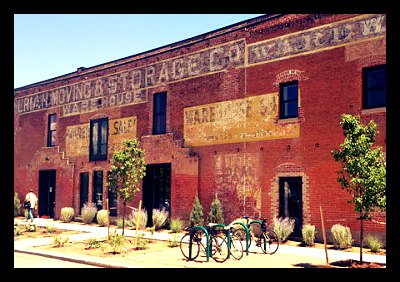
The Posner Center for International Development, located in Denver, Colorado, is an organization that displays the convergence of over 30 companies working together to help create better living conditions for the world’s poor while also addressing environmental issues. These companies work together to come up with creative and innovative solutions that can help those in poverty while also staying environmentally friendly. While these individual companies already create positive impact, their collaboration can only significantly boost the results.

Bridges to Prosperity is one of the organizations that has joined the Posner Center for International Development. Bridges to Prosperity plans and builds bridges over rivers all over the world. While building a bridge over a river may seem like a small development, it can be life altering. In villages with little transportation, most of the world’s poor depend on walking to reach their destinations. Bridges give them a safe means of transport, whether it is to school, a hospital, to work, etc. So far, Bridges to Prosperity has had projects in South America, Asia, Africa, and Central America.

Another such organization is Nokero, short for “no kerosene.” Nokero’s attempt to eliminate kerosene lights that are harmful to the environment is ambitious but possible. They hope to replace these kerosene lamps with solar lights, which are energy efficient and environmentally friendly. Engineers at Nokero have also developed a solar powered cell phone charger. Such valuable technology is affordably priced and cost effective.

Nokero and Bridges to Prosperity are just two of the 35 organizations working at the Posner Center for International Development. Whether it’s with seemingly simple solutions like building bridges to make transportation easier, or with life changing technologies that bring power to a neighborhood, these organizations’ attempts to change the world are indeed powerful and inspiring. Their collaborative efforts will only result in bigger and better ideas and innovations for the future.

– Aalekhya Malladi

Sources: The Denver Post, Posner Center for International Development, Bridges to Prosperity, Nokero
Photo: Hosted

October 5, 2013
https://borgenproject.org/wp-content/uploads/borgen-project-logo.svg 0 0 Borgen Project https://borgenproject.org/wp-content/uploads/borgen-project-logo.svg Borgen Project2013-10-05 04:55:212024-06-05 01:53:38Posner Center for International Development
Page 3 of 512345

Get Smarter

  • Global Poverty 101
  • Global Poverty… The Good News
  • Global Poverty & U.S. Jobs
  • Global Poverty and National Security
  • Innovative Solutions to Poverty
  • Global Poverty & Aid FAQ’s
Search Search

Take Action

  • Call Congress
  • Email Congress
  • Donate
  • 30 Ways to Help
  • Volunteer Ops
  • Internships
  • Courses & Certificates
  • The Podcast
Borgen Project

“The Borgen Project is an incredible nonprofit organization that is addressing poverty and hunger and working towards ending them.”

-The Huffington Post

Inside The Borgen Project

  • Contact
  • About
  • Financials
  • President
  • Board of Directors
  • Board of Advisors

International Links

  • UK Email Parliament
  • UK Donate
  • Canada Email Parliament

Get Smarter

  • Global Poverty 101
  • Global Poverty… The Good News
  • Global Poverty & U.S. Jobs
  • Global Poverty and National Security
  • Innovative Solutions to Poverty
  • Global Poverty & Aid FAQ’s

Ways to Help

  • Call Congress
  • Email Congress
  • Donate
  • 30 Ways to Help
  • Volunteer Ops
  • Internships
  • Courses & Certificates
  • The Podcast
Scroll to top Scroll to top Scroll to top